Grok 4.7, seed 3
Cursor · medium reasoning effort
 Hay 3.01m produced, 6.48 points
 Wood 15.6m produced, 7.19 points
 Carrot 791k produced, 5.90 points
 Pumpkin 50.9k produced, 4.71 points
 Cactus 574k produced, 5.76 points
 Power 23.8k produced, 4.38 points
 Bone 189k produced, 5.28 points
 Weird substance 51.9k produced, 4.72 points
 Gold 91.5k produced, 4.96 points
 Water 46k produced, 4.66 points
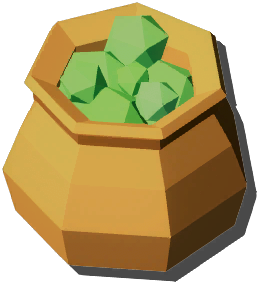 Fertilizer 9.04k produced, 3.96 points
Produced by the end of the run. Pips: points each resource adds to the score, one per tenfold.
- Score · economy-v1
- 57.98orders of magnitude · model mean 58.38
- On seed 3
- #5of 8 models
- Cost
- $10.99API-equivalent estimate
- Real time
- 53m 35swall clock, not scored
timeline
Score and what the agent did, over game time
Ticks under the axis: upgrade purchases.
Data table
| Game time | Score |
|---|---|
| 0s | 0.00 |
| 1h 00m | 15.0 |
| 2h 00m | 33.9 |
| 3h 00m | 47.2 |
| 4h 00m | 51.6 |
| 5h 00m | 55.2 |
| 6h 00m | 58.0 |
Said: the agent's own progress messages. Thought: its thinking as the agent reported it. Read: docs and research. Wrote: program saves. Running: which program the farm ran. Text sits at the game time it was written; the game is paused while the agent thinks. Dots open the step in the log below.
how-it-played
How it played
| Measure | This run | Model mean | Seed 3 mean |
|---|---|---|---|
| Resources opened | 11 of 11 | 11 of 11 | 9.9 of 11 |
| Study | 65 | 83 | 41 |
| Action overhead | 10% | 12% | 9% |
| Tool calls | 226 | 257 | 198 |
| Program writes | 34 | 35 | 29 |
| Program stints | 32 | 33 | 35 |
| Median stint | 3m 41s | 2m 52s | 8m 48s |
| Cost per point | $0.190 | $0.195 | $0.069 |
Farm idle 4% of samples; longest stint 2h 43m; 1 rejected write.
production
Production and holdings
Each resource on its own scale. Ticks: purchases of the upgrade that feeds it. On the log scale each tenfold rise is one point.
upgrades
Upgrade timeline
Every purchase, with what the agent was told
| Game time | Call | Unlocked | Result the agent saw |
|---|---|---|---|
| 2m 40s | {"upgrades":["loops"]} | loops 1 | Bought loops, now level 1. Paid hay 5. Its tutorial is docs page docs/scripting/while.md. |
| 4m 40s | {"upgrades":["speed"]} | speed 1 | Bought speed, now level 1. Paid hay 20. Its tutorial is docs page docs/unlocks/speed.md. |
| 5m 40s | {"upgrades":["expand","plant"]} | expand 1, plant 1 | Bought expand, now level 1. Paid hay 30. Its tutorial is docs page docs/unlocks/expand_1.md. |
| 7m 25s | {"upgrades":["speed"]} | speed 2 | Bought speed, now level 2. Paid wood 20. Its tutorial is docs page docs/unlocks/speed.md. |
| 9m 51s | {"upgrades":["expand","operators"]} | expand 2 | Bought expand, now level 2. Paid wood 20. Its tutorial is docs page docs/unlocks/expand_1.md. |
| 15m 31s | {"upgrades":["operators","senses","grass","carrots"]} | operators 1, senses 1, grass 2, carrots 1 | Bought operators, now level 1. Paid hay 150, wood 10. Its tutorial is docs page docs/scripting/operators.md. |
| 30m 51s | {"upgrades":["variables","functions"]} | variables 1, functions 1, functions 1 | Bought variables, now level 1. Paid carrot 35. Its tutorial is docs page docs/scripting/variables.md. |
| 34m 47s | {"upgrades":["watering","speed","trees","expand"]} | watering 1, speed 3, trees 1, expand 3 | Bought watering, now level 1. Paid wood 50. Its tutorial is docs page docs/unlocks/watering.md. |
| 36m 47s | {"upgrades":["trees"]} | trees 2 | Bought trees, now level 2. Paid hay 300. Its tutorial is docs page docs/unlocks/trees.md. |
| 37m 17s | {"upgrades":["pumpkins","fertilizer"]} | pumpkins 1, fertilizer 1 | Bought pumpkins, now level 1. Paid wood 500, carrot 200. Its tutorial is docs page docs/unlocks/pumpkins.md. |
| 38m 07s | {"upgrades":["watering","carrots","grass"]} | watering 2, carrots 2 | Bought watering, now level 2. Paid wood 200. Its tutorial is docs page docs/unlocks/watering.md. |
| 39m 27s | {"upgrades":["grass"]} | grass 3 | Bought grass, now level 3. Paid wood 500. |
| 41m 42s | {"upgrades":["trees"]} | trees 3 | Bought trees, now level 3. Paid hay 1200. Its tutorial is docs page docs/unlocks/trees.md. |
| 1h 02m | {"upgrades":["speed","lists","expand"]} | speed 4, lists 1, expand 4 | Bought speed, now level 4. Paid carrot 500. Its tutorial is docs page docs/unlocks/speed.md. |
| 1h 03m | {"upgrades":["debug"]} | debug 1 | Bought debug, now level 1. Paid hay 50, wood 50. Its tutorial is docs page docs/scripting/debug.md. |
| 1h 15m | {"upgrades":["polyculture"]} | polyculture 1 | Bought polyculture, now level 1. Paid pumpkin 3000. Its tutorial is docs page docs/unlocks/polyculture.md. |
| 1h 21m | {"upgrades":["carrots","watering","fertilizer","grass"]} | carrots 3, watering 3, fertilizer 2, grass 4 | Bought carrots, now level 3. Paid wood 1250. Its tutorial is docs page docs/unlocks/carrots.md. |
| 1h 24m | {"upgrades":["mazes","speed","sunflowers","pumpkins"]} | mazes 1, speed 5, sunflowers 1, pumpkins 2 | Bought mazes, now level 1. Paid weird_substance 1000. Its tutorial is docs page docs/unlocks/mazes.md. |
| 1h 31m | {"upgrades":["megafarm"]} | megafarm 1 | Bought megafarm, now level 1. Paid gold 2000. Its tutorial is docs page docs/unlocks/megafarm.md. |
| 1h 31m | {"upgrades":["watering","utilities","trees"]} | watering 4, utilities 1 | Bought watering, now level 4. Paid wood 3200. Its tutorial is docs page docs/unlocks/watering.md. |
| 1h 48m | {"upgrades":["trees"]} | trees 4 | Bought trees, now level 4. Paid hay 4800. Its tutorial is docs page docs/unlocks/trees.md. |
| 1h 57m | {"upgrades":["megafarm"]} | megafarm 2 | Bought megafarm, now level 2. Paid gold 8000. Its tutorial is docs page docs/unlocks/megafarm.md. |
| 2h 00m | {"upgrades":["cactus"]} | cactus 1 | Bought cactus, now level 1. Paid pumpkin 5000. Its tutorial is docs page docs/unlocks/cactus.md. |
| 2h 05m | {"upgrades":["dinosaurs","mazes"]} | dinosaurs 1, hats 1, mazes 2 | Bought dinosaurs, now level 1. Paid cactus 2000. Its tutorial is docs page docs/unlocks/dinosaurs.md. |
| 2h 13m | {"upgrades":["polyculture"]} | polyculture 2 | Bought polyculture, now level 2. Paid bone 10000. Its tutorial is docs page docs/unlocks/polyculture.md. |
| 2h 14m | {"upgrades":["carrots","dictionaries"]} | carrots 4, dictionaries 1 | Bought carrots, now level 4. Paid wood 6250. Its tutorial is docs page docs/unlocks/carrots.md. |
| 2h 28m | {"upgrades":["trees","pumpkins","costs","dinosaurs","fertilizer"]} | trees 5, pumpkins 3, costs 1, dinosaurs 2, hats 1, fertilizer 3 | Bought trees, now level 5. Paid hay 19200. Its tutorial is docs page docs/unlocks/trees.md. |
| 2h 48m | {"upgrades":["grass","watering"]} | grass 5, watering 5 | Bought grass, now level 5. Paid wood 12500. |
| 3h 15m | {"upgrades":["megafarm"]} | megafarm 3 | Bought megafarm, now level 3. Paid gold 32000. Its tutorial is docs page docs/unlocks/megafarm.md. |
| 3h 16m | {"upgrades":["expand"]} | expand 5 | Bought expand, now level 5. Paid pumpkin 1000. Its tutorial is docs page docs/unlocks/expand_1.md. |
| 3h 59m | {"upgrades":["trees","pumpkins","dinosaurs","mazes","carrots","grass","watering","fertilizer"]} | trees 6, pumpkins 4, dinosaurs 3, hats 1, mazes 3, carrots 5, grass 6, watering 6, fertilizer 4 | Bought trees, now level 6. Paid hay 76800. Its tutorial is docs page docs/unlocks/trees.md. |
| 4h 59m | {"upgrades":["polyculture","trees","pumpkins","carrots","grass","watering"]} | polyculture 3, trees 7, pumpkins 5, carrots 6, grass 7, watering 7 | Bought polyculture, now level 3. Paid bone 50000. Its tutorial is docs page docs/unlocks/polyculture.md. |
Programs 35 writes, code as the agent wrote it
farm.py
r12m 00sSaved, never run
while True: harvest()- Write result the agent saw
Saved farm (2 lines).
Game time: 2m 10s elapsed, 5h 57m 50s of budget remaining.
r22m 10sRan
harvest()
harvest()
harvest()
harvest()
harvest()
harvest()
harvest()
harvest()
harvest()
harvest()
harvest()
harvest()
harvest()
harvest()
harvest()
harvest()
harvest()
harvest()
harvest()
harvest()
Changes from the previous revision
- while True:
-     harvest()
+ harvest()
+ harvest()
+ harvest()
+ harvest()
+ harvest()
+ harvest()
+ harvest()
+ harvest()
+ harvest()
+ harvest()
+ harvest()
+ harvest()
+ harvest()
+ harvest()
+ harvest()
+ harvest()
+ harvest()
+ harvest()
+ harvest()
+ harvest()
- Write result the agent saw
Saved farm (20 lines).
Game time: 2m 20s elapsed, 5h 57m 40s of budget remaining.
- run_program at 2m 20s for 60s (agent saw)
Ran farm for 10s of game time; it finished.
Inventory change: hay +20.
Game time: 2m 40s elapsed, 5h 57m 20s of budget remaining.
Output:
(none)
r32m 50sRan
while True:
    harvest()
Changes from the previous revision
- harvest()
- harvest()
- harvest()
- harvest()
- harvest()
- harvest()
- harvest()
- harvest()
- harvest()
- harvest()
- harvest()
- harvest()
- harvest()
- harvest()
- harvest()
- harvest()
- harvest()
- harvest()
- harvest()
- harvest()
+ while True:
+     harvest()
- Write result the agent saw
Saved farm (2 lines).
Game time: 3m elapsed, 5h 57m of budget remaining.
- run_program at 3m 00s for 90s (agent saw)
Ran farm for 1m 30s of game time; it is still running.
Inventory change: hay +180.
Game time: 4m 40s elapsed, 5h 55m 20s of budget remaining.
Output:
(none)
—5m 10sRejected
while True: if can_harvest(): harvest()- Write result the agent saw
Stop the program before editing it.
r45m 30sSaved, never run
while True:
    if can_harvest():
        harvest()
Changes from the previous revision
  while True:
-     harvest()
+     if can_harvest():
+         harvest()
- Write result the agent saw
Saved farm (3 lines).
Game time: 5m 40s elapsed, 5h 54m 20s of budget remaining.
r56m 20sRan
while True:
    if can_harvest():
        harvest()
    plant(Entities.Bush)
    move(North)
Changes from the previous revision
      if can_harvest():
          harvest()
+     plant(Entities.Bush)
+     move(North)
- Write result the agent saw
Saved farm (5 lines).
Game time: 6m 30s elapsed, 5h 53m 30s of budget remaining.
- run_program at 6m 30s for 45s (agent saw)
Ran farm for 45s of game time; it is still running.
Inventory change: hay +7, wood +24.
Game time: 7m 25s elapsed, 5h 52m 35s of budget remaining.
Output:
(none)
r610m 11sRan
while True:
    if can_harvest():
        harvest()
    move(North)
    if can_harvest():
        harvest()
    move(North)
    if can_harvest():
        harvest()
    move(North)
    move(East)
Changes from the previous revision
      if can_harvest():
          harvest()
-     plant(Entities.Bush)
      move(North)
+     if can_harvest():
+         harvest()
+     move(North)
+     if can_harvest():
+         harvest()
+     move(North)
+     move(East)
- Write result the agent saw
Saved farm (11 lines).
Game time: 10m 21s elapsed, 5h 49m 39s of budget remaining.
- run_program at 10m 21s for 300s (agent saw)
Ran farm for 5m of game time; it is still running.
Inventory change: hay +575, wood +6.
Game time: 15m 31s elapsed, 5h 44m 29s of budget remaining.
Output:
(none)
r716m 41sRan
while True:
    if can_harvest():
        harvest()
    if get_entity_type() == None:
        plant(Entities.Bush)
    move(North)
    if can_harvest():
        harvest()
    if get_entity_type() == None:
        plant(Entities.Bush)
    move(North)
    if can_harvest():
        harvest()
    if get_entity_type() == None:
        plant(Entities.Bush)
    move(North)
    move(East)
Changes from the previous revision
      if can_harvest():
          harvest()
+     if get_entity_type() == None:
+         plant(Entities.Bush)
      move(North)
      if can_harvest():
          harvest()
+     if get_entity_type() == None:
+         plant(Entities.Bush)
      move(North)
      if can_harvest():
          harvest()
+     if get_entity_type() == None:
+         plant(Entities.Bush)
      move(North)
      move(East)
- Write result the agent saw
Saved farm (17 lines).
Game time: 16m 51s elapsed, 5h 43m 9s of budget remaining.
- run_program at 16m 51s for 20s (agent saw)
Ran farm for 20s of game time; it is still running.
Inventory change: hay +78.
Game time: 17m 21s elapsed, 5h 42m 39s of budget remaining.
Output:
(none)
r818m 11sRan
clear()
while True:
    if can_harvest():
        harvest()
    plant(Entities.Bush)
    move(North)
    if can_harvest():
        harvest()
    plant(Entities.Bush)
    move(North)
    if can_harvest():
        harvest()
    plant(Entities.Bush)
    move(North)
    move(East)
Changes from the previous revision
+ clear()
  while True:
      if can_harvest():
          harvest()
-     if get_entity_type() == None:
-         plant(Entities.Bush)
+     plant(Entities.Bush)
      move(North)
      if can_harvest():
          harvest()
-     if get_entity_type() == None:
-         plant(Entities.Bush)
+     plant(Entities.Bush)
      move(North)
      if can_harvest():
          harvest()
-     if get_entity_type() == None:
-         plant(Entities.Bush)
+     plant(Entities.Bush)
      move(North)
      move(East)
- Write result the agent saw
Saved farm (15 lines).
Game time: 18m 21s elapsed, 5h 41m 39s of budget remaining.
- run_program at 18m 21s for 30s (agent saw)
Ran farm for 30s of game time; it is still running.
Inventory change: hay +24, wood +32.
Game time: 19m 1s elapsed, 5h 40m 59s of budget remaining.
Output:
(none)
r923m 51sRan
clear()
while True:
    if can_harvest():
        harvest()
    if get_ground_type() != Grounds.Soil:
        till()
    plant(Entities.Carrot)
    move(North)
    if can_harvest():
        harvest()
    if get_ground_type() != Grounds.Soil:
        till()
    plant(Entities.Carrot)
    move(North)
    if can_harvest():
        harvest()
    if get_ground_type() != Grounds.Soil:
        till()
    plant(Entities.Carrot)
    move(North)
    move(East)
Changes from the previous revision
      if can_harvest():
          harvest()
-     plant(Entities.Bush)
+     if get_ground_type() != Grounds.Soil:
+         till()
+     plant(Entities.Carrot)
      move(North)
      if can_harvest():
          harvest()
-     plant(Entities.Bush)
+     if get_ground_type() != Grounds.Soil:
+         till()
+     plant(Entities.Carrot)
      move(North)
      if can_harvest():
          harvest()
-     plant(Entities.Bush)
+     if get_ground_type() != Grounds.Soil:
+         till()
+     plant(Entities.Carrot)
      move(North)
      move(East)
- Write result the agent saw
Saved farm (21 lines).
Game time: 24m 1s elapsed, 5h 35m 59s of budget remaining.
- run_program at 24m 01s for 400s (agent saw)
Ran farm for 6m 40s of game time; it is still running.
Inventory change: carrot +386, hay -363, wood -395.
Game time: 30m 51s elapsed, 5h 29m 9s of budget remaining.
Output:
(none)
r1031m 21sRan
def bush_tile():
    if can_harvest():
        harvest()
    plant(Entities.Bush)

def sweep():
    size = get_world_size()
    x = 0
    while x < size:
        y = 0
        while y < size:
            bush_tile()
            move(North)
            y = y + 1
        move(East)
        x = x + 1

clear()
while True:
    sweep()
Changes from the previous revision
- clear()
- while True:
-     if can_harvest():
-         harvest()
-     if get_ground_type() != Grounds.Soil:
-         till()
-     plant(Entities.Carrot)
-     move(North)
-     if can_harvest():
-         harvest()
-     if get_ground_type() != Grounds.Soil:
-         till()
-     plant(Entities.Carrot)
-     move(North)
+ def bush_tile():
      if can_harvest():
          harvest()
-     if get_ground_type() != Grounds.Soil:
-         till()
-     plant(Entities.Carrot)
-     move(North)
-     move(East)
+     plant(Entities.Bush)
+
+ def sweep():
+     size = get_world_size()
+     x = 0
+     while x < size:
+         y = 0
+         while y < size:
+             bush_tile()
+             move(North)
+             y = y + 1
+         move(East)
+         x = x + 1
+
+ clear()
+ while True:
+     sweep()
- Write result the agent saw
Saved farm (20 lines).
Game time: 31m 31s elapsed, 5h 28m 29s of budget remaining.
- run_program at 31m 31s for 25s (agent saw)
Ran farm for 25s of game time; it is still running.
Inventory change: hay +24, wood +25.
Game time: 32m 6s elapsed, 5h 27m 54s of budget remaining.
Output:
(none)
r1135m 47sRan
def maintain():
    if can_harvest():
        harvest()
    x = get_pos_x()
    y = get_pos_y()
    if (x + y) % 2 == 0:
        plant(Entities.Tree)
        if num_items(Items.Water) > 0 and get_water() < 0.3:
            use_item(Items.Water)
    else:
        if num_items(Items.Hay) < 600:
            if get_entity_type() == Entities.Bush:
                harvest()
        else:
            plant(Entities.Bush)

def sweep():
    size = get_world_size()
    i = 0
    while i < size:
        j = 0
        while j < size:
            maintain()
            move(North)
            j = j + 1
        move(East)
        i = i + 1

clear()
while True:
    sweep()
Changes from the previous revision
- def bush_tile():
+ def maintain():
      if can_harvest():
          harvest()
-     plant(Entities.Bush)
+     x = get_pos_x()
+     y = get_pos_y()
+     if (x + y) % 2 == 0:
+         plant(Entities.Tree)
+         if num_items(Items.Water) > 0 and get_water() < 0.3:
+             use_item(Items.Water)
+     else:
+         if num_items(Items.Hay) < 600:
+             if get_entity_type() == Entities.Bush:
+                 harvest()
+         else:
+             plant(Entities.Bush)

  def sweep():
      size = get_world_size()
-     x = 0
-     while x < size:
-         y = 0
-         while y < size:
-             bush_tile()
+     i = 0
+     while i < size:
+         j = 0
+         while j < size:
+             maintain()
              move(North)
-             y = y + 1
+             j = j + 1
          move(East)
-         x = x + 1
+         i = i + 1

  clear()
- Write result the agent saw
Saved farm (31 lines).
Game time: 35m 57s elapsed, 5h 24m 3s of budget remaining.
- run_program at 35m 57s for 40s (agent saw)
Ran farm for 40s of game time; it is still running.
Inventory change: hay +146, water -7, wood +310.
Game time: 36m 47s elapsed, 5h 23m 13s of budget remaining.
Output:
(none)
r1239m 47sSaved, never run
def water():
    if num_items(Items.Water) > 0 and get_water() < 0.4:
        use_item(Items.Water)

def maintain():
    if can_harvest():
        harvest()
    if num_items(Items.Hay) < 3600:
        if get_entity_type() == Entities.Bush or get_entity_type() == Entities.Carrot or get_entity_type() == Entities.Tree or get_entity_type() == Entities.Pumpkin:
            if can_harvest():
                harvest()
        return
    if num_items(Items.Carrot) < 1800:
        if get_ground_type() != Grounds.Soil:
            till()
        plant(Entities.Carrot)
        water()
        return
    if (get_pos_x() + get_pos_y()) % 2 == 0:
        plant(Entities.Tree)
    else:
        plant(Entities.Bush)
    water()

def sweep():
    size = get_world_size()
    i = 0
    while i < size:
        j = 0
        while j < size:
            maintain()
            move(North)
            j = j + 1
        move(East)
        i = i + 1

clear()
while True:
    sweep()
Changes from the previous revision
+ def water():
+     if num_items(Items.Water) > 0 and get_water() < 0.4:
+         use_item(Items.Water)
+
  def maintain():
      if can_harvest():
          harvest()
-     x = get_pos_x()
-     y = get_pos_y()
-     if (x + y) % 2 == 0:
+     if num_items(Items.Hay) < 3600:
+         if get_entity_type() == Entities.Bush or get_entity_type() == Entities.Carrot or get_entity_type() == Entities.Tree or get_entity_type() == Entities.Pumpkin:
+             if can_harvest():
+                 harvest()
+         return
+     if num_items(Items.Carrot) < 1800:
+         if get_ground_type() != Grounds.Soil:
+             till()
+         plant(Entities.Carrot)
+         water()
+         return
+     if (get_pos_x() + get_pos_y()) % 2 == 0:
          plant(Entities.Tree)
-         if num_items(Items.Water) > 0 and get_water() < 0.3:
-             use_item(Items.Water)
      else:
-         if num_items(Items.Hay) < 600:
-             if get_entity_type() == Entities.Bush:
-                 harvest()
-         else:
-             plant(Entities.Bush)
+         plant(Entities.Bush)
+     water()

  def sweep():
- Write result the agent saw
Saved farm (39 lines).
Game time: 39m 57s elapsed, 5h 20m 3s of budget remaining.
r1339m 57sRan
def water():
    if num_items(Items.Water) > 0 and get_water() < 0.4:
        use_item(Items.Water)

def maintain():
    if can_harvest():
        harvest()
    if num_items(Items.Hay) < 3600:
        ent = get_entity_type()
        if ent == Entities.Bush or ent == Entities.Tree or ent == Entities.Carrot or ent == Entities.Pumpkin:
            harvest()
        return
    if num_items(Items.Carrot) < 1800:
        if get_ground_type() != Grounds.Soil:
            till()
        plant(Entities.Carrot)
        water()
        return
    if (get_pos_x() + get_pos_y()) % 2 == 0:
        plant(Entities.Tree)
    else:
        plant(Entities.Bush)
    water()

def sweep():
    size = get_world_size()
    i = 0
    while i < size:
        j = 0
        while j < size:
            maintain()
            move(North)
            j = j + 1
        move(East)
        i = i + 1

clear()
while True:
    sweep()
Changes from the previous revision
          harvest()
      if num_items(Items.Hay) < 3600:
-         if get_entity_type() == Entities.Bush or get_entity_type() == Entities.Carrot or get_entity_type() == Entities.Tree or get_entity_type() == Entities.Pumpkin:
-             if can_harvest():
-                 harvest()
+         ent = get_entity_type()
+         if ent == Entities.Bush or ent == Entities.Tree or ent == Entities.Carrot or ent == Entities.Pumpkin:
+             harvest()
          return
      if num_items(Items.Carrot) < 1800:
- Write result the agent saw
Saved farm (39 lines).
Game time: 40m 7s elapsed, 5h 19m 53s of budget remaining.
- run_program at 40m 07s for 20s (agent saw)
Ran farm for 20s of game time; it is still running.
Inventory change: fertilizer +2, hay +228, water +4.
Game time: 40m 37s elapsed, 5h 19m 23s of budget remaining.
Output:
(none)
r1442m 02sRan
def water():
    if num_items(Items.Water) > 0 and get_water() < 0.4:
        use_item(Items.Water)

def maintain():
    if can_harvest():
        harvest()
    if num_items(Items.Hay) < 2500:
        ent = get_entity_type()
        if ent == Entities.Bush or ent == Entities.Tree or ent == Entities.Carrot or ent == Entities.Pumpkin:
            harvest()
        return
    if num_items(Items.Carrot) < 1300 and num_items(Items.Wood) > 400 and num_items(Items.Hay) > 400:
        if get_ground_type() != Grounds.Soil:
            till()
        plant(Entities.Carrot)
        water()
        return
    if (get_pos_x() + get_pos_y()) % 2 == 0:
        plant(Entities.Tree)
    else:
        plant(Entities.Bush)
    water()

def sweep():
    size = get_world_size()
    i = 0
    while i < size:
        j = 0
        while j < size:
            maintain()
            move(North)
            j = j + 1
        move(East)
        i = i + 1

clear()
while True:
    sweep()
Changes from the previous revision
      if can_harvest():
          harvest()
-     if num_items(Items.Hay) < 3600:
+     if num_items(Items.Hay) < 2500:
          ent = get_entity_type()
          if ent == Entities.Bush or ent == Entities.Tree or ent == Entities.Carrot or ent == Entities.Pumpkin:
              harvest()
          return
-     if num_items(Items.Carrot) < 1800:
+     if num_items(Items.Carrot) < 1300 and num_items(Items.Wood) > 400 and num_items(Items.Hay) > 400:
          if get_ground_type() != Grounds.Soil:
              till()
- Write result the agent saw
Saved farm (39 lines).
Game time: 42m 12s elapsed, 5h 17m 48s of budget remaining.
- run_program at 42m 12s for 15s (agent saw)
Ran farm for 15s of game time; it is still running.
Inventory change: fertilizer +1, hay +168, water +3.
Game time: 42m 37s elapsed, 5h 17m 23s of budget remaining.
Output:
(none)
r1556m 27sRan
def water():
    if num_items(Items.Water) > 10 and get_water() < 0.9:
        use_item(Items.Water)
    elif num_items(Items.Water) > 0 and get_water() < 0.3:
        use_item(Items.Water)

def maintain():
    if can_harvest():
        harvest()
    if num_items(Items.Carrot) < 1400 and num_items(Items.Hay) >= 80 and num_items(Items.Wood) >= 200:
        if get_ground_type() != Grounds.Soil:
            till()
        plant(Entities.Carrot)
        water()
        return
    if num_items(Items.Hay) < 2000:
        if get_ground_type() == Grounds.Soil:
            till()
        ent = get_entity_type()
        if ent == Entities.Bush or ent == Entities.Tree or ent == Entities.Carrot or ent == Entities.Pumpkin:
            harvest()
        return
    if (get_pos_x() + get_pos_y()) % 2 == 0:
        plant(Entities.Tree)
    else:
        plant(Entities.Bush)
    water()

def sweep():
    size = get_world_size()
    i = 0
    while i < size:
        j = 0
        while j < size:
            maintain()
            move(North)
            j = j + 1
        move(East)
        i = i + 1

while True:
    sweep()
Changes from the previous revision
  def water():
-     if num_items(Items.Water) > 0 and get_water() < 0.4:
+     if num_items(Items.Water) > 10 and get_water() < 0.9:
          use_item(Items.Water)
+     elif num_items(Items.Water) > 0 and get_water() < 0.3:
+         use_item(Items.Water)

  def maintain():
      if can_harvest():
          harvest()
-     if num_items(Items.Hay) < 2500:
-         ent = get_entity_type()
-         if ent == Entities.Bush or ent == Entities.Tree or ent == Entities.Carrot or ent == Entities.Pumpkin:
-             harvest()
-         return
-     if num_items(Items.Carrot) < 1300 and num_items(Items.Wood) > 400 and num_items(Items.Hay) > 400:
+     if num_items(Items.Carrot) < 1400 and num_items(Items.Hay) >= 80 and num_items(Items.Wood) >= 200:
          if get_ground_type() != Grounds.Soil:
              till()
          water()
          return
+     if num_items(Items.Hay) < 2000:
+         if get_ground_type() == Grounds.Soil:
+             till()
+         ent = get_entity_type()
+         if ent == Entities.Bush or ent == Entities.Tree or ent == Entities.Carrot or ent == Entities.Pumpkin:
+             harvest()
+         return
      if (get_pos_x() + get_pos_y()) % 2 == 0:
          plant(Entities.Tree)
          i = i + 1

- clear()
  while True:
      sweep()
- Write result the agent saw
Saved farm (42 lines).
Game time: 56m 37s elapsed, 5h 3m 23s of budget remaining.
- run_program at 56m 37s for 40s (agent saw)
Ran farm for 40s of game time; it is still running.
Inventory change: carrot +100, fertilizer +4, hay -132, water -58, wood -132.
Game time: 57m 27s elapsed, 5h 2m 33s of budget remaining.
Output:
(none)
r161h 03mRan
def water():
    if num_items(Items.Water) > 15 and get_water() < 0.75:
        use_item(Items.Water)
    elif num_items(Items.Water) > 0 and get_water() < 0.2:
        use_item(Items.Water)

def sweep(mode):
    size = get_world_size()
    ready = True
    i = 0
    while i < size:
        j = 0
        while j < size:
            if mode == 2:
                ent = get_entity_type()
                if ent != Entities.Pumpkin or not can_harvest():
                    ready = False
                    if ent != Entities.Pumpkin and ent != None:
                        harvest()
                    if get_ground_type() != Grounds.Soil:
                        till()
                    plant(Entities.Pumpkin)
                water()
            elif mode == 1:
                if can_harvest():
                    harvest()
                if get_ground_type() != Grounds.Soil:
                    till()
                plant(Entities.Carrot)
                water()
            elif mode == 0:
                if can_harvest():
                    harvest()
                if get_ground_type() == Grounds.Soil:
                    till()
                ent = get_entity_type()
                if ent == Entities.Bush or ent == Entities.Tree or ent == Entities.Carrot or ent == Entities.Pumpkin:
                    harvest()
            else:
                if can_harvest():
                    harvest()
                if get_ground_type() == Grounds.Soil:
                    till()
                if (get_pos_x() + get_pos_y()) % 2 == 0:
                    plant(Entities.Tree)
                else:
                    plant(Entities.Bush)
                water()
            move(North)
            j = j + 1
        move(East)
        i = i + 1
    return ready

def harvest_all():
    size = get_world_size()
    i = 0
    while i < size:
        j = 0
        while j < size:
            harvest()
            move(North)
            j = j + 1
        move(East)
        i = i + 1

def mode():
    if num_items(Items.Wood) < 250:
        return 3
    if num_items(Items.Hay) < 250:
        return 0
    if num_items(Items.Carrot) < 80:
        return 1
    return 2

while True:
    m = mode()
    if m == 2:
        if sweep(2):
            before = num_items(Items.Pumpkin)
            harvest_all()
            print(num_items(Items.Pumpkin) - before)
    else:
        sweep(m)
Changes from the previous revision
  def water():
-     if num_items(Items.Water) > 10 and get_water() < 0.9:
+     if num_items(Items.Water) > 15 and get_water() < 0.75:
          use_item(Items.Water)
-     elif num_items(Items.Water) > 0 and get_water() < 0.3:
+     elif num_items(Items.Water) > 0 and get_water() < 0.2:
          use_item(Items.Water)

- def maintain():
-     if can_harvest():
-         harvest()
-     if num_items(Items.Carrot) < 1400 and num_items(Items.Hay) >= 80 and num_items(Items.Wood) >= 200:
-         if get_ground_type() != Grounds.Soil:
-             till()
-         plant(Entities.Carrot)
-         water()
-         return
-     if num_items(Items.Hay) < 2000:
-         if get_ground_type() == Grounds.Soil:
-             till()
-         ent = get_entity_type()
-         if ent == Entities.Bush or ent == Entities.Tree or ent == Entities.Carrot or ent == Entities.Pumpkin:
-             harvest()
-         return
-     if (get_pos_x() + get_pos_y()) % 2 == 0:
-         plant(Entities.Tree)
-     else:
-         plant(Entities.Bush)
-     water()
+ def sweep(mode):
+     size = get_world_size()
+     ready = True
+     i = 0
+     while i < size:
+         j = 0
+         while j < size:
+             if mode == 2:
+                 ent = get_entity_type()
+                 if ent != Entities.Pumpkin or not can_harvest():
+                     ready = False
+                     if ent != Entities.Pumpkin and ent != None:
+                         harvest()
+                     if get_ground_type() != Grounds.Soil:
+                         till()
+                     plant(Entities.Pumpkin)
+                 water()
+             elif mode == 1:
+                 if can_harvest():
+                     harvest()
+                 if get_ground_type() != Grounds.Soil:
+                     till()
+                 plant(Entities.Carrot)
+                 water()
+             elif mode == 0:
+                 if can_harvest():
+                     harvest()
+                 if get_ground_type() == Grounds.Soil:
+                     till()
+                 ent = get_entity_type()
+                 if ent == Entities.Bush or ent == Entities.Tree or ent == Entities.Carrot or ent == Entities.Pumpkin:
+                     harvest()
+             else:
+                 if can_harvest():
+                     harvest()
+                 if get_ground_type() == Grounds.Soil:
+                     till()
+                 if (get_pos_x() + get_pos_y()) % 2 == 0:
+                     plant(Entities.Tree)
+                 else:
+                     plant(Entities.Bush)
+                 water()
+             move(North)
+             j = j + 1
+         move(East)
+         i = i + 1
+     return ready

- def sweep():
+ def harvest_all():
      size = get_world_size()
      i = 0
          j = 0
          while j < size:
-             maintain()
+             harvest()
              move(North)
              j = j + 1
          i = i + 1

+ def mode():
+     if num_items(Items.Wood) < 250:
+         return 3
+     if num_items(Items.Hay) < 250:
+         return 0
+     if num_items(Items.Carrot) < 80:
+         return 1
+     return 2
+
  while True:
-     sweep()
+     m = mode()
+     if m == 2:
+         if sweep(2):
+             before = num_items(Items.Pumpkin)
+             harvest_all()
+             print(num_items(Items.Pumpkin) - before)
+     else:
+         sweep(m)
- Write result the agent saw
Saved farm (84 lines).
Game time: 1h 3m 44s elapsed, 4h 56m 16s of budget remaining.
- run_program at 1h 03m for 90s (agent saw)
Ran farm for 1m 30s of game time; it is still running.
Inventory change: carrot -78, fertilizer +9, pumpkin +648, water -6.
Game time: 1h 5m 24s elapsed, 4h 54m 36s of budget remaining.
Output:
216
216
216
r171h 16mRan
def move_to(tx, ty):
    while get_pos_x() != tx:
        move(East)
    while get_pos_y() != ty:
        move(North)

def water():
    if num_items(Items.Water) > 20 and get_water() < 0.8:
        use_item(Items.Water)
    elif num_items(Items.Water) > 0 and get_water() < 0.2:
        use_item(Items.Water)

def plant_entity(entity):
    if entity == Entities.Grass:
        if get_ground_type() == Grounds.Soil:
            till()
        if get_entity_type() != Entities.Grass:
            harvest()
        return
    if entity == Entities.Carrot or entity == Entities.Pumpkin:
        if get_ground_type() != Grounds.Soil:
            till()
    else:
        if get_ground_type() == Grounds.Soil:
            till()
    if get_entity_type() != entity:
        harvest()
        plant(entity)

def poly_cycle(primary):
    size = get_world_size()
    requests = []
    i = 0
    while i < size:
        j = 0
        while j < size:
            if (get_pos_x() + get_pos_y()) % 2 == 0:
                if can_harvest():
                    harvest()
                if get_entity_type() != primary:
                    plant_entity(primary)
                water()
                comp = get_companion()
                if comp != None:
                    ctype, pos = comp
                    cx, cy = pos
                    if (cx + cy) % 2 == 1:
                        requests.append(cx)
                        requests.append(cy)
                        requests.append(ctype)
            move(North)
            j = j + 1
        move(East)
        i = i + 1
    k = 0
    while k < len(requests):
        move_to(requests[k], requests[k + 1])
        plant_entity(requests[k + 2])
        k = k + 3

def pumpkin_cycle():
    size = get_world_size()
    ready = True
    i = 0
    while i < size:
        j = 0
        while j < size:
            ent = get_entity_type()
            if ent != Entities.Pumpkin or not can_harvest():
                ready = False
                if ent != Entities.Pumpkin:
                    harvest()
                    if get_ground_type() != Grounds.Soil:
                        till()
                    plant(Entities.Pumpkin)
                elif num_items(Items.Fertilizer) > 40:
                    use_item(Items.Fertilizer)
            water()
            move(North)
            j = j + 1
        move(East)
        i = i + 1
    if ready:
        before = num_items(Items.Pumpkin)
        i = 0
        while i < size:
            j = 0
            while j < size:
                harvest()
                move(North)
                j = j + 1
            move(East)
            i = i + 1
        print(num_items(Items.Pumpkin) - before)

while True:
    if num_items(Items.Wood) < 1500:
        poly_cycle(Entities.Tree)
    elif num_items(Items.Hay) < 1500:
        poly_cycle(Entities.Grass)
    elif num_items(Items.Carrot) < 600:
        poly_cycle(Entities.Carrot)
    elif num_items(Items.Pumpkin) < 8000:
        pumpkin_cycle()
    elif num_items(Items.Carrot) < 3000:
        poly_cycle(Entities.Carrot)
    else:
        pumpkin_cycle()
Changes from the previous revision
+ def move_to(tx, ty):
+     while get_pos_x() != tx:
+         move(East)
+     while get_pos_y() != ty:
+         move(North)
+
  def water():
-     if num_items(Items.Water) > 15 and get_water() < 0.75:
+     if num_items(Items.Water) > 20 and get_water() < 0.8:
          use_item(Items.Water)
      elif num_items(Items.Water) > 0 and get_water() < 0.2:
          use_item(Items.Water)

- def sweep(mode):
+ def plant_entity(entity):
+     if entity == Entities.Grass:
+         if get_ground_type() == Grounds.Soil:
+             till()
+         if get_entity_type() != Entities.Grass:
+             harvest()
+         return
+     if entity == Entities.Carrot or entity == Entities.Pumpkin:
+         if get_ground_type() != Grounds.Soil:
+             till()
+     else:
+         if get_ground_type() == Grounds.Soil:
+             till()
+     if get_entity_type() != entity:
+         harvest()
+         plant(entity)
+
+ def poly_cycle(primary):
      size = get_world_size()
-     ready = True
+     requests = []
      i = 0
      while i < size:
          j = 0
          while j < size:
-             if mode == 2:
-                 ent = get_entity_type()
-                 if ent != Entities.Pumpkin or not can_harvest():
-                     ready = False
-                     if ent != Entities.Pumpkin and ent != None:
-                         harvest()
-                     if get_ground_type() != Grounds.Soil:
-                         till()
-                     plant(Entities.Pumpkin)
-                 water()
-             elif mode == 1:
-                 if can_harvest():
-                     harvest()
-                 if get_ground_type() != Grounds.Soil:
-                     till()
-                 plant(Entities.Carrot)
-                 water()
-             elif mode == 0:
-                 if can_harvest():
-                     harvest()
-                 if get_ground_type() == Grounds.Soil:
-                     till()
-                 ent = get_entity_type()
-                 if ent == Entities.Bush or ent == Entities.Tree or ent == Entities.Carrot or ent == Entities.Pumpkin:
-                     harvest()
-             else:
+             if (get_pos_x() + get_pos_y()) % 2 == 0:
                  if can_harvest():
                      harvest()
-                 if get_ground_type() == Grounds.Soil:
-                     till()
-                 if (get_pos_x() + get_pos_y()) % 2 == 0:
-                     plant(Entities.Tree)
-                 else:
-                     plant(Entities.Bush)
+                 if get_entity_type() != primary:
+                     plant_entity(primary)
                  water()
+                 comp = get_companion()
+                 if comp != None:
+                     ctype, pos = comp
+                     cx, cy = pos
+                     if (cx + cy) % 2 == 1:
+                         requests.append(cx)
+                         requests.append(cy)
+                         requests.append(ctype)
              move(North)
              j = j + 1
          move(East)
          i = i + 1
-     return ready
+     k = 0
+     while k < len(requests):
+         move_to(requests[k], requests[k + 1])
+         plant_entity(requests[k + 2])
+         k = k + 3

- def harvest_all():
+ def pumpkin_cycle():
      size = get_world_size()
+     ready = True
      i = 0
      while i < size:
          j = 0
          while j < size:
-             harvest()
+             ent = get_entity_type()
+             if ent != Entities.Pumpkin or not can_harvest():
+                 ready = False
+                 if ent != Entities.Pumpkin:
+                     harvest()
+                     if get_ground_type() != Grounds.Soil:
+                         till()
+                     plant(Entities.Pumpkin)
+                 elif num_items(Items.Fertilizer) > 40:
+                     use_item(Items.Fertilizer)
+             water()
              move(North)
              j = j + 1
          move(East)
          i = i + 1
-
- def mode():
-     if num_items(Items.Wood) < 250:
-         return 3
-     if num_items(Items.Hay) < 250:
-         return 0
-     if num_items(Items.Carrot) < 80:
-         return 1
-     return 2
+     if ready:
+         before = num_items(Items.Pumpkin)
+         i = 0
+         while i < size:
+             j = 0
+             while j < size:
+                 harvest()
+                 move(North)
+                 j = j + 1
+             move(East)
+             i = i + 1
+         print(num_items(Items.Pumpkin) - before)

  while True:
-     m = mode()
-     if m == 2:
-         if sweep(2):
-             before = num_items(Items.Pumpkin)
-             harvest_all()
-             print(num_items(Items.Pumpkin) - before)
+     if num_items(Items.Wood) < 1500:
+         poly_cycle(Entities.Tree)
+     elif num_items(Items.Hay) < 1500:
+         poly_cycle(Entities.Grass)
+     elif num_items(Items.Carrot) < 600:
+         poly_cycle(Entities.Carrot)
+     elif num_items(Items.Pumpkin) < 8000:
+         pumpkin_cycle()
+     elif num_items(Items.Carrot) < 3000:
+         poly_cycle(Entities.Carrot)
      else:
-         sweep(m)
+         pumpkin_cycle()
- Write result the agent saw
Saved farm (108 lines).
Game time: 1h 16m 41s elapsed, 4h 43m 19s of budget remaining.
- run_program at 1h 16m for 60s (agent saw)
Ran farm for 1m of game time; it is still running.
Inventory change: fertilizer +6, hay +696, water -4, wood +4696.
Game time: 1h 17m 51s elapsed, 4h 42m 9s of budget remaining.
Output:
(none)
r181h 21mRan
def move_to(tx, ty):
    while get_pos_x() != tx:
        move(East)
    while get_pos_y() != ty:
        move(North)

def water():
    if num_items(Items.Water) > 30 and get_water() < 0.85:
        use_item(Items.Water)
    elif num_items(Items.Water) > 0 and get_water() < 0.25:
        use_item(Items.Water)

def plant_entity(entity):
    if entity == Entities.Grass:
        if get_ground_type() == Grounds.Soil:
            till()
        if get_entity_type() != Entities.Grass:
            harvest()
        return
    if entity == Entities.Carrot or entity == Entities.Pumpkin:
        if get_ground_type() != Grounds.Soil:
            till()
    else:
        if get_ground_type() == Grounds.Soil:
            till()
    if get_entity_type() != entity:
        harvest()
        plant(entity)

def poly_cycle(primary):
    size = get_world_size()
    requests = []
    i = 0
    while i < size:
        j = 0
        while j < size:
            if (get_pos_x() + get_pos_y()) % 2 == 0:
                if can_harvest():
                    harvest()
                if get_entity_type() != primary:
                    plant_entity(primary)
                if primary == Entities.Tree and num_items(Items.Weird_Substance) < 1600:
                    if num_items(Items.Fertilizer) > 0:
                        use_item(Items.Fertilizer)
                water()
                comp = get_companion()
                if comp != None:
                    ctype, pos = comp
                    cx, cy = pos
                    if (cx + cy) % 2 == 1:
                        requests.append(cx)
                        requests.append(cy)
                        requests.append(ctype)
            move(North)
            j = j + 1
        move(East)
        i = i + 1
    k = 0
    while k < len(requests):
        move_to(requests[k], requests[k + 1])
        plant_entity(requests[k + 2])
        k = k + 3

def pumpkin_cycle():
    size = get_world_size()
    ready = True
    i = 0
    while i < size:
        j = 0
        while j < size:
            ent = get_entity_type()
            if ent != Entities.Pumpkin or not can_harvest():
                ready = False
                if ent != Entities.Pumpkin:
                    harvest()
                    if get_ground_type() != Grounds.Soil:
                        till()
                    plant(Entities.Pumpkin)
            elif num_items(Items.Fertilizer) > 80 and num_items(Items.Weird_Substance) > 2000:
                use_item(Items.Fertilizer)
            water()
            move(North)
            j = j + 1
        move(East)
        i = i + 1
    if ready:
        before = num_items(Items.Pumpkin)
        i = 0
        while i < size:
            j = 0
            while j < size:
                harvest()
                move(North)
                j = j + 1
            move(East)
            i = i + 1
        print(num_items(Items.Pumpkin) - before)

while True:
    if num_items(Items.Weird_Substance) < 1500 and num_items(Items.Fertilizer) > 2:
        poly_cycle(Entities.Tree)
    elif num_items(Items.Hay) < 2000:
        poly_cycle(Entities.Grass)
    elif num_items(Items.Wood) < 2000:
        poly_cycle(Entities.Tree)
    elif num_items(Items.Carrot) < 2200:
        poly_cycle(Entities.Carrot)
    else:
        pumpkin_cycle()
Changes from the previous revision
  def water():
-     if num_items(Items.Water) > 20 and get_water() < 0.8:
+     if num_items(Items.Water) > 30 and get_water() < 0.85:
          use_item(Items.Water)
-     elif num_items(Items.Water) > 0 and get_water() < 0.2:
+     elif num_items(Items.Water) > 0 and get_water() < 0.25:
          use_item(Items.Water)

                  if get_entity_type() != primary:
                      plant_entity(primary)
+                 if primary == Entities.Tree and num_items(Items.Weird_Substance) < 1600:
+                     if num_items(Items.Fertilizer) > 0:
+                         use_item(Items.Fertilizer)
                  water()
                  comp = get_companion()
                          till()
                      plant(Entities.Pumpkin)
-                 elif num_items(Items.Fertilizer) > 40:
-                     use_item(Items.Fertilizer)
+             elif num_items(Items.Fertilizer) > 80 and num_items(Items.Weird_Substance) > 2000:
+                 use_item(Items.Fertilizer)
              water()
              move(North)

  while True:
-     if num_items(Items.Wood) < 1500:
+     if num_items(Items.Weird_Substance) < 1500 and num_items(Items.Fertilizer) > 2:
          poly_cycle(Entities.Tree)
-     elif num_items(Items.Hay) < 1500:
+     elif num_items(Items.Hay) < 2000:
          poly_cycle(Entities.Grass)
-     elif num_items(Items.Carrot) < 600:
-         poly_cycle(Entities.Carrot)
-     elif num_items(Items.Pumpkin) < 8000:
-         pumpkin_cycle()
-     elif num_items(Items.Carrot) < 3000:
+     elif num_items(Items.Wood) < 2000:
+         poly_cycle(Entities.Tree)
+     elif num_items(Items.Carrot) < 2200:
          poly_cycle(Entities.Carrot)
      else:
- Write result the agent saw
Saved farm (109 lines).
Game time: 1h 22m 4s elapsed, 4h 37m 56s of budget remaining.
- run_program at 1h 22m for 150s (agent saw)
Ran farm for 2m 30s of game time; it is still running.
Inventory change: carrot +1996, fertilizer -11, hay +444, weird_substance +2480, wood +5204.
Game time: 1h 24m 44s elapsed, 4h 35m 16s of budget remaining.
Output:
(none)
r191h 25mRan
def move_to(tx, ty):
    while get_pos_x() != tx:
        move(East)
    while get_pos_y() != ty:
        move(North)

def plant_sunflowers():
    size = get_world_size()
    i = 0
    while i < size:
        j = 0
        while j < size:
            if get_entity_type() != Entities.Sunflower:
                harvest()
                if get_ground_type() != Grounds.Soil:
                    till()
                plant(Entities.Sunflower)
            if num_items(Items.Water) > 0 and get_water() < 0.5:
                use_item(Items.Water)
            move(North)
            j = j + 1
        move(East)
        i = i + 1

def harvest_best_sunflower():
    size = get_world_size()
    max_p = -1
    i = 0
    while i < size:
        j = 0
        while j < size:
            if get_entity_type() == Entities.Sunflower:
                p = measure()
                if p > max_p:
                    max_p = p
            move(North)
            j = j + 1
        move(East)
        i = i + 1
    if max_p < 0:
        return False
    i = 0
    while i < size:
        j = 0
        while j < size:
            if get_entity_type() == Entities.Sunflower and measure() == max_p and can_harvest():
                harvest()
                if get_ground_type() != Grounds.Soil:
                    till()
                plant(Entities.Sunflower)
                return True
            move(North)
            j = j + 1
        move(East)
        i = i + 1
    return False

def maze_substance():
    mult = 1
    level = num_unlocked(Unlocks.Mazes) - 1
    while level > 0:
        mult = mult * 2
        level = level - 1
    return get_world_size() * mult

def solve_maze():
    directions = [North, East, South, West]
    index = 0
    steps = 0
    while get_entity_type() != Entities.Treasure and steps < 600:
        steps = steps + 1
        index = index - 1
        if index < 0:
            index = 3
        turns = 0
        while turns < 4:
            if can_move(directions[index]):
                move(directions[index])
                break
            index = index + 1
            if index > 3:
                index = 0
            turns = turns + 1
    if get_entity_type() == Entities.Treasure:
        harvest()
        return True
    print(steps)
    return False

def do_maze():
    cost = maze_substance()
    if num_items(Items.Weird_Substance) < cost:
        return False
    harvest()
    if get_ground_type() == Grounds.Soil:
        till()
    plant(Entities.Bush)
    use_item(Items.Weird_Substance, cost)
    return solve_maze()

while True:
    if num_items(Items.Power) < 400:
        plant_sunflowers()
        harvest_best_sunflower()
    else:
        do_maze()
        if num_items(Items.Gold) > 4000:
            print(num_items(Items.Gold))
Changes from the previous revision
          move(North)

- def water():
-     if num_items(Items.Water) > 30 and get_water() < 0.85:
-         use_item(Items.Water)
-     elif num_items(Items.Water) > 0 and get_water() < 0.25:
-         use_item(Items.Water)
-
- def plant_entity(entity):
-     if entity == Entities.Grass:
-         if get_ground_type() == Grounds.Soil:
-             till()
-         if get_entity_type() != Entities.Grass:
-             harvest()
-         return
-     if entity == Entities.Carrot or entity == Entities.Pumpkin:
-         if get_ground_type() != Grounds.Soil:
-             till()
-     else:
-         if get_ground_type() == Grounds.Soil:
-             till()
-     if get_entity_type() != entity:
-         harvest()
-         plant(entity)
-
- def poly_cycle(primary):
+ def plant_sunflowers():
      size = get_world_size()
-     requests = []
      i = 0
      while i < size:
          j = 0
          while j < size:
-             if (get_pos_x() + get_pos_y()) % 2 == 0:
-                 if can_harvest():
-                     harvest()
-                 if get_entity_type() != primary:
-                     plant_entity(primary)
-                 if primary == Entities.Tree and num_items(Items.Weird_Substance) < 1600:
-                     if num_items(Items.Fertilizer) > 0:
-                         use_item(Items.Fertilizer)
-                 water()
-                 comp = get_companion()
-                 if comp != None:
-                     ctype, pos = comp
-                     cx, cy = pos
-                     if (cx + cy) % 2 == 1:
-                         requests.append(cx)
-                         requests.append(cy)
-                         requests.append(ctype)
+             if get_entity_type() != Entities.Sunflower:
+                 harvest()
+                 if get_ground_type() != Grounds.Soil:
+                     till()
+                 plant(Entities.Sunflower)
+             if num_items(Items.Water) > 0 and get_water() < 0.5:
+                 use_item(Items.Water)
              move(North)
              j = j + 1
          move(East)
          i = i + 1
-     k = 0
-     while k < len(requests):
-         move_to(requests[k], requests[k + 1])
-         plant_entity(requests[k + 2])
-         k = k + 3

- def pumpkin_cycle():
+ def harvest_best_sunflower():
      size = get_world_size()
-     ready = True
+     max_p = -1
      i = 0
      while i < size:
          j = 0
          while j < size:
-             ent = get_entity_type()
-             if ent != Entities.Pumpkin or not can_harvest():
-                 ready = False
-                 if ent != Entities.Pumpkin:
-                     harvest()
-                     if get_ground_type() != Grounds.Soil:
-                         till()
-                     plant(Entities.Pumpkin)
-             elif num_items(Items.Fertilizer) > 80 and num_items(Items.Weird_Substance) > 2000:
-                 use_item(Items.Fertilizer)
-             water()
+             if get_entity_type() == Entities.Sunflower:
+                 p = measure()
+                 if p > max_p:
+                     max_p = p
              move(North)
              j = j + 1
          move(East)
          i = i + 1
-     if ready:
-         before = num_items(Items.Pumpkin)
-         i = 0
-         while i < size:
-             j = 0
-             while j < size:
+     if max_p < 0:
+         return False
+     i = 0
+     while i < size:
+         j = 0
+         while j < size:
+             if get_entity_type() == Entities.Sunflower and measure() == max_p and can_harvest():
                  harvest()
-                 move(North)
-                 j = j + 1
-             move(East)
-             i = i + 1
-         print(num_items(Items.Pumpkin) - before)
+                 if get_ground_type() != Grounds.Soil:
+                     till()
+                 plant(Entities.Sunflower)
+                 return True
+             move(North)
+             j = j + 1
+         move(East)
+         i = i + 1
+     return False

+ def maze_substance():
+     mult = 1
+     level = num_unlocked(Unlocks.Mazes) - 1
+     while level > 0:
+         mult = mult * 2
+         level = level - 1
+     return get_world_size() * mult
+
+ def solve_maze():
+     directions = [North, East, South, West]
+     index = 0
+     steps = 0
+     while get_entity_type() != Entities.Treasure and steps < 600:
+         steps = steps + 1
+         index = index - 1
+         if index < 0:
+             index = 3
+         turns = 0
+         while turns < 4:
+             if can_move(directions[index]):
+                 move(directions[index])
+                 break
+             index = index + 1
+             if index > 3:
+                 index = 0
+             turns = turns + 1
+     if get_entity_type() == Entities.Treasure:
+         harvest()
+         return True
+     print(steps)
+     return False
+
+ def do_maze():
+     cost = maze_substance()
+     if num_items(Items.Weird_Substance) < cost:
+         return False
+     harvest()
+     if get_ground_type() == Grounds.Soil:
+         till()
+     plant(Entities.Bush)
+     use_item(Items.Weird_Substance, cost)
+     return solve_maze()
+
  while True:
-     if num_items(Items.Weird_Substance) < 1500 and num_items(Items.Fertilizer) > 2:
-         poly_cycle(Entities.Tree)
-     elif num_items(Items.Hay) < 2000:
-         poly_cycle(Entities.Grass)
-     elif num_items(Items.Wood) < 2000:
-         poly_cycle(Entities.Tree)
-     elif num_items(Items.Carrot) < 2200:
-         poly_cycle(Entities.Carrot)
+     if num_items(Items.Power) < 400:
+         plant_sunflowers()
+         harvest_best_sunflower()
      else:
-         pumpkin_cycle()
+         do_maze()
+         if num_items(Items.Gold) > 4000:
+             print(num_items(Items.Gold))
- Write result the agent saw
Saved farm (108 lines).
Game time: 1h 26m 4s elapsed, 4h 33m 56s of budget remaining.
- run_program at 1h 26m for 50s (agent saw)
Ran farm for 50s of game time; it is still running.
Inventory change: carrot +60, fertilizer +10, hay +96, power +59.33, water -12, wood +148.
Game time: 1h 27m 4s elapsed, 4h 32m 56s of budget remaining.
Output:
(none)
r201h 28mRan
def move_to(tx, ty):
    while get_pos_x() != tx:
        move(East)
    while get_pos_y() != ty:
        move(North)

def plant_sunflower_here():
    if get_ground_type() != Grounds.Soil:
        till()
    plant(Entities.Sunflower)

def ensure_sunflowers():
    size = get_world_size()
    i = 0
    while i < size:
        j = 0
        while j < size:
            if get_entity_type() != Entities.Sunflower:
                harvest()
                plant_sunflower_here()
            move(North)
            j = j + 1
        move(East)
        i = i + 1

def harvest_power():
    size = get_world_size()
    petals = []
    xs = []
    ys = []
    i = 0
    while i < size:
        j = 0
        while j < size:
            if get_entity_type() == Entities.Sunflower:
                petals.append(measure())
                xs.append(get_pos_x())
                ys.append(get_pos_y())
            move(North)
            j = j + 1
        move(East)
        i = i + 1
    gained = 0
    while len(petals) > 0:
        best = 0
        k = 1
        while k < len(petals):
            if petals[k] > petals[best]:
                best = k
            k = k + 1
        move_to(xs[best], ys[best])
        if not can_harvest():
            return gained
        before = num_items(Items.Power)
        harvest()
        gained = gained + (num_items(Items.Power) - before)
        plant_sunflower_here()
        petals.pop(best)
        xs.pop(best)
        ys.pop(best)
    return gained

def maze_cost():
    mult = 1
    level = num_unlocked(Unlocks.Mazes) - 1
    while level > 0:
        mult = mult * 2
        level = level - 1
    return get_world_size() * mult

def solve_maze():
    directions = [North, East, South, West]
    index = 0
    steps = 0
    while get_entity_type() != Entities.Treasure and steps < 800:
        steps = steps + 1
        index = index - 1
        if index < 0:
            index = 3
        turns = 0
        moved = False
        while turns < 4:
            if can_move(directions[index]):
                move(directions[index])
                moved = True
                break
            index = index + 1
            if index > 3:
                index = 0
            turns = turns + 1
        if not moved:
            break
    if get_entity_type() == Entities.Treasure:
        harvest()
        return True
    print(steps)
    return False

def do_maze():
    cost = maze_cost()
    if num_items(Items.Weird_Substance) < cost:
        return
    harvest()
    if get_ground_type() == Grounds.Soil:
        till()
    plant(Entities.Bush)
    use_item(Items.Weird_Substance, cost)
    solve_maze()

while True:
    if num_items(Items.Power) < 250:
        ensure_sunflowers()
        harvest_power()
    else:
        do_maze()
Changes from the previous revision
          move(North)

- def plant_sunflowers():
+ def plant_sunflower_here():
+     if get_ground_type() != Grounds.Soil:
+         till()
+     plant(Entities.Sunflower)
+
+ def ensure_sunflowers():
      size = get_world_size()
      i = 0
              if get_entity_type() != Entities.Sunflower:
                  harvest()
-                 if get_ground_type() != Grounds.Soil:
-                     till()
-                 plant(Entities.Sunflower)
-             if num_items(Items.Water) > 0 and get_water() < 0.5:
-                 use_item(Items.Water)
+                 plant_sunflower_here()
              move(North)
              j = j + 1
          i = i + 1

- def harvest_best_sunflower():
+ def harvest_power():
      size = get_world_size()
-     max_p = -1
+     petals = []
+     xs = []
+     ys = []
      i = 0
      while i < size:
          while j < size:
              if get_entity_type() == Entities.Sunflower:
-                 p = measure()
-                 if p > max_p:
-                     max_p = p
-             move(North)
-             j = j + 1
-         move(East)
-         i = i + 1
-     if max_p < 0:
-         return False
-     i = 0
-     while i < size:
-         j = 0
-         while j < size:
-             if get_entity_type() == Entities.Sunflower and measure() == max_p and can_harvest():
-                 harvest()
-                 if get_ground_type() != Grounds.Soil:
-                     till()
-                 plant(Entities.Sunflower)
-                 return True
+                 petals.append(measure())
+                 xs.append(get_pos_x())
+                 ys.append(get_pos_y())
              move(North)
              j = j + 1
          move(East)
          i = i + 1
-     return False
+     gained = 0
+     while len(petals) > 0:
+         best = 0
+         k = 1
+         while k < len(petals):
+             if petals[k] > petals[best]:
+                 best = k
+             k = k + 1
+         move_to(xs[best], ys[best])
+         if not can_harvest():
+             return gained
+         before = num_items(Items.Power)
+         harvest()
+         gained = gained + (num_items(Items.Power) - before)
+         plant_sunflower_here()
+         petals.pop(best)
+         xs.pop(best)
+         ys.pop(best)
+     return gained

- def maze_substance():
+ def maze_cost():
      mult = 1
      level = num_unlocked(Unlocks.Mazes) - 1
      index = 0
      steps = 0
-     while get_entity_type() != Entities.Treasure and steps < 600:
+     while get_entity_type() != Entities.Treasure and steps < 800:
          steps = steps + 1
          index = index - 1
              index = 3
          turns = 0
+         moved = False
          while turns < 4:
              if can_move(directions[index]):
                  move(directions[index])
+                 moved = True
                  break
              index = index + 1
                  index = 0
              turns = turns + 1
+         if not moved:
+             break
      if get_entity_type() == Entities.Treasure:
          harvest()

  def do_maze():
-     cost = maze_substance()
+     cost = maze_cost()
      if num_items(Items.Weird_Substance) < cost:
-         return False
+         return
      harvest()
      if get_ground_type() == Grounds.Soil:
      plant(Entities.Bush)
      use_item(Items.Weird_Substance, cost)
-     return solve_maze()
+     solve_maze()

  while True:
-     if num_items(Items.Power) < 400:
-         plant_sunflowers()
-         harvest_best_sunflower()
+     if num_items(Items.Power) < 250:
+         ensure_sunflowers()
+         harvest_power()
      else:
          do_maze()
-         if num_items(Items.Gold) > 4000:
-             print(num_items(Items.Gold))
- Write result the agent saw
Saved farm (115 lines).
Game time: 1h 28m 28s elapsed, 4h 31m 32s of budget remaining.
- run_program at 1h 28m for 70s (agent saw)
Ran farm for 1m 10s of game time; it is still running.
Inventory change: carrot -164, fertilizer +14, gold +756, hay +792, power +166.26, water +28, weird_substance -126.
Game time: 1h 29m 48s elapsed, 4h 30m 12s of budget remaining.
Output:
(none)
r211h 32mRan
def move_to(tx, ty):
    while get_pos_x() != tx:
        move(East)
    while get_pos_y() != ty:
        move(North)

def plant_entity(entity):
    if entity == Entities.Grass:
        if get_ground_type() == Grounds.Soil:
            till()
        if get_entity_type() != Entities.Grass:
            harvest()
        return
    if entity == Entities.Carrot or entity == Entities.Pumpkin or entity == Entities.Sunflower:
        if get_ground_type() != Grounds.Soil:
            till()
    else:
        if get_ground_type() == Grounds.Soil:
            till()
    if get_entity_type() != entity:
        harvest()
        plant(entity)

def poly_cycle(primary):
    size = get_world_size()
    requests = []
    i = 0
    while i < size:
        j = 0
        while j < size:
            if (get_pos_x() + get_pos_y()) % 2 == 0:
                if can_harvest():
                    harvest()
                if get_entity_type() != primary:
                    plant_entity(primary)
                if primary == Entities.Tree and num_items(Items.Fertilizer) > 0:
                    use_item(Items.Fertilizer)
                comp = get_companion()
                if comp != None:
                    ctype, pos = comp
                    cx, cy = pos
                    if (cx + cy) % 2 == 1:
                        requests.append(cx)
                        requests.append(cy)
                        requests.append(ctype)
            move(North)
            j = j + 1
        move(East)
        i = i + 1
    k = 0
    while k < len(requests):
        move_to(requests[k], requests[k + 1])
        plant_entity(requests[k + 2])
        k = k + 3

def ensure_sunflowers():
    size = get_world_size()
    i = 0
    while i < size:
        j = 0
        while j < size:
            if get_entity_type() != Entities.Sunflower:
                harvest()
                plant_entity(Entities.Sunflower)
            move(North)
            j = j + 1
        move(East)
        i = i + 1

def harvest_power():
    size = get_world_size()
    petals = []
    xs = []
    ys = []
    i = 0
    while i < size:
        j = 0
        while j < size:
            if get_entity_type() == Entities.Sunflower:
                petals.append(measure())
                xs.append(get_pos_x())
                ys.append(get_pos_y())
            move(North)
            j = j + 1
        move(East)
        i = i + 1
    while len(petals) > 0 and num_items(Items.Power) < 200:
        best = 0
        k = 1
        while k < len(petals):
            if petals[k] > petals[best]:
                best = k
            k = k + 1
        move_to(xs[best], ys[best])
        if not can_harvest():
            return
        harvest()
        plant_entity(Entities.Sunflower)
        petals.pop(best)
        xs.pop(best)
        ys.pop(best)

def maze_cost():
    mult = 1
    level = num_unlocked(Unlocks.Mazes) - 1
    while level > 0:
        mult = mult * 2
        level = level - 1
    return get_world_size() * mult

def solve_maze():
    directions = [North, East, South, West]
    index = 0
    steps = 0
    while get_entity_type() != Entities.Treasure and steps < 800:
        steps = steps + 1
        index = index - 1
        if index < 0:
            index = 3
        turns = 0
        moved = False
        while turns < 4:
            if can_move(directions[index]):
                move(directions[index])
                moved = True
                break
            index = index + 1
            if index > 3:
                index = 0
            turns = turns + 1
        if not moved:
            break
    if get_entity_type() == Entities.Treasure:
        harvest()

def do_maze():
    cost = maze_cost()
    if num_items(Items.Weird_Substance) < cost:
        return
    harvest()
    if get_ground_type() == Grounds.Soil:
        till()
    plant(Entities.Bush)
    use_item(Items.Weird_Substance, cost)
    solve_maze()

while True:
    if num_items(Items.Hay) < 5500:
        poly_cycle(Entities.Grass)
    elif num_items(Items.Weird_Substance) < 500:
        poly_cycle(Entities.Tree)
    elif num_items(Items.Power) < 80:
        ensure_sunflowers()
        harvest_power()
    else:
        do_maze()
Changes from the previous revision
          move(North)

- def plant_sunflower_here():
-     if get_ground_type() != Grounds.Soil:
-         till()
-     plant(Entities.Sunflower)
+ def plant_entity(entity):
+     if entity == Entities.Grass:
+         if get_ground_type() == Grounds.Soil:
+             till()
+         if get_entity_type() != Entities.Grass:
+             harvest()
+         return
+     if entity == Entities.Carrot or entity == Entities.Pumpkin or entity == Entities.Sunflower:
+         if get_ground_type() != Grounds.Soil:
+             till()
+     else:
+         if get_ground_type() == Grounds.Soil:
+             till()
+     if get_entity_type() != entity:
+         harvest()
+         plant(entity)

+ def poly_cycle(primary):
+     size = get_world_size()
+     requests = []
+     i = 0
+     while i < size:
+         j = 0
+         while j < size:
+             if (get_pos_x() + get_pos_y()) % 2 == 0:
+                 if can_harvest():
+                     harvest()
+                 if get_entity_type() != primary:
+                     plant_entity(primary)
+                 if primary == Entities.Tree and num_items(Items.Fertilizer) > 0:
+                     use_item(Items.Fertilizer)
+                 comp = get_companion()
+                 if comp != None:
+                     ctype, pos = comp
+                     cx, cy = pos
+                     if (cx + cy) % 2 == 1:
+                         requests.append(cx)
+                         requests.append(cy)
+                         requests.append(ctype)
+             move(North)
+             j = j + 1
+         move(East)
+         i = i + 1
+     k = 0
+     while k < len(requests):
+         move_to(requests[k], requests[k + 1])
+         plant_entity(requests[k + 2])
+         k = k + 3
+
  def ensure_sunflowers():
      size = get_world_size()
              if get_entity_type() != Entities.Sunflower:
                  harvest()
-                 plant_sunflower_here()
+                 plant_entity(Entities.Sunflower)
              move(North)
              j = j + 1
          move(East)
          i = i + 1
-     gained = 0
-     while len(petals) > 0:
+     while len(petals) > 0 and num_items(Items.Power) < 200:
          best = 0
          k = 1
          move_to(xs[best], ys[best])
          if not can_harvest():
-             return gained
-         before = num_items(Items.Power)
+             return
          harvest()
-         gained = gained + (num_items(Items.Power) - before)
-         plant_sunflower_here()
+         plant_entity(Entities.Sunflower)
          petals.pop(best)
          xs.pop(best)
          ys.pop(best)
-     return gained

  def maze_cost():
      if get_entity_type() == Entities.Treasure:
          harvest()
-         return True
-     print(steps)
-     return False

  def do_maze():

  while True:
-     if num_items(Items.Power) < 250:
+     if num_items(Items.Hay) < 5500:
+         poly_cycle(Entities.Grass)
+     elif num_items(Items.Weird_Substance) < 500:
+         poly_cycle(Entities.Tree)
+     elif num_items(Items.Power) < 80:
          ensure_sunflowers()
          harvest_power()
- Write result the agent saw
Saved farm (156 lines).
Game time: 1h 32m 36s elapsed, 4h 27m 24s of budget remaining.
- run_program at 1h 32m for 20s (agent saw)
Ran farm for 20s of game time; it is still running.
Inventory change: fertilizer +4, power -20.05, water +16.
Game time: 1h 33m 6s elapsed, 4h 26m 54s of budget remaining.
Output:
(none)
r221h 46mRan
def move_to(tx, ty):
    guard = 0
    while get_pos_x() != tx and guard < 30:
        move(East)
        guard = guard + 1
    guard = 0
    while get_pos_y() != ty and guard < 30:
        move(North)
        guard = guard + 1

def plant_entity(entity):
    if entity == Entities.Grass:
        if get_ground_type() == Grounds.Soil:
            till()
        if get_entity_type() != Entities.Grass:
            harvest()
        return
    if entity == Entities.Carrot or entity == Entities.Pumpkin or entity == Entities.Sunflower:
        if get_ground_type() != Grounds.Soil:
            till()
    else:
        if get_ground_type() == Grounds.Soil:
            till()
    if get_entity_type() != entity:
        harvest()
        plant(entity)

def poly_cycle(primary):
    size = get_world_size()
    requests = []
    i = 0
    while i < size:
        j = 0
        while j < size:
            if (get_pos_x() + get_pos_y()) % 2 == 0:
                if can_harvest():
                    harvest()
                if get_entity_type() != primary:
                    plant_entity(primary)
                if primary == Entities.Tree and num_items(Items.Fertilizer) > 0:
                    use_item(Items.Fertilizer)
                comp = get_companion()
                if comp != None:
                    ctype, pos = comp
                    cx, cy = pos
                    if (cx + cy) % 2 == 1:
                        requests.append(cx)
                        requests.append(cy)
                        requests.append(ctype)
            move(North)
            j = j + 1
        move(East)
        i = i + 1
    k = 0
    while k < len(requests):
        move_to(requests[k], requests[k + 1])
        plant_entity(requests[k + 2])
        k = k + 3

def ensure_sunflowers():
    size = get_world_size()
    i = 0
    while i < size:
        j = 0
        while j < size:
            if get_entity_type() != Entities.Sunflower:
                harvest()
                plant_entity(Entities.Sunflower)
            move(North)
            j = j + 1
        move(East)
        i = i + 1

def harvest_power():
    size = get_world_size()
    petals = []
    xs = []
    ys = []
    i = 0
    while i < size:
        j = 0
        while j < size:
            if get_entity_type() == Entities.Sunflower:
                petals.append(measure())
                xs.append(get_pos_x())
                ys.append(get_pos_y())
            move(North)
            j = j + 1
        move(East)
        i = i + 1
    while len(petals) > 0 and num_items(Items.Power) < 180:
        best = 0
        k = 1
        while k < len(petals):
            if petals[k] > petals[best]:
                best = k
            k = k + 1
        move_to(xs[best], ys[best])
        if not can_harvest():
            return
        harvest()
        plant_entity(Entities.Sunflower)
        petals.pop(best)
        xs.pop(best)
        ys.pop(best)

def solve_maze():
    directions = [North, East, South, West]
    index = 0
    steps = 0
    while get_entity_type() != Entities.Treasure and steps < 2000:
        steps = steps + 1
        right = index + 1
        if right > 3:
            right = 0
        if can_move(directions[right]):
            index = right
            move(directions[index])
        elif can_move(directions[index]):
            move(directions[index])
        else:
            index = index - 1
            if index < 0:
                index = 3
            if not can_move(directions[index]):
                index = index - 1
                if index < 0:
                    index = 3
            if can_move(directions[index]):
                move(directions[index])
    harvest()

def do_maze():
    cost = get_world_size()
    if num_unlocked(Unlocks.Mazes) > 1:
        extra = num_unlocked(Unlocks.Mazes) - 1
        while extra > 0:
            cost = cost * 2
            extra = extra - 1
    if num_items(Items.Weird_Substance) < cost:
        return
    harvest()
    if get_ground_type() == Grounds.Soil:
        till()
    plant(Entities.Bush)
    use_item(Items.Weird_Substance, cost)
    solve_maze()

while True:
    ent = get_entity_type()
    if ent == Entities.Hedge or ent == Entities.Treasure:
        solve_maze()
    elif num_items(Items.Hay) < 5200:
        poly_cycle(Entities.Grass)
    elif num_items(Items.Weird_Substance) < 2500:
        poly_cycle(Entities.Tree)
    elif num_items(Items.Power) < 60:
        ensure_sunflowers()
        harvest_power()
    elif num_items(Items.Gold) < 12000:
        do_maze()
    else:
        poly_cycle(Entities.Carrot)
Changes from the previous revision
  def move_to(tx, ty):
-     while get_pos_x() != tx:
+     guard = 0
+     while get_pos_x() != tx and guard < 30:
          move(East)
-     while get_pos_y() != ty:
+         guard = guard + 1
+     guard = 0
+     while get_pos_y() != ty and guard < 30:
          move(North)
+         guard = guard + 1

  def plant_entity(entity):
          move(East)
          i = i + 1
-     while len(petals) > 0 and num_items(Items.Power) < 200:
+     while len(petals) > 0 and num_items(Items.Power) < 180:
          best = 0
          k = 1
          ys.pop(best)

- def maze_cost():
-     mult = 1
-     level = num_unlocked(Unlocks.Mazes) - 1
-     while level > 0:
-         mult = mult * 2
-         level = level - 1
-     return get_world_size() * mult
-
  def solve_maze():
      directions = [North, East, South, West]
      index = 0
      steps = 0
-     while get_entity_type() != Entities.Treasure and steps < 800:
+     while get_entity_type() != Entities.Treasure and steps < 2000:
          steps = steps + 1
-         index = index - 1
-         if index < 0:
-             index = 3
-         turns = 0
-         moved = False
-         while turns < 4:
+         right = index + 1
+         if right > 3:
+             right = 0
+         if can_move(directions[right]):
+             index = right
+             move(directions[index])
+         elif can_move(directions[index]):
+             move(directions[index])
+         else:
+             index = index - 1
+             if index < 0:
+                 index = 3
+             if not can_move(directions[index]):
+                 index = index - 1
+                 if index < 0:
+                     index = 3
              if can_move(directions[index]):
                  move(directions[index])
-                 moved = True
-                 break
-             index = index + 1
-             if index > 3:
-                 index = 0
-             turns = turns + 1
-         if not moved:
-             break
-     if get_entity_type() == Entities.Treasure:
-         harvest()
+     harvest()

  def do_maze():
-     cost = maze_cost()
+     cost = get_world_size()
+     if num_unlocked(Unlocks.Mazes) > 1:
+         extra = num_unlocked(Unlocks.Mazes) - 1
+         while extra > 0:
+             cost = cost * 2
+             extra = extra - 1
      if num_items(Items.Weird_Substance) < cost:
          return

  while True:
-     if num_items(Items.Hay) < 5500:
+     ent = get_entity_type()
+     if ent == Entities.Hedge or ent == Entities.Treasure:
+         solve_maze()
+     elif num_items(Items.Hay) < 5200:
          poly_cycle(Entities.Grass)
-     elif num_items(Items.Weird_Substance) < 500:
+     elif num_items(Items.Weird_Substance) < 2500:
          poly_cycle(Entities.Tree)
-     elif num_items(Items.Power) < 80:
+     elif num_items(Items.Power) < 60:
          ensure_sunflowers()
          harvest_power()
-     else:
+     elif num_items(Items.Gold) < 12000:
          do_maze()
+     else:
+         poly_cycle(Entities.Carrot)
- Write result the agent saw
Saved farm (163 lines).
Game time: 1h 47m 6s elapsed, 4h 12m 54s of budget remaining.
- run_program at 1h 47m for 60s (agent saw)
Ran farm for 1m of game time; it is still running.
Inventory change: fertilizer -42, gold +36, hay +1944, water +48, weird_substance +1710, wood +1814.
Game time: 1h 48m 16s elapsed, 4h 11m 44s of budget remaining.
Output:
(none)
r231h 58mRan
def plant_entity(entity):
    if entity == Entities.Grass:
        if get_ground_type() == Grounds.Soil:
            till()
        if get_entity_type() != Entities.Grass:
            harvest()
        return
    if entity == Entities.Carrot or entity == Entities.Pumpkin or entity == Entities.Sunflower:
        if get_ground_type() != Grounds.Soil:
            till()
    else:
        if get_ground_type() == Grounds.Soil:
            till()
    if get_entity_type() != entity:
        harvest()
        plant(entity)

def move_to(tx, ty):
    guard = 0
    while get_pos_x() != tx and guard < 40:
        move(East)
        guard = guard + 1
    guard = 0
    while get_pos_y() != ty and guard < 40:
        move(North)
        guard = guard + 1

def poly_cycle(primary):
    size = get_world_size()
    requests = []
    i = 0
    while i < size:
        j = 0
        while j < size:
            if (get_pos_x() + get_pos_y()) % 2 == 0:
                if can_harvest():
                    harvest()
                if get_entity_type() != primary:
                    plant_entity(primary)
                if primary == Entities.Tree and num_items(Items.Weird_Substance) < 2000:
                    if num_items(Items.Fertilizer) > 0:
                        use_item(Items.Fertilizer)
                comp = get_companion()
                if comp != None:
                    ctype, pos = comp
                    cx, cy = pos
                    if (cx + cy) % 2 == 1:
                        requests.append(cx)
                        requests.append(cy)
                        requests.append(ctype)
            move(North)
            j = j + 1
        move(East)
        i = i + 1
    k = 0
    while k < len(requests):
        move_to(requests[k], requests[k + 1])
        plant_entity(requests[k + 2])
        k = k + 3

def ensure_sunflowers():
    size = get_world_size()
    i = 0
    while i < size:
        j = 0
        while j < size:
            if get_entity_type() != Entities.Sunflower:
                harvest()
                plant_entity(Entities.Sunflower)
            move(North)
            j = j + 1
        move(East)
        i = i + 1

def harvest_power():
    size = get_world_size()
    petals = []
    xs = []
    ys = []
    i = 0
    while i < size:
        j = 0
        while j < size:
            if get_entity_type() == Entities.Sunflower:
                petals.append(measure())
                xs.append(get_pos_x())
                ys.append(get_pos_y())
            move(North)
            j = j + 1
        move(East)
        i = i + 1
    while len(petals) > 0 and num_items(Items.Power) < 200:
        best = 0
        k = 1
        while k < len(petals):
            if petals[k] > petals[best]:
                best = k
            k = k + 1
        move_to(xs[best], ys[best])
        if not can_harvest():
            return
        harvest()
        plant_entity(Entities.Sunflower)
        petals.pop(best)
        xs.pop(best)
        ys.pop(best)

def pumpkin_column():
    ready = True
    n = get_world_size()
    i = 0
    while i < n:
        ent = get_entity_type()
        if ent != Entities.Pumpkin or not can_harvest():
            ready = False
            if ent != Entities.Pumpkin:
                harvest()
                if get_ground_type() != Grounds.Soil:
                    till()
                plant(Entities.Pumpkin)
        if num_items(Items.Water) > 40 and get_water() < 0.7:
            use_item(Items.Water)
        move(North)
        i = i + 1
    return ready

def harvest_column():
    n = get_world_size()
    i = 0
    while i < n:
        harvest()
        move(North)
        i = i + 1
    return True

def run_parallel(worker):
    while get_pos_x() != 0:
        move(West)
    handles = []
    n = get_world_size()
    col = 0
    self_ready = True
    while col < n:
        spawned = False
        if num_drones() < max_drones():
            h = spawn_drone(worker)
            if h != None:
                handles.append(h)
                spawned = True
        if not spawned:
            self_ready = worker()
        if col < n - 1:
            move(East)
        col = col + 1
    all_ready = self_ready
    k = 0
    while k < len(handles):
        if wait_for(handles[k]) == False:
            all_ready = False
        k = k + 1
    return all_ready

def clear_if_maze():
    ent = get_entity_type()
    if ent == Entities.Hedge or ent == Entities.Treasure:
        harvest()

while True:
    clear_if_maze()
    if num_items(Items.Power) < 40:
        ensure_sunflowers()
        harvest_power()
    elif num_items(Items.Weird_Substance) < 800:
        poly_cycle(Entities.Tree)
    elif num_items(Items.Wood) < 2500:
        poly_cycle(Entities.Tree)
    elif num_items(Items.Hay) < 2500:
        poly_cycle(Entities.Grass)
    elif num_items(Items.Carrot) < 700:
        poly_cycle(Entities.Carrot)
    else:
        if run_parallel(pumpkin_column):
            before = num_items(Items.Pumpkin)
            run_parallel(harvest_column)
            print(num_items(Items.Pumpkin) - before)
Changes from the previous revision
- def move_to(tx, ty):
-     guard = 0
-     while get_pos_x() != tx and guard < 30:
-         move(East)
-         guard = guard + 1
-     guard = 0
-     while get_pos_y() != ty and guard < 30:
-         move(North)
-         guard = guard + 1
-
  def plant_entity(entity):
      if entity == Entities.Grass:
          plant(entity)

+ def move_to(tx, ty):
+     guard = 0
+     while get_pos_x() != tx and guard < 40:
+         move(East)
+         guard = guard + 1
+     guard = 0
+     while get_pos_y() != ty and guard < 40:
+         move(North)
+         guard = guard + 1
+
  def poly_cycle(primary):
      size = get_world_size()
                  if get_entity_type() != primary:
                      plant_entity(primary)
-                 if primary == Entities.Tree and num_items(Items.Fertilizer) > 0:
-                     use_item(Items.Fertilizer)
+                 if primary == Entities.Tree and num_items(Items.Weird_Substance) < 2000:
+                     if num_items(Items.Fertilizer) > 0:
+                         use_item(Items.Fertilizer)
                  comp = get_companion()
                  if comp != None:
          move(East)
          i = i + 1
-     while len(petals) > 0 and num_items(Items.Power) < 180:
+     while len(petals) > 0 and num_items(Items.Power) < 200:
          best = 0
          k = 1
          ys.pop(best)

- def solve_maze():
-     directions = [North, East, South, West]
-     index = 0
-     steps = 0
-     while get_entity_type() != Entities.Treasure and steps < 2000:
-         steps = steps + 1
-         right = index + 1
-         if right > 3:
-             right = 0
-         if can_move(directions[right]):
-             index = right
-             move(directions[index])
-         elif can_move(directions[index]):
-             move(directions[index])
-         else:
-             index = index - 1
-             if index < 0:
-                 index = 3
-             if not can_move(directions[index]):
-                 index = index - 1
-                 if index < 0:
-                     index = 3
-             if can_move(directions[index]):
-                 move(directions[index])
-     harvest()
+ def pumpkin_column():
+     ready = True
+     n = get_world_size()
+     i = 0
+     while i < n:
+         ent = get_entity_type()
+         if ent != Entities.Pumpkin or not can_harvest():
+             ready = False
+             if ent != Entities.Pumpkin:
+                 harvest()
+                 if get_ground_type() != Grounds.Soil:
+                     till()
+                 plant(Entities.Pumpkin)
+         if num_items(Items.Water) > 40 and get_water() < 0.7:
+             use_item(Items.Water)
+         move(North)
+         i = i + 1
+     return ready

- def do_maze():
-     cost = get_world_size()
-     if num_unlocked(Unlocks.Mazes) > 1:
-         extra = num_unlocked(Unlocks.Mazes) - 1
-         while extra > 0:
-             cost = cost * 2
-             extra = extra - 1
-     if num_items(Items.Weird_Substance) < cost:
-         return
-     harvest()
-     if get_ground_type() == Grounds.Soil:
-         till()
-     plant(Entities.Bush)
-     use_item(Items.Weird_Substance, cost)
-     solve_maze()
+ def harvest_column():
+     n = get_world_size()
+     i = 0
+     while i < n:
+         harvest()
+         move(North)
+         i = i + 1
+     return True

- while True:
+ def run_parallel(worker):
+     while get_pos_x() != 0:
+         move(West)
+     handles = []
+     n = get_world_size()
+     col = 0
+     self_ready = True
+     while col < n:
+         spawned = False
+         if num_drones() < max_drones():
+             h = spawn_drone(worker)
+             if h != None:
+                 handles.append(h)
+                 spawned = True
+         if not spawned:
+             self_ready = worker()
+         if col < n - 1:
+             move(East)
+         col = col + 1
+     all_ready = self_ready
+     k = 0
+     while k < len(handles):
+         if wait_for(handles[k]) == False:
+             all_ready = False
+         k = k + 1
+     return all_ready
+
+ def clear_if_maze():
      ent = get_entity_type()
      if ent == Entities.Hedge or ent == Entities.Treasure:
-         solve_maze()
-     elif num_items(Items.Hay) < 5200:
-         poly_cycle(Entities.Grass)
-     elif num_items(Items.Weird_Substance) < 2500:
-         poly_cycle(Entities.Tree)
-     elif num_items(Items.Power) < 60:
+         harvest()
+
+ while True:
+     clear_if_maze()
+     if num_items(Items.Power) < 40:
          ensure_sunflowers()
          harvest_power()
-     elif num_items(Items.Gold) < 12000:
-         do_maze()
-     else:
+     elif num_items(Items.Weird_Substance) < 800:
+         poly_cycle(Entities.Tree)
+     elif num_items(Items.Wood) < 2500:
+         poly_cycle(Entities.Tree)
+     elif num_items(Items.Hay) < 2500:
+         poly_cycle(Entities.Grass)
+     elif num_items(Items.Carrot) < 700:
          poly_cycle(Entities.Carrot)
+     else:
+         if run_parallel(pumpkin_column):
+             before = num_items(Items.Pumpkin)
+             run_parallel(harvest_column)
+             print(num_items(Items.Pumpkin) - before)
- Write result the agent saw
Saved farm (185 lines).
Game time: 1h 58m 19s elapsed, 4h 1m 41s of budget remaining.
- run_program at 1h 58m for 70s (agent saw)
Ran farm for 1m 10s of game time; it is still running.
Inventory change: carrot +618, fertilizer +14, hay +256, power +30.37, pumpkin +1956, water -134, wood +1528.
Game time: 1h 59m 39s elapsed, 4h 21s of budget remaining.
Output:
432
432
432
r242h 02mRan
def plant_entity(entity):
    if entity == Entities.Grass:
        if get_ground_type() == Grounds.Soil:
            till()
        if get_entity_type() != Entities.Grass:
            harvest()
        return
    if entity == Entities.Carrot or entity == Entities.Pumpkin or entity == Entities.Sunflower or entity == Entities.Cactus:
        if get_ground_type() != Grounds.Soil:
            till()
    else:
        if get_ground_type() == Grounds.Soil:
            till()
    if get_entity_type() != entity:
        harvest()
        plant(entity)

def move_to(tx, ty):
    guard = 0
    while get_pos_x() != tx and guard < 40:
        move(East)
        guard = guard + 1
    guard = 0
    while get_pos_y() != ty and guard < 40:
        move(North)
        guard = guard + 1

def poly_cycle(primary):
    size = get_world_size()
    requests = []
    i = 0
    while i < size:
        j = 0
        while j < size:
            if (get_pos_x() + get_pos_y()) % 2 == 0:
                if can_harvest():
                    harvest()
                if get_entity_type() != primary:
                    plant_entity(primary)
                if primary == Entities.Tree and num_items(Items.Weird_Substance) < 1500:
                    if num_items(Items.Fertilizer) > 0:
                        use_item(Items.Fertilizer)
                comp = get_companion()
                if comp != None:
                    ctype, pos = comp
                    cx, cy = pos
                    if (cx + cy) % 2 == 1:
                        requests.append(cx)
                        requests.append(cy)
                        requests.append(ctype)
            move(North)
            j = j + 1
        move(East)
        i = i + 1
    k = 0
    while k < len(requests):
        move_to(requests[k], requests[k + 1])
        plant_entity(requests[k + 2])
        k = k + 3

def ensure_sunflowers():
    size = get_world_size()
    i = 0
    while i < size:
        j = 0
        while j < size:
            if get_entity_type() != Entities.Sunflower:
                harvest()
                plant_entity(Entities.Sunflower)
            move(North)
            j = j + 1
        move(East)
        i = i + 1

def harvest_power():
    size = get_world_size()
    petals = []
    xs = []
    ys = []
    i = 0
    while i < size:
        j = 0
        while j < size:
            if get_entity_type() == Entities.Sunflower:
                petals.append(measure())
                xs.append(get_pos_x())
                ys.append(get_pos_y())
            move(North)
            j = j + 1
        move(East)
        i = i + 1
    while len(petals) > 0 and num_items(Items.Power) < 160:
        best = 0
        k = 1
        while k < len(petals):
            if petals[k] > petals[best]:
                best = k
            k = k + 1
        move_to(xs[best], ys[best])
        if not can_harvest():
            return
        harvest()
        plant_entity(Entities.Sunflower)
        petals.pop(best)
        xs.pop(best)
        ys.pop(best)

def pumpkin_column():
    ready = True
    n = get_world_size()
    i = 0
    while i < n:
        ent = get_entity_type()
        if ent != Entities.Pumpkin or not can_harvest():
            ready = False
            if ent != Entities.Pumpkin:
                harvest()
                if get_ground_type() != Grounds.Soil:
                    till()
                plant(Entities.Pumpkin)
        move(North)
        i = i + 1
    return ready

def harvest_column():
    n = get_world_size()
    i = 0
    while i < n:
        harvest()
        move(North)
        i = i + 1
    return True

def run_east(worker):
    while get_pos_y() != 0:
        move(South)
    while get_pos_x() != 0:
        move(West)
    handles = []
    n = get_world_size()
    i = 0
    self_ok = True
    while i < n:
        spawned = False
        if num_drones() < max_drones():
            h = spawn_drone(worker)
            if h != None:
                handles.append(h)
                spawned = True
        if not spawned:
            if worker() == False:
                self_ok = False
        if i < n - 1:
            move(East)
        i = i + 1
    k = 0
    while k < len(handles):
        if wait_for(handles[k]) == False:
            self_ok = False
        k = k + 1
    return self_ok

def run_north(worker):
    while get_pos_x() != 0:
        move(West)
    while get_pos_y() != 0:
        move(South)
    handles = []
    n = get_world_size()
    i = 0
    while i < n:
        spawned = False
        if num_drones() < max_drones():
            h = spawn_drone(worker)
            if h != None:
                handles.append(h)
                spawned = True
        if not spawned:
            worker()
        if i < n - 1:
            move(North)
        i = i + 1
    k = 0
    while k < len(handles):
        wait_for(handles[k])
        k = k + 1

def plant_cactus_col():
    n = get_world_size()
    i = 0
    while i < n:
        if get_entity_type() != Entities.Cactus:
            harvest()
            if get_ground_type() != Grounds.Soil:
                till()
            plant(Entities.Cactus)
        move(North)
        i = i + 1
    return True

def cactus_grown_col():
    n = get_world_size()
    ready = True
    i = 0
    while i < n:
        if get_entity_type() != Entities.Cactus or not can_harvest():
            ready = False
        move(North)
        i = i + 1
    return ready

def sort_row():
    n = get_world_size()
    while get_pos_x() != 0:
        move(West)
    p = 0
    while p < n:
        swapped = False
        x = 0
        while x < n - 1:
            if measure() > measure(East):
                swap(East)
                swapped = True
            move(East)
            x = x + 1
        while get_pos_x() != 0:
            move(West)
        if not swapped:
            return True
        p = p + 1
    return True

def sort_col():
    n = get_world_size()
    while get_pos_y() != 0:
        move(South)
    p = 0
    while p < n:
        swapped = False
        y = 0
        while y < n - 1:
            if measure() > measure(North):
                swap(North)
                swapped = True
            move(North)
            y = y + 1
        while get_pos_y() != 0:
            move(South)
        if not swapped:
            return True
        p = p + 1
    return True

def cactus_once():
    if num_items(Items.Pumpkin) < 80:
        return
    run_east(plant_cactus_col)
    guard = 0
    while run_east(cactus_grown_col) == False and guard < 15:
        guard = guard + 1
    run_north(sort_row)
    run_east(sort_col)
    harvest()

def pumpkins_once():
    if run_east(pumpkin_column):
        run_east(harvest_column)

while True:
    ent = get_entity_type()
    if ent == Entities.Hedge or ent == Entities.Treasure:
        harvest()
    elif num_items(Items.Power) < 25:
        ensure_sunflowers()
        harvest_power()
    elif num_items(Items.Wood) < 2000:
        poly_cycle(Entities.Tree)
    elif num_items(Items.Hay) < 2000:
        poly_cycle(Entities.Grass)
    elif num_items(Items.Carrot) < 500:
        poly_cycle(Entities.Carrot)
    elif num_items(Items.Pumpkin) < 800:
        pumpkins_once()
    elif num_items(Items.Cactus) < 30000:
        cactus_once()
    else:
        pumpkins_once()
Changes from the previous revision
              harvest()
          return
-     if entity == Entities.Carrot or entity == Entities.Pumpkin or entity == Entities.Sunflower:
+     if entity == Entities.Carrot or entity == Entities.Pumpkin or entity == Entities.Sunflower or entity == Entities.Cactus:
          if get_ground_type() != Grounds.Soil:
              till()
                  if get_entity_type() != primary:
                      plant_entity(primary)
-                 if primary == Entities.Tree and num_items(Items.Weird_Substance) < 2000:
+                 if primary == Entities.Tree and num_items(Items.Weird_Substance) < 1500:
                      if num_items(Items.Fertilizer) > 0:
                          use_item(Items.Fertilizer)
          move(East)
          i = i + 1
-     while len(petals) > 0 and num_items(Items.Power) < 200:
+     while len(petals) > 0 and num_items(Items.Power) < 160:
          best = 0
          k = 1
                      till()
                  plant(Entities.Pumpkin)
-         if num_items(Items.Water) > 40 and get_water() < 0.7:
-             use_item(Items.Water)
          move(North)
          i = i + 1
      return True

- def run_parallel(worker):
+ def run_east(worker):
+     while get_pos_y() != 0:
+         move(South)
      while get_pos_x() != 0:
          move(West)
      handles = []
      n = get_world_size()
-     col = 0
-     self_ready = True
-     while col < n:
+     i = 0
+     self_ok = True
+     while i < n:
          spawned = False
          if num_drones() < max_drones():
                  spawned = True
          if not spawned:
-             self_ready = worker()
-         if col < n - 1:
+             if worker() == False:
+                 self_ok = False
+         if i < n - 1:
              move(East)
-         col = col + 1
-     all_ready = self_ready
+         i = i + 1
      k = 0
      while k < len(handles):
          if wait_for(handles[k]) == False:
-             all_ready = False
+             self_ok = False
          k = k + 1
-     return all_ready
+     return self_ok

- def clear_if_maze():
+ def run_north(worker):
+     while get_pos_x() != 0:
+         move(West)
+     while get_pos_y() != 0:
+         move(South)
+     handles = []
+     n = get_world_size()
+     i = 0
+     while i < n:
+         spawned = False
+         if num_drones() < max_drones():
+             h = spawn_drone(worker)
+             if h != None:
+                 handles.append(h)
+                 spawned = True
+         if not spawned:
+             worker()
+         if i < n - 1:
+             move(North)
+         i = i + 1
+     k = 0
+     while k < len(handles):
+         wait_for(handles[k])
+         k = k + 1
+
+ def plant_cactus_col():
+     n = get_world_size()
+     i = 0
+     while i < n:
+         if get_entity_type() != Entities.Cactus:
+             harvest()
+             if get_ground_type() != Grounds.Soil:
+                 till()
+             plant(Entities.Cactus)
+         move(North)
+         i = i + 1
+     return True
+
+ def cactus_grown_col():
+     n = get_world_size()
+     ready = True
+     i = 0
+     while i < n:
+         if get_entity_type() != Entities.Cactus or not can_harvest():
+             ready = False
+         move(North)
+         i = i + 1
+     return ready
+
+ def sort_row():
+     n = get_world_size()
+     while get_pos_x() != 0:
+         move(West)
+     p = 0
+     while p < n:
+         swapped = False
+         x = 0
+         while x < n - 1:
+             if measure() > measure(East):
+                 swap(East)
+                 swapped = True
+             move(East)
+             x = x + 1
+         while get_pos_x() != 0:
+             move(West)
+         if not swapped:
+             return True
+         p = p + 1
+     return True
+
+ def sort_col():
+     n = get_world_size()
+     while get_pos_y() != 0:
+         move(South)
+     p = 0
+     while p < n:
+         swapped = False
+         y = 0
+         while y < n - 1:
+             if measure() > measure(North):
+                 swap(North)
+                 swapped = True
+             move(North)
+             y = y + 1
+         while get_pos_y() != 0:
+             move(South)
+         if not swapped:
+             return True
+         p = p + 1
+     return True
+
+ def cactus_once():
+     if num_items(Items.Pumpkin) < 80:
+         return
+     run_east(plant_cactus_col)
+     guard = 0
+     while run_east(cactus_grown_col) == False and guard < 15:
+         guard = guard + 1
+     run_north(sort_row)
+     run_east(sort_col)
+     harvest()
+
+ def pumpkins_once():
+     if run_east(pumpkin_column):
+         run_east(harvest_column)
+
+ while True:
      ent = get_entity_type()
      if ent == Entities.Hedge or ent == Entities.Treasure:
          harvest()
-
- while True:
-     clear_if_maze()
-     if num_items(Items.Power) < 40:
+     elif num_items(Items.Power) < 25:
          ensure_sunflowers()
          harvest_power()
-     elif num_items(Items.Weird_Substance) < 800:
-         poly_cycle(Entities.Tree)
-     elif num_items(Items.Wood) < 2500:
+     elif num_items(Items.Wood) < 2000:
          poly_cycle(Entities.Tree)
-     elif num_items(Items.Hay) < 2500:
+     elif num_items(Items.Hay) < 2000:
          poly_cycle(Entities.Grass)
-     elif num_items(Items.Carrot) < 700:
+     elif num_items(Items.Carrot) < 500:
          poly_cycle(Entities.Carrot)
+     elif num_items(Items.Pumpkin) < 800:
+         pumpkins_once()
+     elif num_items(Items.Cactus) < 30000:
+         cactus_once()
      else:
-         if run_parallel(pumpkin_column):
-             before = num_items(Items.Pumpkin)
-             run_parallel(harvest_column)
-             print(num_items(Items.Pumpkin) - before)
+         pumpkins_once()
- Write result the agent saw
Saved farm (287 lines).
Game time: 2h 2m 30s elapsed, 3h 57m 30s of budget remaining.
- run_program at 2h 02m for 90s (agent saw)
Ran farm for 1m 30s of game time; it is still running.
Inventory change: cactus +9072, carrot -85, fertilizer +18, power -82.57, pumpkin -504, water +72.
Game time: 2h 4m 10s elapsed, 3h 55m 50s of budget remaining.
Output:
(none)
r252h 06mRan
def step_toward(tx, ty):
    dirs = []
    if get_pos_x() < tx:
        dirs.append(East)
    elif get_pos_x() > tx:
        dirs.append(West)
    if get_pos_y() < ty:
        dirs.append(North)
    elif get_pos_y() > ty:
        dirs.append(South)
    dirs.append(North)
    dirs.append(East)
    dirs.append(South)
    dirs.append(West)
    i = 0
    while i < len(dirs):
        if move(dirs[i]):
            return True
        i = i + 1
    return False

def dinosaur_once():
    clear()
    change_hat(Hats.Dinosaur_Hat)
    pos = measure()
    if pos == None:
        change_hat(Hats.Straw_Hat)
        return
    tx, ty = pos
    moves = 0
    while moves < 250:
        if get_pos_x() == tx and get_pos_y() == ty:
            nxt = measure()
            if nxt != None:
                tx, ty = nxt
        if not step_toward(tx, ty):
            break
        moves = moves + 1
    change_hat(Hats.Straw_Hat)

while True:
    if num_items(Items.Cactus) < 400:
        break
    if num_items(Items.Bone) > 25000:
        break
    dinosaur_once()
Changes from the previous revision
- def plant_entity(entity):
-     if entity == Entities.Grass:
-         if get_ground_type() == Grounds.Soil:
-             till()
-         if get_entity_type() != Entities.Grass:
-             harvest()
-         return
-     if entity == Entities.Carrot or entity == Entities.Pumpkin or entity == Entities.Sunflower or entity == Entities.Cactus:
-         if get_ground_type() != Grounds.Soil:
-             till()
-     else:
-         if get_ground_type() == Grounds.Soil:
-             till()
-     if get_entity_type() != entity:
-         harvest()
-         plant(entity)
-
- def move_to(tx, ty):
-     guard = 0
-     while get_pos_x() != tx and guard < 40:
-         move(East)
-         guard = guard + 1
-     guard = 0
-     while get_pos_y() != ty and guard < 40:
-         move(North)
-         guard = guard + 1
-
- def poly_cycle(primary):
-     size = get_world_size()
-     requests = []
-     i = 0
-     while i < size:
-         j = 0
-         while j < size:
-             if (get_pos_x() + get_pos_y()) % 2 == 0:
-                 if can_harvest():
-                     harvest()
-                 if get_entity_type() != primary:
-                     plant_entity(primary)
-                 if primary == Entities.Tree and num_items(Items.Weird_Substance) < 1500:
-                     if num_items(Items.Fertilizer) > 0:
-                         use_item(Items.Fertilizer)
-                 comp = get_companion()
-                 if comp != None:
-                     ctype, pos = comp
-                     cx, cy = pos
-                     if (cx + cy) % 2 == 1:
-                         requests.append(cx)
-                         requests.append(cy)
-                         requests.append(ctype)
-             move(North)
-             j = j + 1
-         move(East)
-         i = i + 1
-     k = 0
-     while k < len(requests):
-         move_to(requests[k], requests[k + 1])
-         plant_entity(requests[k + 2])
-         k = k + 3
-
- def ensure_sunflowers():
-     size = get_world_size()
-     i = 0
-     while i < size:
-         j = 0
-         while j < size:
-             if get_entity_type() != Entities.Sunflower:
-                 harvest()
-                 plant_entity(Entities.Sunflower)
-             move(North)
-             j = j + 1
-         move(East)
-         i = i + 1
-
- def harvest_power():
-     size = get_world_size()
-     petals = []
-     xs = []
-     ys = []
-     i = 0
-     while i < size:
-         j = 0
-         while j < size:
-             if get_entity_type() == Entities.Sunflower:
-                 petals.append(measure())
-                 xs.append(get_pos_x())
-                 ys.append(get_pos_y())
-             move(North)
-             j = j + 1
-         move(East)
-         i = i + 1
-     while len(petals) > 0 and num_items(Items.Power) < 160:
-         best = 0
-         k = 1
-         while k < len(petals):
-             if petals[k] > petals[best]:
-                 best = k
-             k = k + 1
-         move_to(xs[best], ys[best])
-         if not can_harvest():
-             return
-         harvest()
-         plant_entity(Entities.Sunflower)
-         petals.pop(best)
-         xs.pop(best)
-         ys.pop(best)
-
- def pumpkin_column():
-     ready = True
-     n = get_world_size()
-     i = 0
-     while i < n:
-         ent = get_entity_type()
-         if ent != Entities.Pumpkin or not can_harvest():
-             ready = False
-             if ent != Entities.Pumpkin:
-                 harvest()
-                 if get_ground_type() != Grounds.Soil:
-                     till()
-                 plant(Entities.Pumpkin)
-         move(North)
-         i = i + 1
-     return ready
-
- def harvest_column():
-     n = get_world_size()
-     i = 0
-     while i < n:
-         harvest()
-         move(North)
-         i = i + 1
-     return True
-
- def run_east(worker):
-     while get_pos_y() != 0:
-         move(South)
-     while get_pos_x() != 0:
-         move(West)
-     handles = []
-     n = get_world_size()
-     i = 0
-     self_ok = True
-     while i < n:
-         spawned = False
-         if num_drones() < max_drones():
-             h = spawn_drone(worker)
-             if h != None:
-                 handles.append(h)
-                 spawned = True
-         if not spawned:
-             if worker() == False:
-                 self_ok = False
-         if i < n - 1:
-             move(East)
-         i = i + 1
-     k = 0
-     while k < len(handles):
-         if wait_for(handles[k]) == False:
-             self_ok = False
-         k = k + 1
-     return self_ok
-
- def run_north(worker):
-     while get_pos_x() != 0:
-         move(West)
-     while get_pos_y() != 0:
-         move(South)
-     handles = []
-     n = get_world_size()
-     i = 0
-     while i < n:
-         spawned = False
-         if num_drones() < max_drones():
-             h = spawn_drone(worker)
-             if h != None:
-                 handles.append(h)
-                 spawned = True
-         if not spawned:
-             worker()
-         if i < n - 1:
-             move(North)
-         i = i + 1
-     k = 0
-     while k < len(handles):
-         wait_for(handles[k])
-         k = k + 1
-
- def plant_cactus_col():
-     n = get_world_size()
-     i = 0
-     while i < n:
-         if get_entity_type() != Entities.Cactus:
-             harvest()
-             if get_ground_type() != Grounds.Soil:
-                 till()
-             plant(Entities.Cactus)
-         move(North)
-         i = i + 1
-     return True
-
- def cactus_grown_col():
-     n = get_world_size()
-     ready = True
+ def step_toward(tx, ty):
+     dirs = []
+     if get_pos_x() < tx:
+         dirs.append(East)
+     elif get_pos_x() > tx:
+         dirs.append(West)
+     if get_pos_y() < ty:
+         dirs.append(North)
+     elif get_pos_y() > ty:
+         dirs.append(South)
+     dirs.append(North)
+     dirs.append(East)
+     dirs.append(South)
+     dirs.append(West)
      i = 0
-     while i < n:
-         if get_entity_type() != Entities.Cactus or not can_harvest():
-             ready = False
-         move(North)
-         i = i + 1
-     return ready
-
- def sort_row():
-     n = get_world_size()
-     while get_pos_x() != 0:
-         move(West)
-     p = 0
-     while p < n:
-         swapped = False
-         x = 0
-         while x < n - 1:
-             if measure() > measure(East):
-                 swap(East)
-                 swapped = True
-             move(East)
-             x = x + 1
-         while get_pos_x() != 0:
-             move(West)
-         if not swapped:
-             return True
-         p = p + 1
-     return True
-
- def sort_col():
-     n = get_world_size()
-     while get_pos_y() != 0:
-         move(South)
-     p = 0
-     while p < n:
-         swapped = False
-         y = 0
-         while y < n - 1:
-             if measure() > measure(North):
-                 swap(North)
-                 swapped = True
-             move(North)
-             y = y + 1
-         while get_pos_y() != 0:
-             move(South)
-         if not swapped:
+     while i < len(dirs):
+         if move(dirs[i]):
              return True
-         p = p + 1
-     return True
+         i = i + 1
+     return False

- def cactus_once():
-     if num_items(Items.Pumpkin) < 80:
+ def dinosaur_once():
+     clear()
+     change_hat(Hats.Dinosaur_Hat)
+     pos = measure()
+     if pos == None:
+         change_hat(Hats.Straw_Hat)
          return
-     run_east(plant_cactus_col)
-     guard = 0
-     while run_east(cactus_grown_col) == False and guard < 15:
-         guard = guard + 1
-     run_north(sort_row)
-     run_east(sort_col)
-     harvest()
-
- def pumpkins_once():
-     if run_east(pumpkin_column):
-         run_east(harvest_column)
+     tx, ty = pos
+     moves = 0
+     while moves < 250:
+         if get_pos_x() == tx and get_pos_y() == ty:
+             nxt = measure()
+             if nxt != None:
+                 tx, ty = nxt
+         if not step_toward(tx, ty):
+             break
+         moves = moves + 1
+     change_hat(Hats.Straw_Hat)

  while True:
-     ent = get_entity_type()
-     if ent == Entities.Hedge or ent == Entities.Treasure:
-         harvest()
-     elif num_items(Items.Power) < 25:
-         ensure_sunflowers()
-         harvest_power()
-     elif num_items(Items.Wood) < 2000:
-         poly_cycle(Entities.Tree)
-     elif num_items(Items.Hay) < 2000:
-         poly_cycle(Entities.Grass)
-     elif num_items(Items.Carrot) < 500:
-         poly_cycle(Entities.Carrot)
-     elif num_items(Items.Pumpkin) < 800:
-         pumpkins_once()
-     elif num_items(Items.Cactus) < 30000:
-         cactus_once()
-     else:
-         pumpkins_once()
+     if num_items(Items.Cactus) < 400:
+         break
+     if num_items(Items.Bone) > 25000:
+         break
+     dinosaur_once()
- Write result the agent saw
Saved farm (46 lines).
Game time: 2h 7m 1s elapsed, 3h 52m 59s of budget remaining.
- run_program at 2h 07m for 200s (agent saw)
Ran farm for 3m 20s of game time; it is still running.
Inventory change: bone +7793, cactus -1082, fertilizer +40, power -84.78, water +160.
Game time: 2h 10m 31s elapsed, 3h 49m 29s of budget remaining.
Output:
(none)
r262h 14mRan
def plant_entity(entity):
    if entity == Entities.Grass:
        if get_ground_type() == Grounds.Soil:
            till()
        if get_entity_type() != Entities.Grass:
            harvest()
        return
    if entity == Entities.Carrot or entity == Entities.Pumpkin or entity == Entities.Sunflower or entity == Entities.Cactus:
        if get_ground_type() != Grounds.Soil:
            till()
    else:
        if get_ground_type() == Grounds.Soil:
            till()
    if get_entity_type() != entity:
        harvest()
        plant(entity)

def move_to(tx, ty):
    guard = 0
    while get_pos_x() != tx and guard < 40:
        move(East)
        guard = guard + 1
    guard = 0
    while get_pos_y() != ty and guard < 40:
        move(North)
        guard = guard + 1

def poly_cycle(primary):
    size = get_world_size()
    requests = []
    i = 0
    while i < size:
        j = 0
        while j < size:
            if (get_pos_x() + get_pos_y()) % 2 == 0:
                if can_harvest():
                    harvest()
                if get_entity_type() != primary:
                    plant_entity(primary)
                if primary == Entities.Tree and num_items(Items.Weird_Substance) < 4000:
                    if num_items(Items.Fertilizer) > 0:
                        use_item(Items.Fertilizer)
                comp = get_companion()
                if comp != None:
                    ctype, pos = comp
                    cx, cy = pos
                    if (cx + cy) % 2 == 1:
                        requests.append(cx)
                        requests.append(cy)
                        requests.append(ctype)
            move(North)
            j = j + 1
        move(East)
        i = i + 1
    k = 0
    while k < len(requests):
        move_to(requests[k], requests[k + 1])
        plant_entity(requests[k + 2])
        k = k + 3

def ensure_sunflowers():
    size = get_world_size()
    i = 0
    while i < size:
        j = 0
        while j < size:
            if get_entity_type() != Entities.Sunflower:
                harvest()
                plant_entity(Entities.Sunflower)
            move(North)
            j = j + 1
        move(East)
        i = i + 1

def harvest_power():
    size = get_world_size()
    petals = []
    xs = []
    ys = []
    i = 0
    while i < size:
        j = 0
        while j < size:
            if get_entity_type() == Entities.Sunflower:
                petals.append(measure())
                xs.append(get_pos_x())
                ys.append(get_pos_y())
            move(North)
            j = j + 1
        move(East)
        i = i + 1
    while len(petals) > 0 and num_items(Items.Power) < 180:
        best = 0
        k = 1
        while k < len(petals):
            if petals[k] > petals[best]:
                best = k
            k = k + 1
        move_to(xs[best], ys[best])
        if not can_harvest():
            return
        harvest()
        plant_entity(Entities.Sunflower)
        petals.pop(best)
        xs.pop(best)
        ys.pop(best)

def run_east(worker):
    while get_pos_y() != 0:
        move(South)
    while get_pos_x() != 0:
        move(West)
    handles = []
    n = get_world_size()
    i = 0
    self_ok = True
    while i < n:
        spawned = False
        if num_drones() < max_drones():
            h = spawn_drone(worker)
            if h != None:
                handles.append(h)
                spawned = True
        if not spawned:
            if worker() == False:
                self_ok = False
        if i < n - 1:
            move(East)
        i = i + 1
    k = 0
    while k < len(handles):
        if wait_for(handles[k]) == False:
            self_ok = False
        k = k + 1
    return self_ok

def run_north(worker):
    while get_pos_x() != 0:
        move(West)
    while get_pos_y() != 0:
        move(South)
    handles = []
    n = get_world_size()
    i = 0
    while i < n:
        spawned = False
        if num_drones() < max_drones():
            h = spawn_drone(worker)
            if h != None:
                handles.append(h)
                spawned = True
        if not spawned:
            worker()
        if i < n - 1:
            move(North)
        i = i + 1
    k = 0
    while k < len(handles):
        wait_for(handles[k])
        k = k + 1

def pumpkin_column():
    ready = True
    n = get_world_size()
    i = 0
    while i < n:
        ent = get_entity_type()
        if ent != Entities.Pumpkin or not can_harvest():
            ready = False
            if ent != Entities.Pumpkin:
                harvest()
                if get_ground_type() != Grounds.Soil:
                    till()
                plant(Entities.Pumpkin)
        move(North)
        i = i + 1
    return ready

def harvest_column():
    n = get_world_size()
    i = 0
    while i < n:
        harvest()
        move(North)
        i = i + 1
    return True

def plant_cactus_col():
    n = get_world_size()
    i = 0
    while i < n:
        if get_entity_type() != Entities.Cactus:
            harvest()
            if get_ground_type() != Grounds.Soil:
                till()
            plant(Entities.Cactus)
        move(North)
        i = i + 1
    return True

def cactus_grown_col():
    n = get_world_size()
    ready = True
    i = 0
    while i < n:
        if get_entity_type() != Entities.Cactus or not can_harvest():
            ready = False
        move(North)
        i = i + 1
    return ready

def sort_row():
    n = get_world_size()
    while get_pos_x() != 0:
        move(West)
    p = 0
    while p < n:
        swapped = False
        x = 0
        while x < n - 1:
            if measure() > measure(East):
                swap(East)
                swapped = True
            move(East)
            x = x + 1
        while get_pos_x() != 0:
            move(West)
        if not swapped:
            return True
        p = p + 1
    return True

def sort_col():
    n = get_world_size()
    while get_pos_y() != 0:
        move(South)
    p = 0
    while p < n:
        swapped = False
        y = 0
        while y < n - 1:
            if measure() > measure(North):
                swap(North)
                swapped = True
            move(North)
            y = y + 1
        while get_pos_y() != 0:
            move(South)
        if not swapped:
            return True
        p = p + 1
    return True

def cactus_once():
    if num_items(Items.Pumpkin) < 90:
        return
    run_east(plant_cactus_col)
    guard = 0
    while run_east(cactus_grown_col) == False and guard < 12:
        guard = guard + 1
    run_north(sort_row)
    run_east(sort_col)
    harvest()

def pumpkins_once():
    if num_items(Items.Carrot) < 80:
        return
    if run_east(pumpkin_column):
        run_east(harvest_column)

def step_toward(tx, ty):
    dirs = []
    if get_pos_x() < tx:
        dirs.append(East)
    elif get_pos_x() > tx:
        dirs.append(West)
    if get_pos_y() < ty:
        dirs.append(North)
    elif get_pos_y() > ty:
        dirs.append(South)
    dirs.append(North)
    dirs.append(East)
    dirs.append(South)
    dirs.append(West)
    i = 0
    while i < len(dirs):
        if move(dirs[i]):
            return True
        i = i + 1
    return False

def dinosaur_once():
    if num_items(Items.Cactus) < 80:
        return
    clear()
    change_hat(Hats.Dinosaur_Hat)
    pos = measure()
    if pos == None:
        change_hat(Hats.Straw_Hat)
        return
    tx, ty = pos
    moves = 0
    while moves < 220:
        if get_pos_x() == tx and get_pos_y() == ty:
            nxt = measure()
            if nxt != None:
                tx, ty = nxt
        if not step_toward(tx, ty):
            break
        moves = moves + 1
    change_hat(Hats.Straw_Hat)

def solve_maze():
    directions = [North, East, South, West]
    index = 0
    steps = 0
    while get_entity_type() != Entities.Treasure and steps < 2000:
        steps = steps + 1
        right = index + 1
        if right > 3:
            right = 0
        if can_move(directions[right]):
            index = right
            move(directions[index])
        elif can_move(directions[index]):
            move(directions[index])
        else:
            index = index - 1
            if index < 0:
                index = 3
            if not can_move(directions[index]):
                index = index - 1
                if index < 0:
                    index = 3
            if can_move(directions[index]):
                move(directions[index])
    harvest()

def do_maze():
    cost = get_world_size()
    extra = num_unlocked(Unlocks.Mazes) - 1
    while extra > 0:
        cost = cost * 2
        extra = extra - 1
    if num_items(Items.Weird_Substance) < cost:
        return
    harvest()
    if get_ground_type() == Grounds.Soil:
        till()
    plant(Entities.Bush)
    use_item(Items.Weird_Substance, cost)
    solve_maze()

phase = 0
while True:
    ent = get_entity_type()
    if ent == Entities.Hedge or ent == Entities.Treasure:
        solve_maze()
    elif num_items(Items.Power) < 40:
        ensure_sunflowers()
        harvest_power()
    elif num_items(Items.Carrot) < 2500:
        poly_cycle(Entities.Carrot)
    elif num_items(Items.Pumpkin) < 4000:
        pumpkins_once()
    elif num_items(Items.Cactus) < 6000:
        cactus_once()
    else:
        phase = phase + 1
        if phase > 7:
            phase = 0
        if phase == 0:
            poly_cycle(Entities.Tree)
        elif phase == 1:
            poly_cycle(Entities.Grass)
        elif phase == 2:
            pumpkins_once()
        elif phase == 3:
            cactus_once()
        elif phase == 4:
            dinosaur_once()
        elif phase == 5:
            do_maze()
        elif phase == 6:
            poly_cycle(Entities.Carrot)
        else:
            ensure_sunflowers()
            harvest_power()
Changes from the previous revision
+ def plant_entity(entity):
+     if entity == Entities.Grass:
+         if get_ground_type() == Grounds.Soil:
+             till()
+         if get_entity_type() != Entities.Grass:
+             harvest()
+         return
+     if entity == Entities.Carrot or entity == Entities.Pumpkin or entity == Entities.Sunflower or entity == Entities.Cactus:
+         if get_ground_type() != Grounds.Soil:
+             till()
+     else:
+         if get_ground_type() == Grounds.Soil:
+             till()
+     if get_entity_type() != entity:
+         harvest()
+         plant(entity)
+
+ def move_to(tx, ty):
+     guard = 0
+     while get_pos_x() != tx and guard < 40:
+         move(East)
+         guard = guard + 1
+     guard = 0
+     while get_pos_y() != ty and guard < 40:
+         move(North)
+         guard = guard + 1
+
+ def poly_cycle(primary):
+     size = get_world_size()
+     requests = []
+     i = 0
+     while i < size:
+         j = 0
+         while j < size:
+             if (get_pos_x() + get_pos_y()) % 2 == 0:
+                 if can_harvest():
+                     harvest()
+                 if get_entity_type() != primary:
+                     plant_entity(primary)
+                 if primary == Entities.Tree and num_items(Items.Weird_Substance) < 4000:
+                     if num_items(Items.Fertilizer) > 0:
+                         use_item(Items.Fertilizer)
+                 comp = get_companion()
+                 if comp != None:
+                     ctype, pos = comp
+                     cx, cy = pos
+                     if (cx + cy) % 2 == 1:
+                         requests.append(cx)
+                         requests.append(cy)
+                         requests.append(ctype)
+             move(North)
+             j = j + 1
+         move(East)
+         i = i + 1
+     k = 0
+     while k < len(requests):
+         move_to(requests[k], requests[k + 1])
+         plant_entity(requests[k + 2])
+         k = k + 3
+
+ def ensure_sunflowers():
+     size = get_world_size()
+     i = 0
+     while i < size:
+         j = 0
+         while j < size:
+             if get_entity_type() != Entities.Sunflower:
+                 harvest()
+                 plant_entity(Entities.Sunflower)
+             move(North)
+             j = j + 1
+         move(East)
+         i = i + 1
+
+ def harvest_power():
+     size = get_world_size()
+     petals = []
+     xs = []
+     ys = []
+     i = 0
+     while i < size:
+         j = 0
+         while j < size:
+             if get_entity_type() == Entities.Sunflower:
+                 petals.append(measure())
+                 xs.append(get_pos_x())
+                 ys.append(get_pos_y())
+             move(North)
+             j = j + 1
+         move(East)
+         i = i + 1
+     while len(petals) > 0 and num_items(Items.Power) < 180:
+         best = 0
+         k = 1
+         while k < len(petals):
+             if petals[k] > petals[best]:
+                 best = k
+             k = k + 1
+         move_to(xs[best], ys[best])
+         if not can_harvest():
+             return
+         harvest()
+         plant_entity(Entities.Sunflower)
+         petals.pop(best)
+         xs.pop(best)
+         ys.pop(best)
+
+ def run_east(worker):
+     while get_pos_y() != 0:
+         move(South)
+     while get_pos_x() != 0:
+         move(West)
+     handles = []
+     n = get_world_size()
+     i = 0
+     self_ok = True
+     while i < n:
+         spawned = False
+         if num_drones() < max_drones():
+             h = spawn_drone(worker)
+             if h != None:
+                 handles.append(h)
+                 spawned = True
+         if not spawned:
+             if worker() == False:
+                 self_ok = False
+         if i < n - 1:
+             move(East)
+         i = i + 1
+     k = 0
+     while k < len(handles):
+         if wait_for(handles[k]) == False:
+             self_ok = False
+         k = k + 1
+     return self_ok
+
+ def run_north(worker):
+     while get_pos_x() != 0:
+         move(West)
+     while get_pos_y() != 0:
+         move(South)
+     handles = []
+     n = get_world_size()
+     i = 0
+     while i < n:
+         spawned = False
+         if num_drones() < max_drones():
+             h = spawn_drone(worker)
+             if h != None:
+                 handles.append(h)
+                 spawned = True
+         if not spawned:
+             worker()
+         if i < n - 1:
+             move(North)
+         i = i + 1
+     k = 0
+     while k < len(handles):
+         wait_for(handles[k])
+         k = k + 1
+
+ def pumpkin_column():
+     ready = True
+     n = get_world_size()
+     i = 0
+     while i < n:
+         ent = get_entity_type()
+         if ent != Entities.Pumpkin or not can_harvest():
+             ready = False
+             if ent != Entities.Pumpkin:
+                 harvest()
+                 if get_ground_type() != Grounds.Soil:
+                     till()
+                 plant(Entities.Pumpkin)
+         move(North)
+         i = i + 1
+     return ready
+
+ def harvest_column():
+     n = get_world_size()
+     i = 0
+     while i < n:
+         harvest()
+         move(North)
+         i = i + 1
+     return True
+
+ def plant_cactus_col():
+     n = get_world_size()
+     i = 0
+     while i < n:
+         if get_entity_type() != Entities.Cactus:
+             harvest()
+             if get_ground_type() != Grounds.Soil:
+                 till()
+             plant(Entities.Cactus)
+         move(North)
+         i = i + 1
+     return True
+
+ def cactus_grown_col():
+     n = get_world_size()
+     ready = True
+     i = 0
+     while i < n:
+         if get_entity_type() != Entities.Cactus or not can_harvest():
+             ready = False
+         move(North)
+         i = i + 1
+     return ready
+
+ def sort_row():
+     n = get_world_size()
+     while get_pos_x() != 0:
+         move(West)
+     p = 0
+     while p < n:
+         swapped = False
+         x = 0
+         while x < n - 1:
+             if measure() > measure(East):
+                 swap(East)
+                 swapped = True
+             move(East)
+             x = x + 1
+         while get_pos_x() != 0:
+             move(West)
+         if not swapped:
+             return True
+         p = p + 1
+     return True
+
+ def sort_col():
+     n = get_world_size()
+     while get_pos_y() != 0:
+         move(South)
+     p = 0
+     while p < n:
+         swapped = False
+         y = 0
+         while y < n - 1:
+             if measure() > measure(North):
+                 swap(North)
+                 swapped = True
+             move(North)
+             y = y + 1
+         while get_pos_y() != 0:
+             move(South)
+         if not swapped:
+             return True
+         p = p + 1
+     return True
+
+ def cactus_once():
+     if num_items(Items.Pumpkin) < 90:
+         return
+     run_east(plant_cactus_col)
+     guard = 0
+     while run_east(cactus_grown_col) == False and guard < 12:
+         guard = guard + 1
+     run_north(sort_row)
+     run_east(sort_col)
+     harvest()
+
+ def pumpkins_once():
+     if num_items(Items.Carrot) < 80:
+         return
+     if run_east(pumpkin_column):
+         run_east(harvest_column)
+
  def step_toward(tx, ty):
      dirs = []

  def dinosaur_once():
+     if num_items(Items.Cactus) < 80:
+         return
      clear()
      change_hat(Hats.Dinosaur_Hat)
      tx, ty = pos
      moves = 0
-     while moves < 250:
+     while moves < 220:
          if get_pos_x() == tx and get_pos_y() == ty:
              nxt = measure()
      change_hat(Hats.Straw_Hat)

+ def solve_maze():
+     directions = [North, East, South, West]
+     index = 0
+     steps = 0
+     while get_entity_type() != Entities.Treasure and steps < 2000:
+         steps = steps + 1
+         right = index + 1
+         if right > 3:
+             right = 0
+         if can_move(directions[right]):
+             index = right
+             move(directions[index])
+         elif can_move(directions[index]):
+             move(directions[index])
+         else:
+             index = index - 1
+             if index < 0:
+                 index = 3
+             if not can_move(directions[index]):
+                 index = index - 1
+                 if index < 0:
+                     index = 3
+             if can_move(directions[index]):
+                 move(directions[index])
+     harvest()
+
+ def do_maze():
+     cost = get_world_size()
+     extra = num_unlocked(Unlocks.Mazes) - 1
+     while extra > 0:
+         cost = cost * 2
+         extra = extra - 1
+     if num_items(Items.Weird_Substance) < cost:
+         return
+     harvest()
+     if get_ground_type() == Grounds.Soil:
+         till()
+     plant(Entities.Bush)
+     use_item(Items.Weird_Substance, cost)
+     solve_maze()
+
+ phase = 0
  while True:
-     if num_items(Items.Cactus) < 400:
-         break
-     if num_items(Items.Bone) > 25000:
-         break
-     dinosaur_once()
+     ent = get_entity_type()
+     if ent == Entities.Hedge or ent == Entities.Treasure:
+         solve_maze()
+     elif num_items(Items.Power) < 40:
+         ensure_sunflowers()
+         harvest_power()
+     elif num_items(Items.Carrot) < 2500:
+         poly_cycle(Entities.Carrot)
+     elif num_items(Items.Pumpkin) < 4000:
+         pumpkins_once()
+     elif num_items(Items.Cactus) < 6000:
+         cactus_once()
+     else:
+         phase = phase + 1
+         if phase > 7:
+             phase = 0
+         if phase == 0:
+             poly_cycle(Entities.Tree)
+         elif phase == 1:
+             poly_cycle(Entities.Grass)
+         elif phase == 2:
+             pumpkins_once()
+         elif phase == 3:
+             cactus_once()
+         elif phase == 4:
+             dinosaur_once()
+         elif phase == 5:
+             do_maze()
+         elif phase == 6:
+             poly_cycle(Entities.Carrot)
+         else:
+             ensure_sunflowers()
+             harvest_power()
- Write result the agent saw
Saved farm (388 lines).
Game time: 2h 14m 31s elapsed, 3h 45m 29s of budget remaining.
- run_program at 2h 14m for 90s (agent saw)
Ran farm for 1m 30s of game time; it is still running.
Inventory change: carrot -16, fertilizer +18, hay +8, water +72.
Game time: 2h 16m 11s elapsed, 3h 43m 49s of budget remaining.
Output:
(none)
- run_program at 2h 16m for 60s (agent saw)
Ran farm for 1m of game time; it is still running.
Inventory change: carrot +3127, fertilizer +12, hay -280, power +38.80, pumpkin +190, water +48, wood -16.
Game time: 2h 18m 2s elapsed, 3h 41m 58s of budget remaining.
Output:
(none)
- run_program at 3h 16m for 30s (agent saw)
Ran farm for 30s of game time; it is still running.
Inventory change: bone +338, cactus +1240, carrot +348, fertilizer +11, gold +72, hay +3392, power -20.93, pumpkin -48, water +48, weird_substance -12, wood -144.
Game time: 3h 16m 42s elapsed, 2h 43m 18s of budget remaining.
Output:
(none)
test.py
r11h 16mRan
clear() till() plant(Entities.Carrot) while num_items(Items.Water) > 0 and get_water() < 0.95: use_item(Items.Water) comp = get_companion() plant_type, pos = comp x, y = pos print(plant_type) print(x) print(y) while get_pos_x() != x: move(East) while get_pos_y() != y: move(North) if plant_type == Entities.Carrot: if get_ground_type() != Grounds.Soil: till() plant(Entities.Carrot) elif plant_type == Entities.Grass: if get_entity_type() != Entities.Grass: harvest() else: if get_ground_type() == Grounds.Soil: till() plant(plant_type) while get_pos_x() != 0: move(West) while get_pos_y() != 0: move(South) while not can_harvest(): if num_items(Items.Water) > 0 and get_water() < 0.8: use_item(Items.Water) harvest() print(num_items(Items.Carrot))- Write result the agent saw
Saved test (35 lines).
Game time: 1h 16m 16s elapsed, 4h 43m 44s of budget remaining.
- run_program at 1h 16m for 30s (agent saw)
Ran test for 5s of game time; it finished.
Inventory change: carrot +20, fertilizer +1, hay -2, water -3, wood -2.
Game time: 1h 16m 31s elapsed, 4h 43m 29s of budget remaining.
Output:
Entities.Bush
0
1
76
r21h 21mRan
clear()
plant(Entities.Tree)
use_item(Items.Fertilizer)
use_item(Items.Fertilizer)
use_item(Items.Fertilizer)
use_item(Items.Fertilizer)
comp = get_companion()
if comp != None:
    ctype, pos = comp
    cx, cy = pos
    while get_pos_x() != cx:
        move(East)
    while get_pos_y() != cy:
        move(North)
    if ctype == Entities.Carrot:
        if get_ground_type() != Grounds.Soil:
            till()
    if ctype != Entities.Grass:
        plant(ctype)
    while get_pos_x() != 0:
        move(West)
    while get_pos_y() != 0:
        move(South)
while not can_harvest():
    use_item(Items.Fertilizer)
harvest()
print(num_items(Items.Wood))
print(num_items(Items.Weird_Substance))
Changes from the previous revision
  clear()
- till()
- plant(Entities.Carrot)
- while num_items(Items.Water) > 0 and get_water() < 0.95:
-     use_item(Items.Water)
+ plant(Entities.Tree)
+ use_item(Items.Fertilizer)
+ use_item(Items.Fertilizer)
+ use_item(Items.Fertilizer)
+ use_item(Items.Fertilizer)
  comp = get_companion()
- plant_type, pos = comp
- x, y = pos
- print(plant_type)
- print(x)
- print(y)
- while get_pos_x() != x:
-     move(East)
- while get_pos_y() != y:
-     move(North)
- if plant_type == Entities.Carrot:
-     if get_ground_type() != Grounds.Soil:
-         till()
-     plant(Entities.Carrot)
- elif plant_type == Entities.Grass:
-     if get_entity_type() != Entities.Grass:
-         harvest()
- else:
-     if get_ground_type() == Grounds.Soil:
-         till()
-     plant(plant_type)
- while get_pos_x() != 0:
-     move(West)
- while get_pos_y() != 0:
-     move(South)
+ if comp != None:
+     ctype, pos = comp
+     cx, cy = pos
+     while get_pos_x() != cx:
+         move(East)
+     while get_pos_y() != cy:
+         move(North)
+     if ctype == Entities.Carrot:
+         if get_ground_type() != Grounds.Soil:
+             till()
+     if ctype != Entities.Grass:
+         plant(ctype)
+     while get_pos_x() != 0:
+         move(West)
+     while get_pos_y() != 0:
+         move(South)
  while not can_harvest():
-     if num_items(Items.Water) > 0 and get_water() < 0.8:
-         use_item(Items.Water)
+     use_item(Items.Fertilizer)
  harvest()
- print(num_items(Items.Carrot))
+ print(num_items(Items.Wood))
+ print(num_items(Items.Weird_Substance))
- Write result the agent saw
Saved test (28 lines).
Game time: 1h 21m 31s elapsed, 4h 38m 29s of budget remaining.
- run_program at 1h 21m for 25s (agent saw)
Ran test for 3s of game time; it finished.
Inventory change: fertilizer -4, weird_substance +100, wood +100.
Game time: 1h 21m 44s elapsed, 4h 38m 16s of budget remaining.
Output:
7034
100
r31h 27mRan
clear()
size = get_world_size()
i = 0
while i < size:
    j = 0
    while j < size:
        if get_ground_type() != Grounds.Soil:
            till()
        plant(Entities.Sunflower)
        move(North)
        j = j + 1
    move(East)
    i = i + 1

ready = 0
while ready < size * size:
    ready = 0
    i = 0
    while i < size:
        j = 0
        while j < size:
            if can_harvest():
                ready = ready + 1
            move(North)
            j = j + 1
        move(East)
        i = i + 1

max_p = -1
i = 0
while i < size:
    j = 0
    while j < size:
        p = measure()
        if p > max_p:
            max_p = p
        move(North)
        j = j + 1
    move(East)
    i = i + 1

i = 0
while i < size:
    j = 0
    while j < size:
        if measure() == max_p:
            before = num_items(Items.Power)
            harvest()
            print(max_p)
            print(num_items(Items.Power) - before)
            i = size
            j = size
        else:
            move(North)
            j = j + 1
    if i < size:
        move(East)
        i = i + 1
Changes from the previous revision
  clear()
- plant(Entities.Tree)
- use_item(Items.Fertilizer)
- use_item(Items.Fertilizer)
- use_item(Items.Fertilizer)
- use_item(Items.Fertilizer)
- comp = get_companion()
- if comp != None:
-     ctype, pos = comp
-     cx, cy = pos
-     while get_pos_x() != cx:
-         move(East)
-     while get_pos_y() != cy:
-         move(North)
-     if ctype == Entities.Carrot:
+ size = get_world_size()
+ i = 0
+ while i < size:
+     j = 0
+     while j < size:
          if get_ground_type() != Grounds.Soil:
              till()
-     if ctype != Entities.Grass:
-         plant(ctype)
-     while get_pos_x() != 0:
-         move(West)
-     while get_pos_y() != 0:
-         move(South)
- while not can_harvest():
-     use_item(Items.Fertilizer)
- harvest()
- print(num_items(Items.Wood))
- print(num_items(Items.Weird_Substance))
+         plant(Entities.Sunflower)
+         move(North)
+         j = j + 1
+     move(East)
+     i = i + 1
+
+ ready = 0
+ while ready < size * size:
+     ready = 0
+     i = 0
+     while i < size:
+         j = 0
+         while j < size:
+             if can_harvest():
+                 ready = ready + 1
+             move(North)
+             j = j + 1
+         move(East)
+         i = i + 1
+
+ max_p = -1
+ i = 0
+ while i < size:
+     j = 0
+     while j < size:
+         p = measure()
+         if p > max_p:
+             max_p = p
+         move(North)
+         j = j + 1
+     move(East)
+     i = i + 1
+
+ i = 0
+ while i < size:
+     j = 0
+     while j < size:
+         if measure() == max_p:
+             before = num_items(Items.Power)
+             harvest()
+             print(max_p)
+             print(num_items(Items.Power) - before)
+             i = size
+             j = size
+         else:
+             move(North)
+             j = j + 1
+     if i < size:
+         move(East)
+         i = i + 1
- Write result the agent saw
Saved test (58 lines).
Game time: 1h 27m 54s elapsed, 4h 32m 6s of budget remaining.
- run_program at 1h 27m for 40s (agent saw)
Ran test for 13s of game time; it finished.
Inventory change: carrot -36, fertilizer +3, power -3.17, water +6.
Game time: 1h 28m 18s elapsed, 4h 31m 42s of budget remaining.
Output:
15
7.9
r42h 01mRan
def plant_col():
    n = get_world_size()
    i = 0
    while i < n:
        if get_entity_type() != Entities.Cactus:
            harvest()
            if get_ground_type() != Grounds.Soil:
                till()
            plant(Entities.Cactus)
        move(North)
        i = i + 1

def grown_col():
    n = get_world_size()
    ready = True
    i = 0
    while i < n:
        if not can_harvest():
            ready = False
        move(North)
        i = i + 1
    return ready

def sort_row():
    n = get_world_size()
    while get_pos_x() != 0:
        move(West)
    p = 0
    while p < n:
        swapped = False
        x = 0
        while x < n - 1:
            if measure() > measure(East):
                swap(East)
                swapped = True
            move(East)
            x = x + 1
        while get_pos_x() != 0:
            move(West)
        if not swapped:
            return
        p = p + 1

def sort_col():
    n = get_world_size()
    while get_pos_y() != 0:
        move(South)
    p = 0
    while p < n:
        swapped = False
        y = 0
        while y < n - 1:
            if measure() > measure(North):
                swap(North)
                swapped = True
            move(North)
            y = y + 1
        while get_pos_y() != 0:
            move(South)
        if not swapped:
            return
        p = p + 1

def run_rows(worker):
    while get_pos_x() != 0:
        move(West)
    while get_pos_y() != 0:
        move(South)
    handles = []
    n = get_world_size()
    i = 0
    while i < n:
        spawned = False
        if num_drones() < max_drones():
            h = spawn_drone(worker)
            if h != None:
                handles.append(h)
                spawned = True
        if not spawned:
            worker()
        if i < n - 1:
            move(North)
        i = i + 1
    k = 0
    while k < len(handles):
        wait_for(handles[k])
        k = k + 1

def run_cols(worker):
    while get_pos_y() != 0:
        move(South)
    while get_pos_x() != 0:
        move(West)
    handles = []
    n = get_world_size()
    i = 0
    while i < n:
        spawned = False
        if num_drones() < max_drones():
            h = spawn_drone(worker)
            if h != None:
                handles.append(h)
                spawned = True
        if not spawned:
            worker()
        if i < n - 1:
            move(East)
        i = i + 1
    k = 0
    while k < len(handles):
        wait_for(handles[k])
        k = k + 1

clear()
run_cols(plant_col)
ready = False
while not ready:
    ready = True
    run_cols(grown_col)
run_rows(sort_row)
run_cols(sort_col)
before = num_items(Items.Cactus)
harvest()
print(num_items(Items.Cactus) - before)
Changes from the previous revision
- clear()
- size = get_world_size()
- i = 0
- while i < size:
-     j = 0
-     while j < size:
-         if get_ground_type() != Grounds.Soil:
-             till()
-         plant(Entities.Sunflower)
+ def plant_col():
+     n = get_world_size()
+     i = 0
+     while i < n:
+         if get_entity_type() != Entities.Cactus:
+             harvest()
+             if get_ground_type() != Grounds.Soil:
+                 till()
+             plant(Entities.Cactus)
          move(North)
-         j = j + 1
-     move(East)
-     i = i + 1
+         i = i + 1

- ready = 0
- while ready < size * size:
-     ready = 0
+ def grown_col():
+     n = get_world_size()
+     ready = True
      i = 0
-     while i < size:
-         j = 0
-         while j < size:
-             if can_harvest():
-                 ready = ready + 1
-             move(North)
-             j = j + 1
-         move(East)
+     while i < n:
+         if not can_harvest():
+             ready = False
+         move(North)
          i = i + 1
+     return ready

- max_p = -1
- i = 0
- while i < size:
-     j = 0
-     while j < size:
-         p = measure()
-         if p > max_p:
-             max_p = p
-         move(North)
-         j = j + 1
-     move(East)
-     i = i + 1
+ def sort_row():
+     n = get_world_size()
+     while get_pos_x() != 0:
+         move(West)
+     p = 0
+     while p < n:
+         swapped = False
+         x = 0
+         while x < n - 1:
+             if measure() > measure(East):
+                 swap(East)
+                 swapped = True
+             move(East)
+             x = x + 1
+         while get_pos_x() != 0:
+             move(West)
+         if not swapped:
+             return
+         p = p + 1

- i = 0
- while i < size:
-     j = 0
-     while j < size:
-         if measure() == max_p:
-             before = num_items(Items.Power)
-             harvest()
-             print(max_p)
-             print(num_items(Items.Power) - before)
-             i = size
-             j = size
-         else:
+ def sort_col():
+     n = get_world_size()
+     while get_pos_y() != 0:
+         move(South)
+     p = 0
+     while p < n:
+         swapped = False
+         y = 0
+         while y < n - 1:
+             if measure() > measure(North):
+                 swap(North)
+                 swapped = True
              move(North)
-             j = j + 1
-     if i < size:
-         move(East)
+             y = y + 1
+         while get_pos_y() != 0:
+             move(South)
+         if not swapped:
+             return
+         p = p + 1
+
+ def run_rows(worker):
+     while get_pos_x() != 0:
+         move(West)
+     while get_pos_y() != 0:
+         move(South)
+     handles = []
+     n = get_world_size()
+     i = 0
+     while i < n:
+         spawned = False
+         if num_drones() < max_drones():
+             h = spawn_drone(worker)
+             if h != None:
+                 handles.append(h)
+                 spawned = True
+         if not spawned:
+             worker()
+         if i < n - 1:
+             move(North)
          i = i + 1
+     k = 0
+     while k < len(handles):
+         wait_for(handles[k])
+         k = k + 1
+
+ def run_cols(worker):
+     while get_pos_y() != 0:
+         move(South)
+     while get_pos_x() != 0:
+         move(West)
+     handles = []
+     n = get_world_size()
+     i = 0
+     while i < n:
+         spawned = False
+         if num_drones() < max_drones():
+             h = spawn_drone(worker)
+             if h != None:
+                 handles.append(h)
+                 spawned = True
+         if not spawned:
+             worker()
+         if i < n - 1:
+             move(East)
+         i = i + 1
+     k = 0
+     while k < len(handles):
+         wait_for(handles[k])
+         k = k + 1
+
+ clear()
+ run_cols(plant_col)
+ ready = False
+ while not ready:
+     ready = True
+     run_cols(grown_col)
+ run_rows(sort_row)
+ run_cols(sort_col)
+ before = num_items(Items.Cactus)
+ harvest()
+ print(num_items(Items.Cactus) - before)
- Write result the agent saw
Saved test (124 lines).
Game time: 2h 1m 58s elapsed, 3h 58m 2s of budget remaining.
- run_program at 2h 01m for 45s (agent saw)
Ran test for 12s of game time; it finished.
Inventory change: cactus +1296, fertilizer +2, hay +280, power -28.70, pumpkin -72, water +9.
Game time: 2h 2m 20s elapsed, 3h 57m 40s of budget remaining.
Output:
1296
r52h 06mRan
clear()
change_hat(Hats.Dinosaur_Hat)
n = get_world_size()
y = 0
while y < n:
    steps = 0
    while steps < n - 1:
        if y % 2 == 0:
            moved = move(East)
        else:
            moved = move(West)
        if not moved:
            y = n
            steps = n
        steps = steps + 1
    if y < n - 1:
        if not move(North):
            y = n
    y = y + 1
change_hat(Hats.Straw_Hat)
print(num_items(Items.Bone))
Changes from the previous revision
- def plant_col():
-     n = get_world_size()
-     i = 0
-     while i < n:
-         if get_entity_type() != Entities.Cactus:
-             harvest()
-             if get_ground_type() != Grounds.Soil:
-                 till()
-             plant(Entities.Cactus)
-         move(North)
-         i = i + 1
-
- def grown_col():
-     n = get_world_size()
-     ready = True
-     i = 0
-     while i < n:
-         if not can_harvest():
-             ready = False
-         move(North)
-         i = i + 1
-     return ready
-
- def sort_row():
-     n = get_world_size()
-     while get_pos_x() != 0:
-         move(West)
-     p = 0
-     while p < n:
-         swapped = False
-         x = 0
-         while x < n - 1:
-             if measure() > measure(East):
-                 swap(East)
-                 swapped = True
-             move(East)
-             x = x + 1
-         while get_pos_x() != 0:
-             move(West)
-         if not swapped:
-             return
-         p = p + 1
-
- def sort_col():
-     n = get_world_size()
-     while get_pos_y() != 0:
-         move(South)
-     p = 0
-     while p < n:
-         swapped = False
-         y = 0
-         while y < n - 1:
-             if measure() > measure(North):
-                 swap(North)
-                 swapped = True
-             move(North)
-             y = y + 1
-         while get_pos_y() != 0:
-             move(South)
-         if not swapped:
-             return
-         p = p + 1
-
- def run_rows(worker):
-     while get_pos_x() != 0:
-         move(West)
-     while get_pos_y() != 0:
-         move(South)
-     handles = []
-     n = get_world_size()
-     i = 0
-     while i < n:
-         spawned = False
-         if num_drones() < max_drones():
-             h = spawn_drone(worker)
-             if h != None:
-                 handles.append(h)
-                 spawned = True
-         if not spawned:
-             worker()
-         if i < n - 1:
-             move(North)
-         i = i + 1
-     k = 0
-     while k < len(handles):
-         wait_for(handles[k])
-         k = k + 1
-
- def run_cols(worker):
-     while get_pos_y() != 0:
-         move(South)
-     while get_pos_x() != 0:
-         move(West)
-     handles = []
-     n = get_world_size()
-     i = 0
-     while i < n:
-         spawned = False
-         if num_drones() < max_drones():
-             h = spawn_drone(worker)
-             if h != None:
-                 handles.append(h)
-                 spawned = True
-         if not spawned:
-             worker()
-         if i < n - 1:
-             move(East)
-         i = i + 1
-     k = 0
-     while k < len(handles):
-         wait_for(handles[k])
-         k = k + 1
-
  clear()
- run_cols(plant_col)
- ready = False
- while not ready:
-     ready = True
-     run_cols(grown_col)
- run_rows(sort_row)
- run_cols(sort_col)
- before = num_items(Items.Cactus)
- harvest()
- print(num_items(Items.Cactus) - before)
+ change_hat(Hats.Dinosaur_Hat)
+ n = get_world_size()
+ y = 0
+ while y < n:
+     steps = 0
+     while steps < n - 1:
+         if y % 2 == 0:
+             moved = move(East)
+         else:
+             moved = move(West)
+         if not moved:
+             y = n
+             steps = n
+         steps = steps + 1
+     if y < n - 1:
+         if not move(North):
+             y = n
+     y = y + 1
+ change_hat(Hats.Straw_Hat)
+ print(num_items(Items.Bone))
- Write result the agent saw
Saved test (21 lines).
Game time: 2h 6m 11s elapsed, 3h 53m 49s of budget remaining.
- run_program at 2h 06m for 30s (agent saw)
Ran test for 3s of game time; it finished.
Inventory change: bone +9, cactus -8, power -2.48, water +3.
Game time: 2h 6m 24s elapsed, 3h 53m 36s of budget remaining.
Output:
9
r62h 06mRan
def step_toward(tx, ty):
    dirs = []
    if get_pos_x() < tx:
        dirs.append(East)
    elif get_pos_x() > tx:
        dirs.append(West)
    if get_pos_y() < ty:
        dirs.append(North)
    elif get_pos_y() > ty:
        dirs.append(South)
    dirs.append(North)
    dirs.append(East)
    dirs.append(South)
    dirs.append(West)
    i = 0
    while i < len(dirs):
        if move(dirs[i]):
            return True
        i = i + 1
    return False

clear()
change_hat(Hats.Dinosaur_Hat)
tx, ty = measure()
moves = 0
while moves < 300:
    if get_pos_x() == tx and get_pos_y() == ty:
        nxt = measure()
        if nxt != None:
            tx, ty = nxt
    if not step_toward(tx, ty):
        break
    moves = moves + 1
change_hat(Hats.Straw_Hat)
print(moves)
print(num_items(Items.Bone))
Changes from the previous revision
+ def step_toward(tx, ty):
+     dirs = []
+     if get_pos_x() < tx:
+         dirs.append(East)
+     elif get_pos_x() > tx:
+         dirs.append(West)
+     if get_pos_y() < ty:
+         dirs.append(North)
+     elif get_pos_y() > ty:
+         dirs.append(South)
+     dirs.append(North)
+     dirs.append(East)
+     dirs.append(South)
+     dirs.append(West)
+     i = 0
+     while i < len(dirs):
+         if move(dirs[i]):
+             return True
+         i = i + 1
+     return False
+
  clear()
  change_hat(Hats.Dinosaur_Hat)
- n = get_world_size()
- y = 0
- while y < n:
-     steps = 0
-     while steps < n - 1:
-         if y % 2 == 0:
-             moved = move(East)
-         else:
-             moved = move(West)
-         if not moved:
-             y = n
-             steps = n
-         steps = steps + 1
-     if y < n - 1:
-         if not move(North):
-             y = n
-     y = y + 1
+ tx, ty = measure()
+ moves = 0
+ while moves < 300:
+     if get_pos_x() == tx and get_pos_y() == ty:
+         nxt = measure()
+         if nxt != None:
+             tx, ty = nxt
+     if not step_toward(tx, ty):
+         break
+     moves = moves + 1
  change_hat(Hats.Straw_Hat)
+ print(moves)
  print(num_items(Items.Bone))
- Write result the agent saw
Saved test (36 lines).
Game time: 2h 6m 34s elapsed, 3h 53m 26s of budget remaining.
- run_program at 2h 06m for 40s (agent saw)
Ran test for 7s of game time; it finished.
Inventory change: bone +289, cactus -36, fertilizer +2, power -5.07, water +6.
Game time: 2h 6m 51s elapsed, 3h 53m 9s of budget remaining.
Output:
86
298
r72h 16mRan
change_hat(Hats.Straw_Hat)Changes from the previous revision
- def step_toward(tx, ty):
-     dirs = []
-     if get_pos_x() < tx:
-         dirs.append(East)
-     elif get_pos_x() > tx:
-         dirs.append(West)
-     if get_pos_y() < ty:
-         dirs.append(North)
-     elif get_pos_y() > ty:
-         dirs.append(South)
-     dirs.append(North)
-     dirs.append(East)
-     dirs.append(South)
-     dirs.append(West)
-     i = 0
-     while i < len(dirs):
-         if move(dirs[i]):
-             return True
-         i = i + 1
-     return False
-
- clear()
- change_hat(Hats.Dinosaur_Hat)
- tx, ty = measure()
- moves = 0
- while moves < 300:
-     if get_pos_x() == tx and get_pos_y() == ty:
-         nxt = measure()
-         if nxt != None:
-             tx, ty = nxt
-     if not step_toward(tx, ty):
-         break
-     moves = moves + 1
  change_hat(Hats.Straw_Hat)
- print(moves)
- print(num_items(Items.Bone))
- Write result the agent saw
Saved test (1 lines).
Game time: 2h 16m 41s elapsed, 3h 43m 19s of budget remaining.
- run_program at 2h 16m for 10s (agent saw)
Ran test for 0s of game time; it finished.
Inventory change: bone +196.
Game time: 2h 16m 52s elapsed, 3h 43m 8s of budget remaining.
Output:
(none)
r82h 48mRan
def move_to(tx, ty):
    guard = 0
    while get_pos_x() != tx and guard < 40:
        move(East)
        guard = guard + 1
    guard = 0
    while get_pos_y() != ty and guard < 40:
        move(North)
        guard = guard + 1

def plant_sun():
    if get_ground_type() != Grounds.Soil:
        till()
    plant(Entities.Sunflower)

def ensure_sunflowers():
    size = get_world_size()
    i = 0
    while i < size:
        j = 0
        while j < size:
            if get_entity_type() != Entities.Sunflower:
                harvest()
                plant_sun()
            move(North)
            j = j + 1
        move(East)
        i = i + 1

def harvest_power():
    size = get_world_size()
    petals = []
    xs = []
    ys = []
    i = 0
    while i < size:
        j = 0
        while j < size:
            if get_entity_type() == Entities.Sunflower:
                petals.append(measure())
                xs.append(get_pos_x())
                ys.append(get_pos_y())
            move(North)
            j = j + 1
        move(East)
        i = i + 1
    while len(petals) > 0 and num_items(Items.Power) < 150:
        best = 0
        k = 1
        while k < len(petals):
            if petals[k] > petals[best]:
                best = k
            k = k + 1
        move_to(xs[best], ys[best])
        if not can_harvest():
            return
        harvest()
        plant_sun()
        petals.pop(best)
        xs.pop(best)
        ys.pop(best)

def solve_maze():
    directions = [North, East, South, West]
    index = 0
    steps = 0
    while get_entity_type() != Entities.Treasure and steps < 2000:
        steps = steps + 1
        right = index + 1
        if right > 3:
            right = 0
        if can_move(directions[right]):
            index = right
            move(directions[index])
        elif can_move(directions[index]):
            move(directions[index])
        else:
            index = index - 1
            if index < 0:
                index = 3
            if not can_move(directions[index]):
                index = index - 1
                if index < 0:
                    index = 3
            if can_move(directions[index]):
                move(directions[index])
    harvest()

def do_maze():
    cost = get_world_size()
    extra = num_unlocked(Unlocks.Mazes) - 1
    while extra > 0:
        cost = cost * 2
        extra = extra - 1
    if num_items(Items.Weird_Substance) < cost:
        return
    harvest()
    if get_ground_type() == Grounds.Soil:
        till()
    plant(Entities.Bush)
    use_item(Items.Weird_Substance, cost)
    solve_maze()

change_hat(Hats.Straw_Hat)
while True:
    ent = get_entity_type()
    if ent == Entities.Hedge or ent == Entities.Treasure:
        solve_maze()
    elif num_items(Items.Power) < 25:
        ensure_sunflowers()
        harvest_power()
    elif num_items(Items.Weird_Substance) < 20:
        harvest()
    else:
        do_maze()
Changes from the previous revision
+ def move_to(tx, ty):
+     guard = 0
+     while get_pos_x() != tx and guard < 40:
+         move(East)
+         guard = guard + 1
+     guard = 0
+     while get_pos_y() != ty and guard < 40:
+         move(North)
+         guard = guard + 1
+
+ def plant_sun():
+     if get_ground_type() != Grounds.Soil:
+         till()
+     plant(Entities.Sunflower)
+
+ def ensure_sunflowers():
+     size = get_world_size()
+     i = 0
+     while i < size:
+         j = 0
+         while j < size:
+             if get_entity_type() != Entities.Sunflower:
+                 harvest()
+                 plant_sun()
+             move(North)
+             j = j + 1
+         move(East)
+         i = i + 1
+
+ def harvest_power():
+     size = get_world_size()
+     petals = []
+     xs = []
+     ys = []
+     i = 0
+     while i < size:
+         j = 0
+         while j < size:
+             if get_entity_type() == Entities.Sunflower:
+                 petals.append(measure())
+                 xs.append(get_pos_x())
+                 ys.append(get_pos_y())
+             move(North)
+             j = j + 1
+         move(East)
+         i = i + 1
+     while len(petals) > 0 and num_items(Items.Power) < 150:
+         best = 0
+         k = 1
+         while k < len(petals):
+             if petals[k] > petals[best]:
+                 best = k
+             k = k + 1
+         move_to(xs[best], ys[best])
+         if not can_harvest():
+             return
+         harvest()
+         plant_sun()
+         petals.pop(best)
+         xs.pop(best)
+         ys.pop(best)
+
+ def solve_maze():
+     directions = [North, East, South, West]
+     index = 0
+     steps = 0
+     while get_entity_type() != Entities.Treasure and steps < 2000:
+         steps = steps + 1
+         right = index + 1
+         if right > 3:
+             right = 0
+         if can_move(directions[right]):
+             index = right
+             move(directions[index])
+         elif can_move(directions[index]):
+             move(directions[index])
+         else:
+             index = index - 1
+             if index < 0:
+                 index = 3
+             if not can_move(directions[index]):
+                 index = index - 1
+                 if index < 0:
+                     index = 3
+             if can_move(directions[index]):
+                 move(directions[index])
+     harvest()
+
+ def do_maze():
+     cost = get_world_size()
+     extra = num_unlocked(Unlocks.Mazes) - 1
+     while extra > 0:
+         cost = cost * 2
+         extra = extra - 1
+     if num_items(Items.Weird_Substance) < cost:
+         return
+     harvest()
+     if get_ground_type() == Grounds.Soil:
+         till()
+     plant(Entities.Bush)
+     use_item(Items.Weird_Substance, cost)
+     solve_maze()
+
  change_hat(Hats.Straw_Hat)
+ while True:
+     ent = get_entity_type()
+     if ent == Entities.Hedge or ent == Entities.Treasure:
+         solve_maze()
+     elif num_items(Items.Power) < 25:
+         ensure_sunflowers()
+         harvest_power()
+     elif num_items(Items.Weird_Substance) < 20:
+         harvest()
+     else:
+         do_maze()
- Write result the agent saw
Saved test (115 lines).
Game time: 2h 49m 2s elapsed, 3h 10m 58s of budget remaining.
- run_program at 2h 49m for 1600s (agent saw)
Ran test for 26m 40s of game time; it is still running.
Inventory change: cactus +1, carrot -1391, fertilizer +640, gold +48960, hay +12336, power -34.80, water +2560, weird_substance -8160.
Game time: 3h 15m 52s elapsed, 2h 44m 8s of budget remaining.
Output:
(none)
log
Step by step
- 0sthoughtStarting The Farmer Was Replaced. I will build the largest and most diverse farm economy within the 6-hour game-time budget. I will read the tool schemas first. Then I will observe the farm and read the documentation.
- 0ssaidI'll start by learning the farm tools and the in-game docs, then build up production before the game-time budget runs out.
- 0sthoughtI'll observe the farm, list the documentation, and research upgrades in parallel. I'll start with observe and docs_list, since parallel calls might each cost 10 seconds of game time.
- 0s
observeresult
Game time: 10s elapsed, 5h 59m 50s of budget remaining.
Program: none running.
Inventory: empty.
Farm 1x1. x runs west to east, rows are listed north (top) to south.
Cells: ground (# soil, _ grassland) + entity code + size (1 small, 2 medium, 3 full); * marks a drone.
Entities: Gr=grass.
y= 0  _Gr3*
Recent output:
(none)
- 10s
docs_listresult
docs/home.md  General Info
unlocks/auto_unlock  Auto Unlock
unlocks/cactus  Cactus
unlocks/carrots  Carrots
unlocks/costs  Costs
unlocks/debug  Debug
unlocks/debug_2  Debug_2
unlocks/dictionaries  Dictionaries
unlocks/dinosaurs  Dinosaurs
unlocks/expand  Expand
unlocks/fertilizer  Fertilizer
unlocks/functions  Functions
unlocks/grass  Grass
unlocks/hats  Hats
unlocks/import  Import
unlocks/leaderb…
- 20s
researchresult
auto_unlock (Auto Unlock) level 0/1; cost pumpkin 5000; requires costs
  ## Auto Unlock Automatically unlock things. unlock(Unlocks.Megafarm)
cactus (Cactus) level 0/6; cost pumpkin 5000; requires pumpkins
  ## Cactus Cactus! plant(Entities.Cactus)
carrots (Carrots) level 0/10; cost wood 50; requires plant
  ## Carrots Till the soil and plant carrots. till() plant(Entities.Carrot)
costs (Costs) le…
- 30sthoughtI know this game well. I'm reading the key documentation to plan efficient programs. The farm starts as a 1x1 grid with full grass. I need to harvest it first, then work through the progression path: loops for hay, speed upgrades, expansion, and planting.
- 30s
docs_readpath="docs/getting_started.md"result
# Getting Started
This window contains information about everything in the game.

You can move windows around by dragging and dropping the gray part of the window.
You can move around by dragging anywhere outside the windows.

To get started with programming, go to the [First Program](docs/first_program.md) page by clicking it.

Be sure to check out the buttons in the top right corner of the scree…
- 40s
docs_readpath="docs/first_program.md"result
# First Program ## Text editor All programming is done in code windows. Each code window corresponds to a text file containing code. You can rename the file by clicking on its name at the top of the window. The code can be edited like in any text editor as long as it's not running. You can execute the program directly by pressing the green play button in the code window.  You c…
- 50s
docs_readpath="unlocks/loops"result
## Loops Unlocks a simple while loop. while True: harvest() ### Unlock Cost [Current cost: hay=5] Game time: 1m elapsed, 5h 59m of budget remaining. - 1m 00s
docs_readpath="functions/harvest"result
harvest()
Harvests the entity under the drone.
If you harvest an entity that can't be harvested, it will be destroyed.

returns True if an entity was removed, False otherwise.

takes 200 ticks to execute if an entity was removed, 1 tick otherwise.

example:
harvest()
Game time: 1m 10s elapsed, 5h 58m 50s of budget remaining.
- 1m 10s
docs_readpath="items/hay"result
## Hay
Obtained by cutting grass.

You have `0`
Game time: 1m 20s elapsed, 5h 58m 40s of budget remaining.
- 1m 20s
docs_readpath="objects/grass"result
## Grass
Grows automatically on grassland. Harvest it to obtain Items.Hay.

Base growth time between 0.5 and 0.5 seconds.
Can grow on soil or grassland.
Game time: 1m 30s elapsed, 5h 58m 30s of budget remaining.
- 1m 30sthoughtI know this game well from prior experience. Recalling the tick mechanics to avoid wasting time on documentation. Harvest, move, and plant each take 200 ticks. The default speed appears to be 400 ticks per second. The resource list includes Hay, Wood, Carrot, Pumpkin, Power, Gold, Cactus, Bone, and Weird Substance. The early progression path is: harvest grass for hay, then unlock loops, speed, expand, and plant. After that come operators, variables, functions, imports, carrots, and watering. The remaining progression path covers trees, pumpkins, polyculture, sunflowers for power, fertilizer, mazes for gold, cactus, dinosaurs for bones, and megafarm with multiple drones. Grass yield appears to scale from 100% to 200% at level one. The grass yield formula is being reconsidered. A doubling multiplier across ten levels would produce an unrealistic 1024x increase, so the actual scaling is likely linear or follows a different pattern. Checking the wiki and costs page to confirm exact unlock requirements. The scoring formula is ambiguous: it is unclear whether the final score reflects total inventory or net production after upgrades. The six-hour budget equals 21600 seconds of game time. The strategy is to unlock the full tech tree efficiently, then mass-produce resources to maximize both total amounts and variety. Tool calls cost ten seconds each. Programs should be written and left running for long stretches. The Speed unlock is critical to purchase early because it multiplies both drone movement and code execution speed. Speed unlock costs are being estimated at 20 hay for level one. The first usable program is a simple infinite harvest loop, since the can_harvest sensor requires an earlier unlock. Grass regenerates every half second, so the drone will be idle for most of that interval. Grass is already fully grown, so the first harvest will yield hay immediately. I will read the speed and simulation timing documentation now, then write and run a simple harvest program. I will run the harvest program for thirty seconds to measure hay yield before buying upgrades.
- 1m 30s
docs_readpath="unlocks/speed" show_hints=trueresult
## Speed
Increases the speed of both the drone and code execution.

### Unlock Cost [Current cost: hay=20]
Game time: 1m 40s elapsed, 5h 58m 20s of budget remaining.
- 1m 40s
docs_readpath="unlocks/expand" show_hints=trueresult
## Expand
Expands the farm land and unlocks movement.

### Unlock Cost [Current cost: hay=30]
Game time: 1m 50s elapsed, 5h 58m 10s of budget remaining.
- 1m 50s
docs_readpath="unlocks/plant" show_hints=trueresult
## Plant
Unlocks planting.

plant(Entities.Bush)

### Unlock Cost [Current cost: hay=50]
Game time: 2m elapsed, 5h 58m of budget remaining.
- 2m 00s
write_programname="farm" · evidenceresult
Saved farm (2 lines).
Game time: 2m 10s elapsed, 5h 57m 50s of budget remaining.
- 2m 10sthoughtThe while True loop requires the loops upgrade, which is not yet available. I'll write a program that calls harvest() repeatedly without loops to gather hay, then buy the loops upgrade.
- 2m 10s
write_programname="farm" · evidenceresult
Saved farm (20 lines).
Game time: 2m 20s elapsed, 5h 57m 40s of budget remaining.
- 2m 20sthoughtRunning a program to measure hay production. Grass regrows in 0.5 seconds, so rapid harvests may only yield one hay. Running the program for 60 seconds to test.
- 2m 20s
run_programname="farm" seconds=60result
Ran farm for 10s of game time; it finished.
Inventory change: hay +20.
Game time: 2m 40s elapsed, 5h 57m 20s of budget remaining.
Output:
(none)
- 2m 40sthoughtChecking whether 20 harvests yield 20 hay in 10 seconds. Confirmed 20 harvests produced 20 hay. Grass regrew instantly, so all harvests succeeded. The 10-second tool call includes the program runtime. Game time advanced 20 seconds total, so the harvest program finished well within that window. The 20 harvests consumed 4000 ticks in 10 seconds, matching the game's base tick rate of 400 per second. Grass regrowth and harvest timing align perfectly with this rate. I have 20 hay. I will buy the loops upgrade first to enable infinite harvests, then farm more to gather the 5 hay needed for speed.
- 2m 40s
buy_upgradeupgrades=["loops"] · evidenceresult
Bought loops, now level 1. Paid hay 5. Its tutorial is docs page docs/scripting/while.md.
Game time: 2m 50s elapsed, 5h 57m 10s of budget remaining.
- 2m 50sthoughtOnly 15 hay remains. Five more are needed to buy the speed upgrade. Planning an infinite harvest loop to gather hay for the speed upgrade. Checking the game's speed multiplier values. A late-game megafarm strategy is planned: drones will farm pumpkins, cactus, sunflowers, mazes, and dinosaurs to maximize resource diversity. Exact upgrade costs will be verified through in-game research rather than guessed. The farm currently occupies a 1x1 grid. Expand upgrades will increase world size up to nine levels, likely reaching 10x10. The 1x1 farm grid likely reflects a modified start state. Bushes yield wood, carrots require soil and seeds, and trees need space. Pumpkins appear to produce larger yields when grown in contiguous square patches. Sunflowers yield power from the 15-petalled flower. Mazes require navigating to treasure for gold. Cactus needs sorting by size before harvest. Dinosaurs provide bones through an apple game. Polyculture companion planting multiplies yield. Water and fertilizer accelerate growth but may cause infection. Megafarm unlocks spawn multiple drones that run in parallel, which is essential for scaling. The scoring criteria are ambiguous. The goal likely counts resources produced, but only inventory is observable. I will unlock every available resource to maximize variety. Stockpiling every resource is the priority, since the scoring likely rewards cumulative production rather than final inventory. The plan splits into two phases. Phase one focuses on hay: an infinite harvest loop will gather resources, speed upgrades will be purchased immediately for exponential value, expand will be unlocked, and grass yield upgrades will follow when affordable. Phase two shifts to wood production by planting bushes and using some tiles for grass. The plan now has nine phases. Phase three covers carrots, trees, and watering. Phase four focuses on pumpkins and polyculture. Phase five adds sunflowers for power. Phase six unlocks fertilizer, mazes, and weird substance. Phase seven targets cactus and dinosaurs for bones. Phase eight spawns multiple drones via megafarm. Phase nine scales the most valuable crops. A hay farm will run until 20 hay is gathered for speed. Five hay takes roughly 2.5 seconds at 400 ticks per second. The infinite harvest loop will run for ten seconds to ensure the speed upgrade can be purchased safely. Documentation on movement and other mechanics will be reviewed while farming continues. A grass yield upgrade costs three hundred hay for a two-fold increase, but speed and expand are prioritized in early game. On a one-by-one grid, drone time is fully utilized since growth and harvest both take half a second per tile. A one-by-one grid may be optimal for hay production until speed upgrades arrive. Once harvest time drops below grass growth time, expanding the farm becomes necessary to keep drones busy. Watering might also accelerate grass growth. The hay farm program will run for thirty seconds. Parallel tool calls risk stacking ten-second delays, so documentation will be read sequentially. Parallel tool calls stack sequentially, so each costs ten seconds individually. I will minimize calls and batch purchases instead. The hay farm will run until 500 hay is gathered, then several upgrades will be bought at once. The speed upgrade likely costs 20 hay for the first level and 60 hay for the second. The farm will run for about a minute to gather enough hay, buy the first speed upgrade immediately, then repeat the cycle. The hay farm will run for 120 seconds to gather 255 hay. This avoids guessing upgrade costs and lets me research and buy all affordable upgrades in one batch. I will not read documentation during the run to save time. The infinite harvest loop is confirmed available. The harvest loop will run for ninety seconds. Harvesting before grass is fully grown destroys the crop and resets its growth timer, so the drone must wait for the plant to mature.
- 2m 50s
write_programname="farm" · evidenceresult
Saved farm (2 lines).
Game time: 3m elapsed, 5h 57m of budget remaining.
- 3m 00sthoughtRunning the program for 90 seconds to accumulate hay.
- 3m 00s
run_programname="farm" seconds=90result
Ran farm for 1m 30s of game time; it is still running.
Inventory change: hay +180.
Game time: 4m 40s elapsed, 5h 55m 20s of budget remaining.
Output:
(none)
- 4m 40sthoughtHay production is 2 units per second. The current stock totals 195. Speed costs 20. I will buy one speed upgrade and research next. The program keeps running during the tool call, so hay production continues.
- 4m 40s
buy_upgradeupgrades=["speed"] · evidenceresult
Bought speed, now level 1. Paid hay 20. Its tutorial is docs page docs/unlocks/speed.md.
Game time: 4m 50s elapsed, 5h 55m 10s of budget remaining.
- 4m 50sthoughtReading the speed tutorial and research costs. The program is still running.
- 4m 50s
docs_readpath="docs/unlocks/speed.md" show_hints=trueresult
# Speed Upgrade
The execution speed has been doubled. The problem is that the drone now harvests faster than the grass can grow resulting in no harvest at all. To deal with this [if](docs/scripting/if.md) branches and the [can_harvest](functions/can_harvest) function are now unlocked.

## Checking Before Harvesting
So far we only had `True` and `False` as conditions, which is of course not very us…
- 5m 00s
researchresult
auto_unlock (Auto Unlock) level 0/1; cost pumpkin 5000; requires costs
  ## Auto Unlock Automatically unlock things. unlock(Unlocks.Megafarm)
cactus (Cactus) level 0/6; cost pumpkin 5000; requires pumpkins
  ## Cactus Cactus! plant(Entities.Cactus)
carrots (Carrots) level 0/10; cost wood 50; requires plant
  ## Carrots Till the soil and plant carrots. till() plant(Entities.Carrot)
costs (Costs) le…
- 5m 10sthoughtSpeed level 1 doubled execution speed. Speed upgrade text shows 150% to 225%, conflicting with the tutorial's claim that execution speed doubled from base. The display format may be misleading. The blind harvest loop is destroying grass before it grows, producing zero hay. The tutorial unlocked `can_harvest()` alongside the speed upgrade. `can_harvest()` is available immediately, but movement still requires the separate `expand` upgrade. The current one-tile farm cannot reach grass before it regrows. A blind `if can_harvest()` loop would waste ticks spinning at full speed until growth completes. A busy-wait loop on a single tile would still yield hay, since grass regrows at a fixed rate. Two tiles are optimal: harvest takes 0.25 seconds at doubled speed while growth takes 0.5 seconds. The next step is to check the inventory for hay and then purchase the expand upgrade. The broken loop destroyed grass for roughly 30 seconds while the player was buying upgrades and reading documentation. The farm still holds about 175 hay. The next step is to buy the expand upgrade and plant crops together, then read the movement tutorial. Grass yield upgrades are deferred in favor of wood and a larger farm. Hats will be skipped. The farm will use a grid traversal strategy. Repeated `move(North)` calls wrap around the world edge, so a single column is insufficient. A nested loop over `get_world_size()` is needed to cover the entire farm. `for` loops may require the lists unlock, so the farm program will use only `while` loops. A simple busy-wait loop that harvests when grass is ready and moves north is the safest approach. A concrete program is being drafted to plant bushes on empty grassland tiles and harvest them when ready. Bushes yield wood, but they must be replanted after each harvest because the tile becomes empty. Grass regrows automatically on bare grassland. Bushes yield wood, so the farm must also grow grass for hay. The destructive loop will be replaced with a safe `while True: if can_harvest(): harvest()` program immediately. Then expand and plant will be purchased. The safe program must be written and run before buying upgrades. Writing first would waste ten seconds while the destructive loop continues running. The tutorial confirms that the current loop destroys grass faster than it regrows, producing zero hay. Stopping it immediately is critical.
- 5m 10s
write_programname="farm" · evidenceresult
Stop the program before editing it.
- 5m 20sthoughtI need to stop the current program before writing a new one.
- 5m 20s
stop_programresult
Program stopped.
Game time: 5m 30s elapsed, 5h 54m 30s of budget remaining.
- 5m 30sthoughtI will write a program to expand the farm, buy supplies, and plant crops.
- 5m 30s
write_programname="farm" · evidenceresult
Saved farm (3 lines).
Game time: 5m 40s elapsed, 5h 54m 20s of budget remaining.
- 5m 40s
buy_upgradeupgrades=["expand","plant"] · evidenceresult
Bought expand, now level 1. Paid hay 30. Its tutorial is docs page docs/unlocks/expand_1.md.
Bought plant, now level 1. Paid hay 50. Its tutorial is docs page docs/unlocks/plant.md.
Game time: 5m 50s elapsed, 5h 54m 10s of budget remaining.
- 5m 50sthoughtI read the expand and plant tutorials. I also reviewed the move and plant functions. The farm starts at 1x1. Expand may behave differently.
- 5m 50s
docs_readpath="docs/unlocks/expand_1.md" show_hints=trueresult
# Expand 1
Your farm has grown! This space is not much use if you can't move the drone, so there is a new function `move()` that moves the drone. `move()` requires that you specify the direction in which you want the drone to move. There are four new constants for this: `North, East, South, West`

For example, `move(North)` will move the drone one square to the north.

If you move over the edge of…
- 6m 00s
docs_readpath="docs/unlocks/plant.md" show_hints=trueresult
# Plant
Grass is nice because it grows automatically. All other plants have to be planted with the `plant()` function. The only plant you can plant right now is a bush.
You can pass the type of plant you want to plant to the function like this:

`plant(Entities.Bush)`

This will plant a bush under the drone.

Call `clear()` to reset the farm to all grass and reset the drone position.

It seems tha…
- 6m 10s
observeresult
Game time: 6m 20s elapsed, 5h 53m 40s of budget remaining.
Program: none running.
Inventory: hay 116.
Farm 1x3. x runs west to east, rows are listed north (top) to south.
Cells: ground (# soil, _ grassland) + entity code + size (1 small, 2 medium, 3 full); * marks a drone.
Entities: Gr=grass.
y= 2  _Gr3
y= 1  _Gr3
y= 0  _Gr3*
Recent output:
(none)
- 6m 20sthoughtThe farm is one column by three rows. Hay totals 116. The next speed upgrade needs 20 wood, and the next expansion cost is unknown. A grass upgrade costs 300 hay. Bushes will provide wood while grass is harvested. Bush growth takes about 4 seconds, trees take longer, carrots need seeds, and pumpkins require adjacency. Sunflowers take about 5 seconds. I will read the object documentation to verify growth times and yields. The program will move north through the column, harvest crops when ready, and plant bushes where grass is absent. Hay is needed for upgrades, but wood is also required for the speed upgrade. The column will be dedicated to bushes until enough wood is gathered. Hay will be farmed alongside. The program will harvest when ready, plant a bush, and move north. Bushes are removed by harvest before replanting. The speed upgrade halves the tick cost of actions. Three moves now take 0.75 seconds per cycle. Bush growth takes about four seconds, so the program will loop many times before any wood is ready. At double speed, a 200-tick action now takes 0.25 seconds. Three harvests in the column take 0.75 seconds total. Grass grows in 0.5 seconds, so the program will cycle through tiles faster than crops mature. A three-tile rotation yields only two hay per second, identical to a single tile at double speed. Grass grows in half a second, so the column cannot be farmed faster than one tile. The grass yield upgrade doubles hay production to four per second. At the current two per second rate, it takes 150 seconds to gather the 300 hay needed for the upgrade. The next speed upgrade description shows a 150% increase, which would only reach 225% total speed rather than the expected 200%. This appears to be a display bug in the game's upgrade text. The speed upgrade text will be verified empirically. Bush growth time and yield still need confirmation. Carrots require fifty wood to unlock, while trees need fifty wood and seventy carrots. A concrete plan is being drafted. The plan is to run a mixed farm until 20 wood and more hay are gathered, then buy speed 2 and unlock trees. Bushes yield 1 wood after 4 seconds. Trees grow slower and yield more wood, especially without adjacent trees. Bushes are free to plant and yield one wood each. Trees yield roughly five to twenty wood depending on their level. Pumpkins provide a massive bonus when all members of a connected group are ripe, scaling with the square or cube of the group size. Pumpkin yield scales with the cube of the connected group size. A fully grown 10x10 patch produces 1,000 pumpkins per harvest. Sunflowers yield power equal to their petal count, but only the single flower with the most petals on the farm counts. Mazes are created by applying a substance to a bush and can be harvested for gold. Cacti yield items equal to the square of their sorted count. Dinosaurs consume apples and bones based on length, producing very high yields. Weird substance is obtained by fertilizing plants or through trade; it is required for fertilizer. Weird substance is obtained by applying fertilizer to a plant, though the plant may become infected in the process. This creates a circular dependency for producing fertilizer. Fertilizer is the same item as weird substance. The circular dependency is resolved because fertilized plants sometimes yield extra weird substance on harvest, giving a positive expected value. Maze upgrades require one thousand weird substance, which is a large initial cost. Companion planting can multiply yields by five to ten times when the correct adjacent plant is present. Water is drawn from a shared tank that refills over time. Each watering level adds 0.25 to the tile's water level, and growth time is divided by one plus that level. The tank size increases with each watering unlock. Megafarm spawns a new drone for each function call, with capacity scaling up to five drones. The exact growth-time formula for water is still unknown and will be checked once the watering documentation unlocks. Thirty-two drones could farm pumpkins, cacti, and mazes simultaneously. A single drone can replant a full 10x10 pumpkin field in about one to two seconds once water is applied. The remaining budget of roughly 5.5 hours could produce millions of items at this scale. Unlock costs scale steeply, so the exact cost curve must be known before committing to endgame expansion. Unlock costs likely scale quadratically or exponentially with level, but the exact formula is unknown until `get_cost()` is available. The strategy is to bootstrap hay and wood, then immediately max out speed upgrades before expanding the farm. Carrots, trees, and watering will follow. Power is not required for any unlock, so it is only a variety resource. The plan now prioritizes pumpkins with polyculture, then sunflowers for power, followed by the fertilizer-to-weird-substance-to-maze gold chain, cactus and dinosaur bone production, and finally megafarm for parallel output. Maxing all yield upgrades could multiply hay production by over five hundredfold, but the cost curve will likely explode. The first thirty to forty minutes should be spent unlocking every tree and yield upgrade. Production will then switch to mass output with the best setup. Wood and hay farming is starting now on the three-tile column. The program will alternate between clearing grass for hay and planting bushes for wood. The first target is roughly one hundred wood and four hundred hay, which should be reachable in about thirty seconds at the current rate. An expand upgrade may be purchased if it is cheap enough to add more tiles. Whether `plant()` can replace an existing bush still needs verification. `plant()` returns false when a bush is already present, confirming it cannot replace one. The next step is to run the bush program for sixty seconds and observe the actual behavior of `plant`, `move`, `can_harvest`, and `clear`. The `for` loop syntax is not yet available.
- 6m 20s
write_programname="farm" · evidenceresult
Saved farm (5 lines).
Game time: 6m 30s elapsed, 5h 53m 30s of budget remaining.
- 6m 30sthoughtRunning the program for 45 seconds to observe wood yield.
- 6m 30s
run_programname="farm" seconds=45result
Ran farm for 45s of game time; it is still running.
Inventory change: hay +7, wood +24.
Game time: 7m 25s elapsed, 5h 52m 35s of budget remaining.
Output:
(none)
- 7m 25sthoughtThe initial wood yield is 0.53 per second, plus 7 hay from the first grass harvest. Hay totals 123. I will buy the speed upgrade for 20 wood and then research the next upgrade.
- 7m 25s
buy_upgradeupgrades=["speed"] · evidenceresult
Bought speed, now level 2. Paid wood 20. Its tutorial is docs page docs/unlocks/speed.md.
Game time: 7m 35s elapsed, 5h 52m 25s of budget remaining.
- 7m 35sthoughtSpeed 2 was purchased. The tutorial may be unchanged. Researching next costs while the program runs. Wood production should increase at higher speed. The 10-second research delay is productive.
- 7m 35s
researchresult
auto_unlock (Auto Unlock) level 0/1; cost pumpkin 5000; requires costs
  ## Auto Unlock Automatically unlock things. unlock(Unlocks.Megafarm)
cactus (Cactus) level 0/6; cost pumpkin 5000; requires pumpkins
  ## Cactus Cactus! plant(Entities.Cactus)
carrots (Carrots) level 0/10; cost wood 50; available, not affordable
  ## Carrots Till the soil and plant carrots. till() plant(Entities.Carrot)
costs…
- 7m 45sthoughtChecking whether the first speed upgrade doubles production. Speed upgrades stack multiplicatively at 1.5x per level. Level 2 is 225% total. The tutorial's claim of doubling was approximate. Planning to expand the farm to 3x3 once enough wood is gathered. The current hay supply is too low for the operator upgrade. The strategy is to let the existing farm run until wood reaches roughly 80, then expand and continue toward the carrot goal. Grass production is bottlenecked by the drone's harvest and move cycles. At 2.25x speed, the farm yields roughly 2.25 hay per second. A 200% grass upgrade would double this to 4.5 hay per second but costs 300 hay and takes about 133 seconds to pay off. The grass upgrade is worthwhile before hay runs out. Hay is still short of the 150 needed for operators, so I will wait until wood reaches 100 to check inventory.
- 7m 45s
waitseconds=120 until_resources={"wood":100}result
Waited 1m 56s (wood reached 100). Program: farm running.
Inventory change: wood +78.
Game time: 9m 51s elapsed, 5h 50m 9s of budget remaining.
- 9m 51sthoughtWood production is 100. The last run added 78 wood in 116 seconds. Hay production is unchanged at roughly 123. I will buy expand to reach a 3x3 farm and operators, provided hay is sufficient. Carrots are also under consideration. If operators are unavailable, I will focus on hay production instead. I also need to read the carrot and tree mechanics. After expanding to a 3x3 farm, the current program only covers one column. Variables require operators, so I will use a while loop with manual movement to cover the full grid. I will unroll the movement logic for the 3x3 grid. Operators unlock comparison and logic, but variables require a separate purchase. I will buy expand and operators now, then check hay availability.
- 9m 51s
buy_upgradeupgrades=["expand","operators"] · evidenceresult
Bought expand, now level 2. Paid wood 20. Its tutorial is docs page docs/unlocks/expand_1.md.
Could not buy operators: Not enough resources.
Game time: 10m 1s elapsed, 5h 49m 59s of budget remaining.
- 10m 01sthoughtHay is needed for operators. The current program only covers one column of the 3x3 farm. I will write an unrolled hay program to cover all tiles and run it until 200 hay is collected. Hay is roughly 123. Wood is about 80. The unrolled program will run until 400 hay are collected to cover operators and the grass upgrade. Hay production is about 2.25 per second. Reaching 500 hay would take roughly 170 seconds. The grass upgrade costs 300 hay and would require another 80 seconds of collection. I am weighing whether to buy the grass upgrade first for better long-term yield, or to collect more hay and then purchase operators. The plan is to farm hay to 300, buy the grass upgrade, then collect hay for operators. I will stop, write the new program, observe inventory, and wait. Variables require 35 carrots and senses need 100 hay. Carrots unlock at 50 wood. I will farm hay and wood together in a mixed 3x3 pattern. Carrots can be unlocked in parallel with hay collection, but I will prioritize the grass upgrade and operators first. I will read the carrot documentation while farming. The spiral path covers every tile. It returns to the starting position after each full cycle, so the drone will keep reharvesting the same spots. The simple column pattern is more efficient than the spiral. It covers all nine tiles in a 12-step cycle and returns to the starting position. I will skip harvests on tiles that are not ready to avoid idle ticks. Bush planting is being set aside for now. I will observe the exact hay count before writing the program, since the wait command requires absolute inventory targets.
- 10m 01s
stop_programresult
Program stopped.
Game time: 10m 11s elapsed, 5h 49m 49s of budget remaining.
- 10m 11sthoughtI will write a 3x3 hay farmer program and add a note. The program will run until hay reaches 350 to buy grass. I'll skip adding a num_items print since it may need senses.
- 10m 11s
write_programname="farm" · evidenceresult
Saved farm (11 lines).
Game time: 10m 21s elapsed, 5h 49m 39s of budget remaining.
- 10m 21sthoughtThe program will run until hay reaches 350, returning immediately if that amount is already present. The wait command will be capped at 300 seconds.
- 10m 21s
run_programname="farm" seconds=300result
Ran farm for 5m of game time; it is still running.
Inventory change: hay +575, wood +6.
Game time: 15m 31s elapsed, 5h 44m 29s of budget remaining.
Output:
(none)
- 15m 31sthoughtThe program ran for the full 300 seconds despite using until_resources. The run_program tool does not support until_resources; that parameter belongs to wait. Hay production averaged 1.92 per second, slightly below the estimate. Next purchases are operators, grass, and senses. Carrots are also being purchased, since they unlock 50 wood. The upgrade order is operators, then senses, then grass, then carrots.
- 15m 31s
buy_upgradeupgrades=["operators","senses","grass","carrots"] · evidenceresult
Bought operators, now level 1. Paid hay 150, wood 10. Its tutorial is docs page docs/scripting/operators.md.
Bought senses, now level 1. Paid hay 100. Its tutorial is docs page docs/unlocks/senses.md.
Bought grass, now level 2. Paid hay 300.
Bought carrots, now level 1. Paid wood 50. Its tutorial is docs page docs/unlocks/carrots.md.
Game time: 15m 41s elapsed, 5h 44m 19s of budget remaining.
- 15m 41sthoughtNext I will set up variables and functions, then add watering and trees. Hay production has doubled because grass yield is now 2x. I am reading the carrot tutorial, senses documentation, and research costs to plan the next steps.
- 15m 41s
docs_readpath="docs/unlocks/carrots.md" show_hints=trueresult
# Carrots
Before you can plant carrots with `plant(Entities.Carrot)`, you have to till the soil. This will change the ground to `Grounds.Soil`. To till the soil, simply call `till()`. Calling `till()` again will change it back to `Grounds.Grassland`.

Planting carrots costs wood and hay. These items will be automatically removed when calling `plant(Entities.Carrot)`.

You can see the cost of any p…
- 15m 51s
docs_readpath="docs/unlocks/senses.md" show_hints=trueresult
# Senses
The drone can see now!

The functions `get_pos_x()` and `get_pos_y()` return the current x and y position of the drone. At the start position they are both `0`. The x position increases by `1` every tile towards `East` and the y position increases by `1` every tile towards `North`.

`num_items(item)` returns how many of an item you have.
For example `num_items(Items.Hay)` returns how muc…
- 16m 01s
researchresult
auto_unlock (Auto Unlock) level 0/1; cost pumpkin 5000; requires costs
  ## Auto Unlock Automatically unlock things. unlock(Unlocks.Megafarm)
cactus (Cactus) level 0/6; cost pumpkin 5000; requires pumpkins
  ## Cactus Cactus! plant(Entities.Cactus)
carrots (Carrots) level 1/10; cost wood 250; available, not affordable; tutorial docs/unlocks/carrots.md
  ## Carrots Increases the yield and cost of c…
- 16m 11sthoughtChecking the carrot object and plant cost functions to determine resource requirements. Reviewing the full upgrade tree to map out resource costs for each tier. Higher carrot levels increase both seed cost and yield. Evaluating whether to max out carrot levels. Higher tiers double both seed cost and yield, so the net efficiency per seed stays flat but throughput improves. Abundant hay and wood make higher levels worthwhile. Will also write a short debug program to print the current inventory. Drafting a 3x3 carrot farm program. Checking the exact growth time for carrots. Current hay and wood reserves may be too low to afford seeds.
- 16m 11s
docs_readpath="objects/carrot" show_hints=trueresult
## Carrot
Carrots!

Base growth time between 4.8 and 7.2 seconds.
Can grow on soil.

### Plant Cost [Current cost: hay=1, wood=1]

For more related information see: [Carrots](docs/unlocks/carrots.md)
Game time: 16m 21s elapsed, 5h 43m 39s of budget remaining.
- 16m 21s
observeresult
Game time: 16m 31s elapsed, 5h 43m 29s of budget remaining.
Program: farm (running).
Inventory: hay 365, wood 41.
Farm 3x3. x runs west to east, rows are listed north (top) to south.
Cells: ground (# soil, _ grassland) + entity code + size (1 small, 2 medium, 3 full); * marks a drone.
Entities: Gr=grass.
y= 2  _Gr3  _Gr3  _Gr3
y= 1  _Gr3  _Gr3  _Gr3*
y= 0  _Gr3  _Gr3  _Gr2
Recent output:
(none)
- 16m 31sthoughtHay stock is 365. Wood stock is 41. Grass yield has doubled. Carrot production is limited by wood stock. Bushes will provide wood without seeds until a buffer of 200+ is reached. A two-phase strategy is planned. Bushes will be farmed until wood reaches 300. Carrots will be farmed until they reach 200, which costs 200 wood and 200 hay. Upgrades will be purchased after that. Wood production on a 3x3 field may reach 1.5 to 2 per second. Bush growth is estimated at 4 seconds per plant with a yield of 1 wood. Nine bushes should produce 2.25 wood per second. The drone cycle takes about 6 seconds across all nine tiles. The drone may be limited to 1.5 wood per second. Bushes grow in 4 seconds, so the drone cannot harvest every cycle. The plan is to harvest only when a bush is ready and plant immediately after. A generic sweep program will unroll the 3x3 grid manually. The debug print tool is unavailable because wood stock is too low. The bush farm program will be written and run for 120 seconds to measure wood production before switching to carrots. A scalable farmer using variables and loops is planned for later. Checking whether `range` and `for` loops are available before writing the scalable farmer. A quick test program will verify syntax before committing to a larger script. Unrolled code will be used for the 3x3 farm to save time. A mega program is planned for later once variables, functions, and advanced mechanics are unlocked. Reading multiple mechanic documents in a batch is efficient because each read takes 10 seconds while the farm continues running. The bush farm will be started immediately. Then the drone will read the full set of unlock and object documents while the farm continues running.
- 16m 31s
stop_programresult
Program stopped.
Game time: 16m 41s elapsed, 5h 43m 19s of budget remaining.
- 16m 41sthoughtPlanning a 3x3 bush farm layout.
- 16m 41s
write_programname="farm" · evidenceresult
Saved farm (17 lines).
Game time: 16m 51s elapsed, 5h 43m 9s of budget remaining.
- 16m 51sthoughtStarting a short run to observe the farm. Reading the in-game documentation while it continues.
- 16m 51s
run_programname="farm" seconds=20result
Ran farm for 20s of game time; it is still running.
Inventory change: hay +78.
Game time: 17m 21s elapsed, 5h 42m 39s of budget remaining.
Output:
(none)
- 17m 21sthoughtHay production is high but wood production is zero. That seems odd. The lack of wood suggests the bush planting failed. Grass was fully grown and ready for harvest, but the bush may not have replaced it. The program sequence looks correct. Bushes may simply need more time to grow before they can be harvested. Thirty-nine grass harvests in twenty seconds means no bush cycles occurred. The plant command likely failed silently or returned false. The None check on `get_entity_type` might be failing, preventing bush planting. Grass also regrows in just 0.5 seconds at high speed, so the tile may not stay empty long enough for planting to occur. Grass regrows too slowly to explain the missing bush harvests. The high hay yield confirms the program is still harvesting grass instead of planting bushes. I will check the saved code for an indentation or syntax error. The grass entity may linger as a zero-size object after harvest, preventing bush planting. I will try unconditional planting and check the plant function documentation.
- 17m 21s
list_programsresult
## farm
while True:
	if can_harvest():
		harvest()
	if get_entity_type() == None:
		plant(Entities.Bush)
	move(North)
	if can_harvest():
		harvest()
	if get_entity_type() == None:
		plant(Entities.Bush)
	move(North)
	if can_harvest():
		harvest()
	if get_entity_type() == None:
		plant(Entities.Bush)
	move(North)
	move(East)

Game time: 17m 31s elapsed, 5h 42m 29s of budget remaining.
- 17m 31s
docs_readpath="functions/plant"result
plant(entity)
Spends the cost of the specified entity and plants it under the drone.
It fails if you can't afford the plant, the ground type is wrong or there's already a plant there.

returns True if it succeeded, False otherwise.

takes 200 ticks to execute if it succeeded, 1 tick otherwise.

example:
plant(Entities.Bush)
Game time: 17m 41s elapsed, 5h 42m 19s of budget remaining.
- 17m 41s
docs_searchquery="bush"result
docs/home.md: …unctions/till) ## Items [Hay](items/hay) [Wood](items/wood) [Carrot](items/carrot) ## Entities [Bush](objects/bush) [Carrot](objects/carrot) [Grass](objects/grass) ## Grounds [Grassland](objects/grassland) [Soil](objects/soil)…
unlocks/lists: …## Lists Use lists to store lots of values. plants = [Entities.Grass, Entities.Bush, Entities.Tree] for p in plants: plant(p) move(North) ###…
- 17m 51sthoughtThe code looks correct, but the farm is only producing hay. I need to find out why. The `None` comparison in the harvest condition may be broken. If `get_entity_type() == None` always evaluates to False, the program never plants crops and only harvests grass. This perfectly explains the hay-only output. I'll stop the current program and rewrite it to plant unconditionally. I'll also check the bush documentation. Always calling plant() after harvest should work if the tile is cleared. If grass is still growing, planting fails and the drone moves on. Ready grass gets harvested first, then a bush is planted. I'll inspect the tile contents to verify what's actually on each square. The new program will harvest only when ready, then plant a bush unconditionally, and clear the drone at startup. I'll also read the bush object documentation.
- 17m 51s
stop_programresult
Program stopped.
Game time: 18m 1s elapsed, 5h 41m 59s of budget remaining.
- 18m 01s
docs_readpath="objects/bush"result
## Bush
A small bush that drops Items.Wood.

Base growth time between 3.2 and 4.8 seconds.
Can grow on grassland or soil.

For more related information see: [Plant](docs/unlocks/plant.md)
Game time: 18m 11s elapsed, 5h 41m 49s of budget remaining.
- 18m 11sthoughtBushes grow on grassland or soil. Bushes drop wood but have no yield upgrade. I will rewrite the program to clear land and plant after every harvest. I suspect the bug is that grass stumps remain non-None after being harvested, blocking replanting. I will clear the field once at startup and plant only bushes in a loop. The program kept running, so the `== None` check is valid but likely always false. The program kept running, so the `== None` check is valid but likely always false. I will plant unconditionally instead of checking for empty tiles. The inventory shows grass harvests but no bush drops, meaning planting failed or was skipped. I will fix the logic and inspect a tile after a few seconds.
- 18m 11s
write_programname="farm" · evidenceresult
Saved farm (15 lines).
Game time: 18m 21s elapsed, 5h 41m 39s of budget remaining.
- 18m 21sthoughtRunning the program for 30 seconds to observe the farm tiles.
- 18m 21s
run_programname="farm" seconds=30result
Ran farm for 30s of game time; it is still running.
Inventory change: hay +24, wood +32.
Game time: 19m 1s elapsed, 5h 40m 59s of budget remaining.
Output:
(none)
- 19m 01sthoughtWood production is roughly 1.07 units per second. Hay was already present from the initial grass. The None check bug is fixed. The farm now has about 73 wood. I will stock up on roughly 150 wood and 120 carrots to buy variables, functions, watering, speed, trees, and expand. That requires about 190 seconds at the current rate. I will read 18 unlock and function guides while the drone farms wood. That covers the 190 seconds needed for the stock-up.
- 19m 01s
docs_readpath="unlocks/trees" show_hints=trueresult
## Trees
Unlocks trees.

plant(Entities.Trees)

### Unlock Cost [Current cost: wood=50, carrot=70]
Game time: 19m 11s elapsed, 5h 40m 49s of budget remaining.
- 19m 11s
docs_readpath="unlocks/watering" show_hints=trueresult
## Watering
Water the plants to make them grow faster.

use_item(Items.Water)

### Unlock Cost [Current cost: wood=50]
Game time: 19m 21s elapsed, 5h 40m 39s of budget remaining.
- 19m 21s
docs_readpath="unlocks/pumpkins" show_hints=trueresult
## Pumpkins
Pumpkins!

plant(Entities.Pumpkin)

### Unlock Cost [Current cost: wood=500, carrot=200]
Game time: 19m 31s elapsed, 5h 40m 29s of budget remaining.
- 19m 31s
docs_readpath="unlocks/sunflowers" show_hints=trueresult
## Sunflowers
Sunflowers and Power.

plant(Entities.Sunflowers)

### Unlock Cost [Current cost: carrot=500]
Game time: 19m 41s elapsed, 5h 40m 19s of budget remaining.
- 19m 41s
docs_readpath="unlocks/fertilizer" show_hints=trueresult
## Fertilizer
Grow plants instantly.

use_item(Items.Fertilizer)

### Unlock Cost [Current cost: wood=500]
Game time: 19m 51s elapsed, 5h 40m 9s of budget remaining.
- 19m 51s
docs_readpath="unlocks/mazes" show_hints=trueresult
## Mazes A maze with a treasure in the middle. if get_entity_type() == Entities.Treasure: harvest() ### Unlock Cost [Current cost: weird_substance=1000] Game time: 20m 1s elapsed, 5h 39m 59s of budget remaining. - 20m 01sthoughtUnlock pages lack detailed mechanics. Tutorials appear only after purchase. Wood production is roughly 64 units during the next 60 seconds of documentation reading. Total wood should reach about 137 units. Hay totals around 467 units. The plan is to wait until wood hits 250 before switching to carrots. Trees yield wood based on their unlock level. Tree growth is slow, roughly 8 seconds per tree. Yield drops by half when trees are adjacent, so a checkerboard layout maximizes production. Water can be added to the ground via use_item and checked with get_water. Water tank refills automatically over time. The watering upgrade increases both tank size and refill rate. A decompiled formula shows that water level directly speeds up plant growth. At full water, plants grow four times faster. Pumpkin harvests trigger a connected-component bonus. When fully grown pumpkins sit adjacent to each other, the entire group is harvested together. The yield scales cubically with the size of that connected cluster. Sunflowers yield power equal to petals times a multiplier. The plan is to measure every flower, harvest only the one with the most petals, and replant it. Fertilizer instantly grows plants but may produce a weird substance when harvested. The first weird substance is obtained by using fertilizer on a plant. It costs one unit and instantly grows the plant. Fertilizing a fully grown plant may spawn an infection that yields weird substance when harvested. The initial supply of weird substance might come from the unlock itself or from trading. Mazes consume weird substance rather than produce it. Dead pumpkins block the mega harvest. Fertilizing them revives them and costs weird substance. The first supply of weird substance likely comes from the fertilizer unlock itself. The fertilizer unlock costs wood, but it is unclear whether the item itself is crafted from wood or given freely. Mazes are created by planting a bush and applying weird substance, which consumes an amount based on the intended maze size. The drone must navigate through the maze to reach a treasure and harvest gold; the reward scales with both the maze level and its size. The weird substance cost to generate a full maze scales with world size and the number of unlocked maze levels. Megafarm unlocks spawn extra drones that share inventory, though the exact maximum drone count is still uncertain. Megafarm starts at level zero and costs 2000 gold to unlock. Each level doubles the maximum drone count, reaching 32 drones at level five. Cacti grow to random sizes. They can be swapped with adjacent cacti to sort them ascending. Fully sorted cacti are harvested for yield equal to size squared times the count. Dinosaurs spawn when an apple appears. The drone can change its hat to a dinosaur hat to control the creature. Dinosaurs follow the drone and eat apples. Harvesting them yields bones equal to length squared. Polyculture companion plants provide a flat yield multiplier, likely around six times. The unlock tool can automatically purchase upgrades if the player has enough gold. get_cost returns a dictionary of required resources for each entity. Leaderboard, top hat, and farmer's remains unlocks are too expensive to pursue unless surplus bones and gold exist. The game score is based on resources produced, not inventory, so spending large amounts on these unlocks would likely reduce the final score. The score reflects cumulative harvests, so spending large amounts on useless hats at the end will not reduce the final tally. Quantity should be prioritized: pumpkins and hay will dominate counts, while cacti, bones, and gold provide variety. Speed can still be upgraded to five levels for roughly a 7.6x boost, though costs rise each level. Expansion is also available up to nine levels, currently at three by three. World size equals unlock level plus one, so expansion reaches ten by ten at level nine. The next phase is to stockpile wood to three hundred, plant carrots for over one hundred fifty units, then buy variables, functions, lists, watering, speed, trees, and expansion. A generic farmer program using for loops is being drafted. Carrot production costs one hay and one wood per plant, yielding roughly one carrot every six seconds. Nine plants produce about one and a half carrots per second, which exceeds the current wood income of about one and a half wood per second. This means wood would likely go negative unless the drone interleaves bush and carrot planting or maintains a large wood stockpile. The wood estimate is now about 148 units. I will wait until wood reaches 400, then plant all remaining tiles as carrots to stockpile resources for upgrades. Grass level three costs five hundred wood for a fourfold hay yield. Each level may double the multiplier, so ten levels could produce five hundred and twelve times the base hay. Grass upgrades will be purchased only when their wood cost remains reasonable.
- 20m 01s
waitseconds=400 until_resources={"wood":450}result
Waited 3m 30s (wood reached 450). Program: farm running.
Inventory change: wood +283.
Game time: 23m 41s elapsed, 5h 36m 19s of budget remaining.
- 23m 41sthoughtWood production reached 450 units. It took 210 seconds to gather 283 wood. Wood production is averaging 35 units per second. I will rewrite the program to focus on carrots, targeting roughly 215 units across variables, functions, speed, trees, and expansion. The drone cycle for a 9-tile carrot field is being calculated. Carrot growth and drone cycles align closely. The drone can harvest roughly 1.5 carrots per second, though each plant costs 1.5 wood and 1.5 hay. With 450 wood and 467 hay available, the farm can produce about 450 carrots at a 1:1 conversion rate. I will set a target of 220 carrots to avoid running out of wood. Watering upgrades are deferred because the current drone cycle and growth rate already align closely. The focus is on writing the carrot program now, using clear() to reset ground before tilling and planting.
- 23m 41s
stop_programresult
Program stopped.
Game time: 23m 51s elapsed, 5h 36m 9s of budget remaining.
- 23m 51sthoughtI will write a program to automate a carrot farm.
- 23m 51s
write_programname="farm" · evidenceresult
Saved farm (21 lines).
Game time: 24m 1s elapsed, 5h 35m 59s of budget remaining.
- 24m 01sthoughtThe plan is to run the program until it produces 250 carrots, with a maximum runtime of 400 seconds.
- 24m 01s
run_programname="farm" seconds=400result
Ran farm for 6m 40s of game time; it is still running.
Inventory change: carrot +386, hay -363, wood -395.
Game time: 30m 51s elapsed, 5h 29m 9s of budget remaining.
Output:
(none)
- 30m 51sthoughtThe program ran for the full 400 seconds. The run_program schema ignores until_resources, so I will use wait() for resource targets instead. Results after 400 seconds: 386 carrots, -363 hay, and -395 wood. Carrot yield is roughly one per seed. Wood and hay costs are nearly equal to production. The farm overspent on wood, leaving only about 55 units remaining. Hay inventory may have been higher at the start. I will observe exact stock before buying upgrades. The best options are variables and functions for 75 carrots, plus watering for 50 wood. Speed and trees require too much wood. I will skip those and focus on the cheaper upgrades. Speed and watering are both strong upgrades. Speed doubles drone throughput, which helps wood and hay collection. Watering accelerates growth for crops that are growth-bound. Expand to 4x4 would add tiles but reduce drone utilization because the same drone must visit more plants less frequently. Expanding the farm would not increase throughput because the drone is already the bottleneck. Grass grows in 0.5 seconds, but the drone takes about 4 seconds to cycle through nine tiles, so more tiles do not help grass production. Faster drones would help grass, but expansion does not improve it. At 2.25x speed the drone visits each tile in about 0.44 seconds, well below the 0.5 second grass growth time. The optimal farm size is therefore one tile, because extra tiles add move time without increasing harvest throughput. Expansion only helps when plants are not ready on arrival or when parallel growth is needed for slow crops. Large farms are essential for slow crops like pumpkins, because many plants can grow in parallel while the drone is away. Wood bushes grow in about four seconds, so eight tiles match the drone cycle time; nine tiles is a good fit. Because speed upgrades reduce tile visit time, expanding the farm size will be necessary to keep the drone saturated. The next upgrade will be speed, raising the total multiplier to 3.375x. At 3.375x speed the drone visits each tile in about 0.3 seconds, so sixteen tiles match the four-second wood growth time. This confirms that expanding to 4x4 alongside speed is the right combination. Watering reduces growth time, which would shrink the optimal farm size further and could make rapid visits wasteful without expansion. Wood is still tight: only about fifty-five units remain, while speed costs fifty and expand costs thirty. Variables and functions will be bought first because they require no wood. After that, the plan is to grow wood, then purchase speed, expand, trees, and watering together. I am testing whether while loops with variables can replace for loops, which would let me skip the expensive lists upgrade. I will verify if get_world_size is available and then buy variables and functions.
- 30m 51s
buy_upgradeupgrades=["variables","functions"] · evidenceresult
Bought variables, now level 1. Paid carrot 35. Its tutorial is docs page docs/scripting/variables.md.
Bought functions, now level 1. Paid carrot 40. Its tutorial is docs page docs/scripting/functions.md.
Game time: 31m 1s elapsed, 5h 28m 59s of budget remaining.
- 31m 01s
observeresult
Game time: 31m 11s elapsed, 5h 28m 49s of budget remaining.
Program: farm (running).
Inventory: hay 275, wood 49, carrot 330.
Farm 3x3. x runs west to east, rows are listed north (top) to south.
Cells: ground (# soil, _ grassland) + entity code + size (1 small, 2 medium, 3 full); * marks a drone.
Entities: Ca=carrot.
y= 2  #Ca2  #Ca1  #Ca3
y= 1  #Ca2  #Ca3  #Ca1
y= 0  #Ca3* #Ca2  #Ca3
Recent outpu…
- 31m 11sthoughtHay is at 275, wood at 49, and carrots at 330. The active carrot farm is still consuming wood and hay. Stopping the carrot farm now to preserve wood for upgrades. The next targets are speed, expand, trees, watering, grass, and higher carrot yields. Grass and higher carrot yields are deferred. The immediate priority is speed, watering, trees, and expand. Wood will be gathered first to reach 200. A generic sweep program is being drafted to plant bushes across the farm. The sweep program now harvests before planting to avoid failing on grass. It moves in a grid pattern and repeats forever. The sweep program will now unconditionally plant bushes after harvesting, accepting that a growing bush may fail in one tick. Carrot planting will require tilling first if the ground is not soil. Indentation style is being verified against the tutorial and previous code.
- 31m 11s
stop_programresult
Program stopped.
Game time: 31m 21s elapsed, 5h 28m 39s of budget remaining.
- 31m 21sthoughtI am writing a generic bush farmer program using functions and variables. I will avoid using comments in the program, since I am unsure if they are unlocked.
- 31m 21s
write_programname="farm" · evidenceresult
Saved farm (20 lines).
Game time: 31m 31s elapsed, 5h 28m 29s of budget remaining.
- 31m 31sthoughtRunning a short test to check for errors.
- 31m 31s
run_programname="farm" seconds=25result
Ran farm for 25s of game time; it is still running.
Inventory change: hay +24, wood +25.
Game time: 32m 6s elapsed, 5h 27m 54s of budget remaining.
Output:
(none)
- 32m 06sthoughtget_world_size works. Wood production is 1 per second. Wood production is slower than expected due to overhead. Hay totals 24. I will wait until wood reaches 280 before buying speed, watering, trees, and expand. Carrots total 330.
- 32m 06s
waitseconds=300 until_resources={"wood":280}result
Waited 2m 31s (wood reached 280). Program: farm running. Inventory change: wood +202. Game time: 34m 47s elapsed, 5h 25m 13s of budget remaining.
- 34m 47sthoughtWood production is 280 units. The rate is 1 unit per 151 seconds. The 25-second startup was clearing grass and carrots. The true wood rate is 34 per second. I will buy watering, speed, trees, and expand next. Wood is at 180 and carrots at 140. Grass costs 500 wood so it is skipped for now. Expand clears the farm to 4x4. The running program should adapt to the new size. I will check the updated costs and read the tree and watering tutorials.
- 34m 47s
buy_upgradeupgrades=["watering","speed","trees","expand"] · evidenceresult
Bought watering, now level 1. Paid wood 50. Its tutorial is docs page docs/unlocks/watering.md. Bought speed, now level 3. Paid wood 50, carrot 50. Its tutorial is docs page docs/unlocks/speed.md. Bought trees, now level 1. Paid wood 50, carrot 70. Its tutorial is docs page docs/unlocks/trees.md. Bought expand, now level 3. Paid wood 30, carrot 20. Its tutorial is docs page docs/unlocks/expand_1.m…
- 34m 57sthoughtI read the tutorials on watering, trees, and research. The farm is running on an expanded field.
- 34m 57s
docs_readpath="docs/unlocks/watering.md" show_hints=trueresult
# Watering Plants grow faster when they are watered. The ground has a water level ranging from `0` to `1`. The function `get_water()` returns the water level of the ground it is over. The growth speed of a plant scales linearly from 1x speed at water level 0 to 5x speed at water level 1. The ground dries up over time: On average, it loses 1% of its current water per second, but there is some ran…
- 35m 07s
docs_readpath="docs/unlocks/trees.md" show_hints=trueresult
# Trees [Trees](objects/tree) are a better way to get wood than bushes. They give 5 wood each. Like bushes, they can be planted on grass or soil. Trees like to have some space and planting them right next to each other will slow down their growth. The growing time is doubled for each tree that is on a tile directly to the north, east, west or south of it. So if you plant trees on every tile, they…
- 35m 17s
docs_readpath="objects/tree"result
## Tree Trees drop more wood than bushes. They take longer to grow if other trees grow next to them. Base growth time between 5.6 and 8.4 seconds. Can grow on soil or grassland. For more related information see: [Trees](docs/unlocks/trees.md) Game time: 35m 27s elapsed, 5h 24m 33s of budget remaining.
- 35m 27s
researchresult
auto_unlock (Auto Unlock) level 0/1; cost pumpkin 5000; requires costs ## Auto Unlock Automatically unlock things. unlock(Unlocks.Megafarm) cactus (Cactus) level 0/6; cost pumpkin 5000; requires pumpkins ## Cactus Cactus! plant(Entities.Cactus) carrots (Carrots) level 1/10; cost wood 250; available, not affordable; tutorial docs/unlocks/carrots.md ## Carrots Increases the yield and cost of c…
- 35m 37sthoughtWater production scales from 1x at zero water to 5x at full water capacity. The tutorial states one water tank is added every ten seconds. The research indicates the next upgrade doubles income from 0.1 to 0.2 tanks per second. Water income of 0.025 per second can sustain about 2.5 total water levels across the farm. Evenly distributed across sixteen tiles yields a growth multiplier near 1.6x. Watering only eight tree tiles raises that multiplier to roughly 2.3x. Watering upgrades are extremely powerful. Level nine produces 25.6 tanks per second, which easily sustains a full farm at maximum water capacity. The next upgrade costs 200 wood. Tree growth averages seven seconds when isolated. Each adjacent tree doubles the growth time. A checkerboard layout of eight trees yields about 5.7 wood per second. The drone can harvest and replant sixteen tiles in roughly seven seconds. That cycle matches the tree growth rate exactly. Bushes on all sixteen tiles would be drone-bound at only one wood per second. The next tree yield upgrade costs 300 hay and doubles production to 10 wood per tree. The farm currently holds 275 hay, so it must buy more immediately. Expanding to a 6x6 farm costs 100 wood and 50 carrots. The drone cycle would stretch to 16 seconds, exceeding the seven-second tree growth rate. The harvest rate would drop to about 5.6 wood per second, nearly unchanged from the current 4x4 layout. Expansion is not worthwhile while the drone remains bound by its cycle. Planting bushes on the empty tiles of the 4x4 checkerboard would raise total wood production to about 6.9 per second. Eight bushes yield one wood each, and they grow in four seconds, so they are ready before the trees finish. Bushes do not slow tree growth, only trees slow other trees. The next speed upgrade costs 500 carrots and would raise the drone rate to 5.0625x. The farm currently holds about 190 carrots, so it must grow more before purchasing. Pumpkin farming requires 500 wood and 200 carrots. It is a major unlock but will wait until wood is abundant. Lists and debug tools are not essential right now. The immediate priority is accumulating enough resources to buy the speed upgrade. The plan is to run a checkerboard of trees and bushes, water only the trees, farm hay for the yield upgrade, scale wood production, then unlock pumpkins, polyculture, sunflowers, fertilizer, mazes, cactus, dinos, and megafarm. A draft `maybe_water` function would keep water at 0.5. That would give a 3x growth multiplier. Eight trees lose 0.04 water per second from evaporation. The farm cannot sustain that level with its current income. Sustaining water at 0.31 across eight trees is impractical because evaporation exceeds income. The farm should target a lower water level to avoid waste. Watering only helps when growth is the limiting factor; if the drone cycle is already bound, it cannot increase wood production. Watering only helps when the drone cycle is shorter than a plant's growth time. On the current 4x4 farm, both trees and bushes are ready before the drone arrives, so watering would not increase throughput. It should be skipped until the drone is faster or the farm is larger. At maximum speed, the drone cycle shrinks to about 4.7 seconds on a 4x4 farm. That is shorter than the seven-second tree growth time, so the drone would idle while waiting for trees to mature. Watering would then help by cutting tree growth to roughly 2.3 seconds, letting the drone catch up and increasing throughput. A larger farm could also absorb the drone without needing watering. The maximum wood production is capped by the drone's harvest rate multiplied by the yield per harvest. To maximize output, the farm should prioritize speed upgrades and tree yield upgrades. A checkerboard layout wastes half the drone's visits on empty or bush tiles. Planting trees on every tile would eliminate that waste but would slow growth to 112 seconds per tree. A fully tree farm would yield only 0.7 wood per second. The checkerboard layout is optimal because it keeps half the tiles as ready trees and the other half as bushes, producing six wood every two tiles. The next grass yield upgrade costs 500 wood and would quadruple hay production. I need to check how much hay the farm currently holds before deciding whether to buy it or switch to a tree farm first. I also recalled from the pumpkin tutorial that harvesting one fully grown pumpkin may trigger a cascade harvest of adjacent pumpkins, with total yield scaling as the cube of the number of pumpkins harvested. A 10x10 square of fully grown pumpkins yields exactly 1,000 pumpkins per harvest. With the yield upgrade at level ten, that becomes 512,000 per harvest. The grow time is estimated at roughly 20 to 40 seconds. With water at five times capacity, a single drone could harvest pumpkins every cycle. That would yield roughly thirty-four thousand pumpkins per second, or about six hundred million over five hours. The farm will prioritize pumpkins aggressively despite their steep cost. Megafarm is the next major goal. It requires gold from mazes and other sources. The intended scaling path is to build a wood engine first, then unlock pumpkins with a few yield levels, then collect gold through fertilizer, weird substance, and mazes, and finally purchase megafarm. Megafarm unlocks parallel drones for simultaneous crops. The first maze level costs 1000 weird substance to unlock, not per run. Each solved maze yields gold scaled by world size and a level multiplier, reaching thousands at high levels. Weird substance is generated by harvesting fertilized plants. It costs 1000 to unlock the first maze level, and each subsequent run consumes more. Fertilizer costs 500 wood and can instantly grow the plant under the drone. The farm can afford this upgrade in about eighty seconds. A draft `work_tile` function is being written to implement the checkerboard tree-and-bush layout. The `work_tile` function is now fully drafted. It harvests any ready plant, then plants a tree on even coordinates and a bush on odd ones using modulo. Water is only applied when the water level drops below 0.3. A `sweep` routine iterates the entire grid to run this logic repeatedly. Watering will be skipped entirely for now. The drone cycle already matches plant growth, and adding water calls would waste ticks. The tree yield upgrade costs 300 hay, which is close to the current stock of about 275, so the farm will observe its resources before deciding whether to buy it. Expanding to 6x6 would not increase wood output because the drone cycle lengthens while the harvest rate stays flat. The current checkerboard layout already yields about six wood per second. A snake path through only tree tiles is too complex, so the mixed layout is kept. Grass will be grown occasionally for hay. Grass will be planted on non-tree tiles to produce hay, since it yields two hay per harvest while bushes give only one wood. The tree yield upgrade will be purchased if hay is sufficient. The carrot yield upgrade costs 250 wood and doubles output without changing seed cost, making it worthwhile once the drone is bound. Pumpkin seed requirements will be checked upon unlock. The sweep routine uses relative moves, so the drone can start from any position. Planting a tree on an already-growing tile fails safely. The farm will be cleared once at startup to reset the grid to grass. I still need to verify that modulo operators work correctly. The tree tutorial confirms modulo operators work. Lists are unavailable, so the left-hand maze solver will use nested if statements for turns instead. The left-hand wall follower will test a left turn first, then forward, then right. It assumes move() returns False when blocked by a wall and succeeds in open farm. Harvesting the treasure ends the maze and yields gold. The dinosaur upgrade requires cactus, which needs pumpkins, so that chain is long. Sunflowers will be farmed for power variety. The drone will scan the grid to find the highest-petalled sunflower, move there, and harvest it repeatedly. Power output is capped by upgrades, so the farm must harvest the maximum available each cycle. Megafarm costs 2000 gold, so several mazes will be needed to unlock it. The current bush farm program is still running and must be replaced with the tree farm. Grass will be grown on half the tiles whenever hay drops below 400 to stockpile hay for the tree yield upgrade. The farm will alternate tile types based on hay stock. Below 400 hay, non-tree tiles grow grass instead of bushes so the drone can harvest hay. Once hay is sufficient, those tiles become bushes. Grass regrows automatically on empty tiles without replanting. Hay production is now quantified: the drone harvests 32 hay per cycle, or roughly 6.8 per second. A simpler two-program strategy is being considered, alternating between a short hay run and a longer tree run. The farm will use a hybrid layout: trees on checkerboard tiles for wood, and grass on the remaining tiles for hay. Both crops grow simultaneously, with grass regenerating in 0.5 seconds and trees in 7 seconds. The hybrid farm now produces roughly 5.7 wood and 2.3 hay per second. Once hay exceeds 400, the code will automatically switch grass tiles to bushes for higher wood yield. The tree yield upgrade will be purchased manually when affordable. A `maintain` function is being drafted to handle this logic. The farm will now water trees when the water level drops below 0.2, accepting the extra 200 ticks to speed growth. The tile-maintenance logic is finalized: it leaves a bush in place if hay is low and the plant is not yet ready, and only harvests it once hay stock reaches 500. Watering will trigger only when the tank drops below 0.3, yielding a two-fold growth boost while keeping evaporation low. The drone will check `num_items` before calling `use_item`, since the function consumes one tick even when no water is available. Water is confirmed to be tracked as an inventory item. The tree yield upgrade doubles output again, so the farm will keep purchasing it. I am now writing the program and pausing to stop the old running drone.
- 35m 37s
stop_programresult
Program stopped. Game time: 35m 47s elapsed, 5h 24m 13s of budget remaining.
- 35m 47sthoughtWriting a program to automate the tree farm.
- 35m 47s
write_programname="farm" · evidenceresult
Saved farm (31 lines). Game time: 35m 57s elapsed, 5h 24m 3s of budget remaining.
- 35m 57sthoughtRunning a 40-second test to verify the program works and produces wood.
- 35m 57s
run_programname="farm" seconds=40result
Ran farm for 40s of game time; it is still running. Inventory change: hay +146, water -7, wood +310. Game time: 36m 47s elapsed, 5h 23m 13s of budget remaining. Output: (none)
- 36m 47sthoughtWood production reached 310 in 40 seconds, yielding 7 per second. Hay production reached 146 in 40 seconds, yielding 3.65 per second. Water usage dropped by 7 tanks. Wood output improved to 7.75 per second, likely from faster tree growth or fewer ticks. Hay is still needed for the tree upgrade. Hay likely totals around 420. Wood is estimated at roughly 450. The tree upgrade costs 300 hay. I will attempt to buy it now and wait if funds are insufficient. Expanding the farm to 6x6 requires 100 wood and 50 carrots. The drone is keeping up with the faster wood production. Eight trees now yield 40 wood per cycle, or roughly 5.2 seconds each. Expanding to 6x6 would add ten more trees, but the drone would slow down to about 11.7 seconds per cycle. I am weighing whether that expansion is worthwhile. The 6x6 expansion would add fifty percent tiles, but the drone is likely already balanced with the current setup. The tree upgrade is the priority. Grass requires five hundred wood, which is not yet available. Carrots total about one hundred ninety, still short of the five hundred needed for the next speed upgrade. I will skip the import upgrade because it does not speed production. I plan to buy the trees yield upgrade now, then continue farming, and wait for fifty hundred wood and two hundred carrots before attempting pumpkins.
- 36m 47s
buy_upgradeupgrades=["trees"] · evidenceresult
Bought trees, now level 2. Paid hay 300. Its tutorial is docs page docs/unlocks/trees.md. Game time: 36m 57s elapsed, 5h 23m 3s of budget remaining.
- 36m 57sthoughtTree yield doubled. Wood production should rise to roughly 15 per second. Researching the next upgrade now. The farm will keep producing wood during the 10-second wait.
- 36m 57s
researchresult
auto_unlock (Auto Unlock) level 0/1; cost pumpkin 5000; requires costs ## Auto Unlock Automatically unlock things. unlock(Unlocks.Megafarm) cactus (Cactus) level 0/6; cost pumpkin 5000; requires pumpkins ## Cactus Cactus! plant(Entities.Cactus) carrots (Carrots) level 1/10; cost wood 250; can buy now; tutorial docs/unlocks/carrots.md ## Carrots Increases the yield and cost of carrots. 100% =…
- 37m 07sthoughtPumpkins are now available for purchase. They cost 500 wood and 200 carrots. Checking exact inventory. Wood should cover the 500 cost, but only about 190 carrots remain, falling short of the 200 needed.
- 37m 07s
observeresult
Game time: 37m 17s elapsed, 5h 22m 43s of budget remaining. Program: farm (running). Inventory: hay 339, wood 1010, carrot 200. Farm 4x4. x runs west to east, rows are listed north (top) to south. Cells: ground (# soil, _ grassland) + entity code + size (1 small, 2 medium, 3 full); * marks a drone. Entities: Gr=grass, Tr=tree. y= 3 _Gr3 _Tr3 _Gr3 _Tr2 y= 2 _Gr1* _Gr3 _Tr3 _Gr3 y= 1 _Gr2 _…
- 37m 17sthoughtCurrent inventory: 339 hay, 1010 wood, and exactly 200 carrots. Pumpkins cost 200 carrots and 500 wood. They are the exponential resource. Buying them would use all remaining carrots. I will farm more carrots first. Then I will plant pumpkins, sunflowers, lists, and polyculture. Fertilizer unlocks mazes, gold, and megafarm drones. Watering doubles water for cheap long-term growth. Grass 4x would raise hay to 7.3/s but costs 1200 hay. The tree upgrade doubles wood yield. Wood is more valuable than hay for buying upgrades. Pumpkins and fertilizer are mandatory. Watering is too expensive right now. I will farm wood for about 20 seconds to cover the gap. Pumpkins and fertilizer cost 1000 wood total. That leaves 10 wood. I will read their tutorials next. Then I will buy watering. Carrots will be zero after this purchase.
- 37m 17s
buy_upgradeupgrades=["pumpkins","fertilizer"] · evidenceresult
Bought pumpkins, now level 1. Paid wood 500, carrot 200. Its tutorial is docs page docs/unlocks/pumpkins.md. Bought fertilizer, now level 1. Paid wood 500. Its tutorial is docs page docs/unlocks/fertilizer.md. Game time: 37m 27s elapsed, 5h 22m 33s of budget remaining.
- 37m 27sthoughtI read the tutorials and examined the pumpkin object. I also noticed a weird substance item.
- 37m 27s
docs_readpath="docs/unlocks/pumpkins.md" show_hints=trueresult
# Pumpkins [Pumpkins](objects/pumpkin) grow like carrots on tilled soil. Planting them costs carrots. When all the pumpkins in a square are fully grown, they will grow together to form a giant pumpkin. Unfortunately, pumpkins have a 20% chance of dying once they are fully grown, so you will need to replant the dead ones if you want them to merge. When a pumpkin dies, it leaves behind a dead pum…
- 37m 37s
docs_readpath="docs/unlocks/fertilizer.md" show_hints=trueresult
# Fertilizer At some point, waiting for the plants to grow is just not efficient enough anymore. Similar to water, you will automatically receive 1 fertilizer every 10 seconds, doubling with each upgrade. Fertilizer can make plants grow instantly. `use_item(Items.Fertilizer)` reduces the remaining growing time of the plant under the drone by 2 seconds. This has some side effects. Plants grown w…
- 37m 47s
docs_readpath="objects/pumpkin"result
## Pumpkin Pumpkins grow together when they are next to other fully grown pumpkins. About 1 in 5 pumpkins dies when it grows up. Base growth time between 0.2 and 3.8 seconds. Can grow on soil. ### Plant Cost [Current cost: carrot=1] For more related information see: [Pumpkins](docs/unlocks/pumpkins.md) Game time: 37m 57s elapsed, 5h 22m 3s of budget remaining.
- 37m 57s
docs_readpath="items/weird_substance"result
## Weird_Substance Call use_item(Items.Weird_Substance) on a bush to grow a maze, or on other plants to toggle their infection status. Obtained from infected plants. Fertilizing plants infects them. You have `0` For more related information see: [Fertilizer](docs/unlocks/fertilizer.md) Game time: 38m 7s elapsed, 5h 21m 53s of budget remaining.
- 38m 07sthoughtThe pumpkin yield formula differs from what I remembered. Pumpkin yield is n³ for plots under 6x6, but n×n×6 for larger plots. A 10×10 plot therefore yields 600 pumpkins per harvest. The first pumpkin upgrade level is already purchased. Pumpkin growth takes roughly two seconds on average. At maximum yield, a single harvest produces about 307,200 pumpkins. A 4×4 plot yields 64 pumpkins per harvest, but the farm currently has no carrots to plant them. A 6×6 plot yields 216 pumpkins, or six per tile compared to four for a 4×4. Expanding to 10×10 costs 100 wood and 50 carrots. Beyond 6×6, yield per tile stays constant at six pumpkins, so larger fields do not improve efficiency. The drone must replant more tiles, which slows cycles. A 6×6 plot yields about 216 pumpkins per two-second growth cycle. All megafarm drones share one farm, so there is only one field to manage. A 6×6 plot is the optimal size for the full pumpkin multiplier, yielding six pumpkins per tile. Larger fields increase total harvests but also scale up the time needed to replant dead pumpkins. At maximum speed, replanting a 10×10 field takes roughly ten seconds. A 6×6 field needs about five seconds. The drone is bound by replanting time on larger plots, so the extra pumpkins do not improve cycle rate. Fertilizer only speeds up growth by two seconds per unit, so it cannot instantly grow a whole field. At the maximum level of four, the farm produces eight fertilizers per ten seconds, which is still too slow to cover one hundred tiles. Fertilizer is mainly useful for infection and saving dead pumpkins by making replacements grow instantly. Infected pumpkins convert half their yield into weird substance. A 6×6 harvest produces roughly one hundred eight units per cycle, so about ten harvests would reach the one thousand needed to unlock mazes. Fertilizer also triggers infection. Fertilizer triggers infection, so dead pumpkins must be replanted before harvest to avoid losing half the yield. The cost of using weird substance to grow a maze may be separate from the one thousand unlock requirement. A 6×6 field needs roughly forty-five carrots per harvest to plant its seeds. A carrot engine must produce at least forty-five carrots per pumpkin cycle. The yield upgrade doubles both output and input costs, but the ratio stays the same, so it is still worthwhile when the drone is bound by time. Polyculture costs three thousand pumpkins and could multiply yields significantly, though it requires pumpkins first. The immediate priority is growing enough carrots to expand to a six-by-six field; otherwise the farm must remain on a four-by-four until the seed stock is ready. A 4×4 carrot field yields roughly 2.7 carrots per second at maximum speed, so the farm needs about 185 seconds to accumulate 500 carrots for the next speed upgrade. The current hay stock is near 339 and still growing. Speed level four costs 500 carrots, raising drone speed to about 5.06×. The immediate plan is to farm carrots until the stock reaches 600, then purchase that speed upgrade. The full plan now spans twelve steps, from expanding to six-by-six to long production runs. The next immediate step is upgrading grass to double hay production, which helps fund tree upgrades that require 1200 hay for 2x wood. The current non-tree tiles are grass. Grass will be upgraded to double hay production. The farm currently produces about 3.6 hay per second, so reaching 1200 hay would take roughly 236 seconds. After the upgrade, production rises to 7.2 per second, cutting that time to about 118 seconds. The wood cost is only 500, which takes about 33 seconds at the current rate, so the upgrade saves over a hundred seconds. Watering will also be purchased if wood remains available. The current farm already produces both wood and hay, so a pure carrot field would sacrifice those resources. Upgrades must be bought now while the farm can still generate both materials. The wood estimate is now roughly 600 to 900. The planned purchases total about 950 wood, so the grass upgrade may be skipped if the stock is too low. All three items will still be attempted in priority order. The carrot yield upgrade costs 250 wood, not carrots. Because the farm currently has none, expanding to six-by-six and purchasing speed are impossible right now. Infecting pumpkins is preferable to fertilizing trees for weird substance. A single four-by-four pumpkin harvest yields about thirty-two units of weird substance, while eight trees would produce only forty in total. Pumpkins also provide the pumpkin resource itself. Alternating harvests between uninfected pumpkins and infected ones would preserve both the crop and weird substance. After mazes unlock, each one requires ongoing weird substance to grow, so a dedicated weird substance engine is needed for gold farming. The next step is to read the maze documentation. Fertilizing trees to produce weird substance is a possible side strategy, but it would halve wood income. That trade-off is too risky to attempt now. Polyculture requires roughly forty-seven harvests of four-by-four pumpkins, or about 235 seconds total. It offers five levels of increasing companion yield bonuses. The farm program will be restructured as a state machine so it can automatically switch to carrot production when stock runs low, avoiding restarts. The state machine will use a want() function that returns "carrot" when stock drops below 800, "hay" below 1500, and "tree" otherwise. The maintain() loop checks harvest readiness first, then plants the requested crop on each tile. Carrots require all tiles to be planted, so switching the entire farm mid-sweep is cleaner than mixing crops. The want() check runs per tile, allowing the drone to change crops during a single sweep. The program will not buy upgrades automatically, so the drone must run a long carrot farm until stock reaches 800 before manually purchasing speed and expanding to pumpkins. The carrot yield upgrade will be bought next because its doubled cost is acceptable. Hay is required to plant carrots, so the farm must stockpile hay before switching crops. Eight hundred hay are needed, but only three hundred thirty-nine are available; reaching one thousand would take roughly one hundred twenty-eight seconds at current production, or about sixty-four seconds with the grass upgrade active. Wood is not a concern because it is produced quickly.
- 38m 07s
buy_upgradeupgrades=["watering","carrots","grass"] · evidenceresult
Bought watering, now level 2. Paid wood 200. Its tutorial is docs page docs/unlocks/watering.md. Bought carrots, now level 2. Paid wood 250. Its tutorial is docs page docs/unlocks/carrots.md. Could not buy grass: Not enough resources. Game time: 38m 17s elapsed, 5h 21m 43s of budget remaining.
- 38m 17sthoughtGrass production failed due to insufficient wood. Watering and carrots were purchased. Carrot costs have increased. I will wait for 1500 hay and 800 wood before buying grass and the tree upgrade. Hay will take roughly 320 seconds to accumulate. Wood will arrive well before that. I will read the polyculture and cactus documentation during the wait. I will read 30 documentation pages during the wait to gain knowledge and save time.
- 38m 17s
docs_readpath="objects/carrot"result
## Carrot Carrots! Base growth time between 4.8 and 7.2 seconds. Can grow on soil. ### Plant Cost [Current cost: hay=2, wood=2] For more related information see: [Carrots](docs/unlocks/carrots.md) Game time: 38m 27s elapsed, 5h 21m 33s of budget remaining.
- 38m 27s
docs_readpath="unlocks/polyculture" show_hints=trueresult
## Polyculture Use companion planting to increase the yield. plant_type, (x, y) = get_companion() ### Unlock Cost [Current cost: pumpkin=3000] Game time: 38m 37s elapsed, 5h 21m 23s of budget remaining.
- 38m 37s
docs_readpath="unlocks/megafarm" show_hints=trueresult
## Megafarm More drones! spawn_drone(task) ### Unlock Cost [Current cost: gold=2000] Game time: 38m 47s elapsed, 5h 21m 13s of budget remaining.
- 38m 47s
docs_readpath="unlocks/cactus" show_hints=trueresult
## Cactus Cactus! plant(Entities.Cactus) ### Unlock Cost [Current cost: pumpkin=5000] Game time: 38m 57s elapsed, 5h 21m 3s of budget remaining.
- 38m 57s
docs_readpath="unlocks/dinosaurs" show_hints=trueresult
## Dinosaurs Majestic ancient creatures. ### Unlock Cost [Current cost: cactus=2000] Game time: 39m 7s elapsed, 5h 20m 53s of budget remaining.
- 39m 07s
docs_readpath="functions/measure"result
No accessible documentation page functions/measure. Use docs_list.
- 39m 17sthoughtCarrots cost 2 hay and 2 wood. Their yield is likely 2. The upgrade doubles both yield and cost, so efficiency per seed resource stays the same. Unlock pages lack mechanic details until purchased, so I am recalling polyculture, cactus, dinosaurs, and megafarm from memory. Polyculture pairs a companion plant at a fixed coordinate to multiply yield. Megafarm automates columnar farming by moving north and harvesting. Megafarm unlocks the ability to spawn drones. The maximum drone count likely scales with megafarm level, perhaps up to 32. Drones run in parallel and share inventory. `spawn_drone` returns False when the limit is reached. Drones disappear once their function returns, so infinite work requires an endless loop. I am unsure whether multiple drones can share a tile. Cactus plants grow to measurable sizes. The tutorial suggests sorting them so each cactus is smaller than the one to its east and north. Harvesting the entire sorted field yields a bonus equal to the square of the number of cacti or the product of their sizes. Cacti range in size from 0 to 9. `swap(direction)` exchanges a cactus with its neighbor. Harvesting any cactus after the field is fully sorted yields all cacti together, with bonus equal to the square of the total count. Dinosaurs require equipping a Dinosaur Hat. An apple appears for the dinosaur to chase. The dinosaur moves and grows. `measure()` returns the next apple position as coordinates. Stopping to harvest rewards bones based on length. Hitting the tail causes death. I will read the tutorials once they unlock. My immediate plan is to stock hay and wood, buy grass and tree upgrades, farm carrots, purchase speed, expand to a 6x6 field, build a pumpkin farm, and scale up. I am checking current inventory levels before deciding what to buy.
- 39m 17s
observeresult
Game time: 39m 27s elapsed, 5h 20m 33s of budget remaining. Program: farm (running). Inventory: hay 623, wood 2108, water 2, fertilizer 11. Farm 4x4. x runs west to east, rows are listed north (top) to south. Cells: ground (# soil, _ grassland) + entity code + size (1 small, 2 medium, 3 full); * marks a drone. Entities: Bu=bush, Tr=tree. y= 3 _Bu1 _Tr3* _Bu3 _Tr3 y= 2 _Tr2 _Bu1 _Tr3 _Bu3 y=…
- 39m 27sthoughtHay production hit 623, above the 600 threshold. The farm switched from grass to bushes on non-tree tiles. Hay production is now frozen at 623. Wood totals 2108, fertilizer 11, and water 2. I will raise the hay target to 2000 and buy grass for 500 wood. The tree upgrade needs 1200 hay. The hay target is raised to 2500 so grass remains the dominant crop. Wood is 2108, enough for the grass upgrade. After hay hits 1500, the plan shifts to carrots and pumpkins. I will buy the grass upgrade now. Watering research is deferred until after the code change. Fertilizer 11 will be saved for tree infection later. A robust multi-crop program with auto goals is the next step. Unlocking tools must still be purchased via the tool until the `unlock()` function exists. That requires 500 carrots first. The full unlock chain requires 2500 pumpkins for dictionaries, 2500 for costs, and 5000 for auto_unlock. The immediate priority is Speed at 500 carrots. A phase-based program will farm hay until 2000, then switch to carrots. A long-running phase program would stall when it reaches the pumpkin goal, preventing manual purchases like Speed. The revised plan is to buy Speed first, then run a short hay and carrot farm, then purchase upgrades, and finally start the pumpkins.
- 39m 27s
buy_upgradeupgrades=["grass"] · evidenceresult
Bought grass, now level 3. Paid wood 500. Game time: 39m 37s elapsed, 5h 20m 23s of budget remaining.
- 39m 37sthoughtUpdating the hay threshold and preparing to stop, write, and run the program. Hay target set to 2500. This covers the tree upgrade and enough hay for 1300 carrots. Wood is sufficient for all seeds.
- 39m 37s
stop_programresult
Program stopped. Game time: 39m 47s elapsed, 5h 20m 13s of budget remaining.
- 39m 47sthoughtUpdating the farm program to include a carrot phase that activates once hay reaches 2500. This lets the drone continue producing carrots after the hay supply is fully stocked. The crop function now prioritizes hay, then carrots, then wood. The maintain function will automatically till and plant carrots when the crop phase selects them. Water is consumed automatically when the drone's water level drops below 0.5 for carrots, 0.3 for wood, or 0.3 for hay. Wood production alternates between trees and bushes based on tile parity. Hay production covers all tiles with grass. The maintain function now harvests existing bushes and carrots before planting new crops. Soil tiles can grow grass or trees without tilling. Watering carrots at 0.5 level provides a 3x growth multiplier. Carrot growth drops to 2 seconds with water. The water level threshold is set to 0.35 to offset evaporation. Trees will not be planted during the carrot phase. Hay production will use all tiles as grass for maximum yield. Harvesting and moving takes about 0.3 seconds per cycle. Hay production yields roughly 13.6 units per second. Carrots produce about 3.4 per second at 200% yield. The drone will run pure grass for the first phase, then automatically switch to carrots. Hay target raised to 3200 to cover both the 1800-carrot seed cost and tree planting. The full cycle of hay production, then carrots, takes roughly twelve minutes. I will write and run the program now, and may buy a tree upgrade once hay hits 1200. The tree upgrade will be purchased at 1400 hay, before the program consumes that stock for the 3200 hay target. This leaves 300 hay, which extends hay production by about 213 seconds. The drone will then proceed to the carrot phase. Hay target raised to 3600. After the tree upgrade consumes 1200 hay, 2400 remains for the drone to continue producing. This leaves a buffer so the program can reach the full 3600 hay stock before switching to carrots.
- 39m 47s
write_programname="farm" · evidenceresult
Saved farm (39 lines). Game time: 39m 57s elapsed, 5h 20m 3s of budget remaining.
- 39m 57sthoughtRunning the program to collect hay. Waiting for 1500 hay to buy trees. Considering a short run_program check before waiting. Clearing the farm resets the terrain and grass growth, so hay won't appear immediately. Trees will be left to grow for wood while grass fills other tiles, creating a mixed economy. Realized that leaving trees in hay mode halves the hay rate. The program needs to be rewritten to harvest or destroy growing trees immediately, since harvest() destroys non-ready entities without waiting. Refined the clearing logic to avoid destroying grass. Only non-grass entities like trees, bushes, carrots, and pumpkins will be force-harvested immediately. Grass will only be harvested when fully grown. The clearing logic will use `!= Entities.Grass` instead of `== None` to avoid potential comparison bugs. Harvesting an empty tile costs only one tick, so it is safe to use as a fallback.
- 39m 57s
write_programname="farm" · evidenceresult
Saved farm (39 lines). Game time: 40m 7s elapsed, 5h 19m 53s of budget remaining.
- 40m 07sthoughtStarting the farm. Waiting for hay to reach 1600 before buying trees. Hay is at 623. Waiting 150 seconds to reach the 1600 target. Running a short program first to verify no errors.
- 40m 07s
run_programname="farm" seconds=20result
Ran farm for 20s of game time; it is still running. Inventory change: fertilizer +2, hay +228, water +4. Game time: 40m 37s elapsed, 5h 19m 23s of budget remaining. Output: (none)
- 40m 37sthoughtHay production is 11.4 per second, slightly below the 13 target. Hay totals 851. I will wait until 1500 to buffer time for the tree upgrade.
- 40m 37s
waitseconds=90 until_resources={"hay":1600}result
Waited 55s (hay reached 1603). Program: farm running. Inventory change: fertilizer +6, hay +636, water +11. Game time: 41m 42s elapsed, 5h 18m 18s of budget remaining.
- 41m 42sthoughtHay stock is 1603. Trees cost 1200 hay, leaving about 400 hay remaining. The program will run until 3600, then plant carrots. I'll check the next tree and grass costs before buying trees now.
- 41m 42s
buy_upgradeupgrades=["trees"] · evidenceresult
Bought trees, now level 3. Paid hay 1200. Its tutorial is docs page docs/unlocks/trees.md. Game time: 41m 52s elapsed, 5h 18m 8s of budget remaining.
- 41m 52sthoughtCalculating wood yield from trees at 400% efficiency. Each tree produces 20 wood. Hay will be farmed for 280 seconds. Carrots will be farmed for 530 seconds. The program will then switch to trees and bushes. Hay and carrot production will pause during the 1200-second wait. The 3600 hay stock covers the 1800-carrot requirement. Wood production will also halt during this phase. Wood is too scarce for the planned 1800 carrots. The starting stock plus cleared trees yields only about 1700 wood, which is insufficient. I will lower the carrot target to 1400 to preserve wood and prevent a stall. A 1200-carrot target would leave a comfortable 500 wood buffer. The program is already running toward 1800, so it will likely exhaust wood and stall before reaching that goal. I will stop the program now and lower the carrot target to 1400. The hay goal should also drop from 3600 to 1400. I will add a self-balancing fallback: if wood runs low, the program will switch to tree planting instead of stalling on carrots. Hay is still a scoring resource, but pumpkins will eventually outpace it. I will raise the hay target to 2000 instead of 1400. That requires about 140 seconds of farming. The 1400-carrot target with the wood guard remains.
- 41m 52s
stop_programresult
Program stopped. Game time: 42m 2s elapsed, 5h 17m 58s of budget remaining.
- 42m 02sthoughtUpdating targets. Wood will be produced if it runs low during carrot farming. Hay target set to 2500. Carrots target set to 1300. Wood floor set to 400. Tree upgrade costs are not scaling predictably. Carrot production will pause after reaching the target so resources accumulate for upgrades. Pumpkins are deferred until speed and expansion upgrades are purchased.
- 42m 02s
write_programname="farm" · evidenceresult
Saved farm (39 lines). Game time: 42m 12s elapsed, 5h 17m 48s of budget remaining.
- 42m 12sthoughtA clear() command would wipe the farm. Hay is already in inventory. Hay production needs roughly 184 seconds. Carrots need about 380 seconds. I'll run a short verification program first, then wait until the carrot budget reaches 1200.
- 42m 12s
run_programname="farm" seconds=15result
Ran farm for 15s of game time; it is still running. Inventory change: fertilizer +1, hay +168, water +3. Game time: 42m 37s elapsed, 5h 17m 23s of budget remaining. Output: (none)
- 42m 37sthoughtHay production is 11.2 units per second. Hay needs about 172 seconds to reach 2500. Carrots need roughly 400 seconds. Waiting 700 seconds should let the first 1200 carrots grow.
- 42m 37s
waitseconds=800 until_resources={"carrot":1200}result
Waited 13m 20s (time up). Program: farm running. Inventory change: carrot +128, fertilizer +80, hay +1584, water +116, wood -128. Game time: 56m 7s elapsed, 5h 3m 53s of budget remaining.
- 56m 07sthoughtThe farm produced only 128 carrots in the 800-second window. That yield is far too low. Hay production consumed 141 seconds. Carrot planting only managed 64 plants in the remaining 659 seconds. The yield formula and resource costs check out, so the bottleneck is likely the program logic. The program oscillates between hay and carrot modes. Carrot planting consumes hay and drops it below the 2500 threshold, forcing a switch back to hay. Hay then recovers, allowing a few more carrots before the cycle repeats. This explains the tiny carrot yield. A separate flag should fix the loop. The exact failure mechanism is now clear. When hay sits just above 2500, each carrot plant costs 2 hay and drops the stock to 2499, immediately triggering a switch back to hay mode. This produces exactly one plant per cycle, matching the observed 64 plants in 659 seconds. The program needs a way to maintain a stable hay buffer or a persistent flag to break this oscillation. A staged threshold should fix the oscillation. Carrots will be planted only when hay exceeds 800 and wood exceeds 400, while hay is only collected when stock drops below 800. This prevents the 2500 threshold from forcing a switch back to hay immediately after each carrot plant. Hay floor set to 400. Carrot floor set to 1300. Wood floor set to 250. Wood stock is sufficient for the remaining carrot deficit. The next step is observation before applying the fix. Fertilizer is available but too sparse to justify adding complex logic for instant growth. The speed upgrade remains the proper fix. Proceeding to observe and apply the code changes.
- 56m 07s
observeresult
Game time: 56m 17s elapsed, 5h 3m 43s of budget remaining. Program: farm (running). Inventory: hay 2499, wood 1874, carrot 128, water 159, fertilizer 112. Farm 4x4. x runs west to east, rows are listed north (top) to south. Cells: ground (# soil, _ grassland) + entity code + size (1 small, 2 medium, 3 full); * marks a drone. Entities: none. y= 3 #--* #-- #-- #-- y= 2 #-- #-- #-- #-- y…
- 56m 17sthoughtHay is at 2499, just below the 2500 threshold. The ground is empty SOIL from prior carrot attempts. Grass may be missing from the tiles. If grass is absent, hay cannot grow and the farm remains stuck in hay mode. This would deadlock the economy. Hay is an odd number, so the farm cannot afford a carrot. The empty tiles may be from a failed tilling attempt. The program should not till while in hay mode. The prior logic was backwards. The farm should plant carrots until it reaches 1400 or resources run low, since hay is already at 2499 and wood at 1874. The farm will plant carrots until it reaches 1400, then switch to hay if hay is below 1500. If the ground is soil, till() will be used to restore grassland for hay production. Water stockpile has grown to 159 tanks. Hay mode does not consume water, so the farm can use this surplus to heavily water the carrot field for 5x growth. Water will be used to cut carrot growth time to about 1.2 seconds. Fertilizer is too risky for carrots because it halves the yield and turns half into WS, which would waste needed food.
- 56m 17s
stop_programresult
Program stopped. Game time: 56m 27s elapsed, 5h 3m 33s of budget remaining.
- 56m 27sthoughtPlanning a focused carrot-farming program. Avoiding clear() to preserve existing farm state. The field is already tilled, so clear() is unnecessary. Watering will be aggressive.
- 56m 27s
write_programname="farm" · evidenceresult
Saved farm (42 lines). Game time: 56m 37s elapsed, 5h 3m 23s of budget remaining.
- 56m 37sthoughtRunning a 40-second test to measure the carrot production rate, then waiting for the remaining time.
- 56m 37s
run_programname="farm" seconds=40result
Ran farm for 40s of game time; it is still running. Inventory change: carrot +100, fertilizer +4, hay -132, water -58, wood -132. Game time: 57m 27s elapsed, 5h 2m 33s of budget remaining. Output: (none)
- 57m 27sthoughtCarrot production is 2.5 per second. Wood and hay dropped 132 for 100 carrots. The resource costs don't match the expected 2:1 ratio. The math suggests roughly 1.32 wood per carrot, or that some plants yielded less than two items. The cost mismatch is a startup transient. Sixty-six plants were paid for but only fifty were harvested. Water will last roughly seventy more seconds before production slows. The remaining gap to 1400 carrots needs about 586 seconds at the slower pace. Hay will drop to around 1200. Wood will drop to roughly 570. That is above the 200 threshold.
- 57m 27s
waitseconds=700 until_resources={"carrot":1400}result
Waited 5m 8s (carrot reached 1400). Program: farm running. Inventory change: carrot +1140, fertilizer +31, hay -1140, water -87, wood -1140. Game time: 1h 2m 44s elapsed, 4h 57m 16s of budget remaining.
- 1h 02mthoughtThe farm produced 1,140 carrots in 308 seconds. Hay production is now the priority. The program will buy speed and lists upgrades first, then expand to a 6×6 farm. Sunflowers are too expensive with only 350 carrots left. Sunflowers are deferred. Speed upgrades will be bought first, then lists and expand. Research is next. A 6×6 pumpkin farm program is being drafted with nested loops. Carrots must be preserved for pumpkin seeds. The 6×6 pumpkin program is being written with nested loops to traverse the farm. It will harvest, till, plant, and water pumpkins as it moves. A helper function to detect dead pumpkins that need replanting is also being drafted. The pumpkin farm must wait until every tile is fully grown before harvesting. Harvesting one plant early would break the giant pumpkin group. The algorithm will sweep the field, till and replant dead pumpkins, then harvest only when all tiles are ready. The pumpkin farm needs a way to tell dead pumpkins from growing ones. Both return can_harvest False. Planting a new pumpkin on an empty tile succeeds. Planting on a growing pumpkin fails. This lets the sweep replant dead tiles without disturbing mature ones. The sweep logic is confirmed: dead pumpkins are replaced and growing ones are skipped, so the ready flag only becomes true when every tile is fully grown. Harvesting one giant pumpkin triggers the entire group to drop at once, leaving the remaining tiles empty. A 6×6 pumpkin field yields 216 pumpkins per harvest. The cost is only 36 carrots, making it extremely profitable. Pumpkin growth will take roughly 8 to 15 seconds per harvest. After speed upgrades, the drone can produce about 21.6 pumpkins per second. A 6×6 field could yield over 300,000 pumpkins in four hours, scaling to millions with further yield upgrades. Water upgrades will make growth nearly instantaneous, so the drone will be the limiting factor. Watering will be used to speed up the slowest pumpkins so the field can sync faster. Fertilizer is being saved for a later stage. The plan is to first build a large uninfected pumpkin farm to unlock polyculture and cactus production, then use a few infected harvests to collect 1,000 water seeds for the maze. Fertilizer also spreads to neighboring tiles when applied to a giant pumpkin.
- 1h 02m
buy_upgradeupgrades=["speed","lists","expand"] · evidenceresult
Bought speed, now level 4. Paid carrot 500. Its tutorial is docs page docs/unlocks/speed.md. Bought lists, now level 1. Paid carrot 500. Its tutorial is docs page docs/scripting/lists.md. Bought expand, now level 4. Paid wood 100, carrot 50. Its tutorial is docs page docs/unlocks/expand_1.md. Game time: 1h 2m 54s elapsed, 4h 57m 6s of budget remaining.
- 1h 02mthoughtSpeed 4 provides a 5.06x production multiplier. Carrot inventory is now 350. Wood costs 100. I'm drafting a pumpkin farm program using nested loops to sweep the field and harvest crops. The pumpkin farm program is complete. It uses nested loops to till and plant pumpkins, water crops when needed, and harvests fully grown ones. The ready flag correctly skips replanting already-harvested patches. Verified the pumpkin farm logic handles growing, dead, and empty patches correctly. The ready flag properly skips replanting when crops are already present. One extra sweep occurs when all fields are ready, but this is harmless. Confirmed that the `not` operator works for the harvest check. I'll try using `range()` for the loop instead of manual counters, and test it immediately. I have 350 carrots available to plant. Pumpkin harvests cost 36 carrots each and yield 216 pumpkins, so the current 350-carrot stock will only last about nine harvests. That produces roughly 2000 pumpkins total, which is too few to afford the polyculture upgrade. I need to grow more carrots first—about 1000 more—to sustain a larger pumpkin farm. A full 6x6 square must be entirely pumpkins to merge, so mixing crops on the same farm is impossible. The strategy is to alternate entire cycles: run a full carrot farm until stock reaches 500, then switch to pumpkins. Carrots require hay and wood to grow, creating a resource loop where wood and hay production time must be factored in. Hay and wood each convert to six pumpkins. Time is the limiting factor. At 5x speed, a full 36-tile pumpkin sweep takes about nine seconds. That equals roughly seven seconds of carrot production. The ratio between crop growth and harvest time is large. A full pumpkin harvest cycle takes roughly 20 to 30 seconds. That yields about eight pumpkins per second, requiring only about one and a half carrots per second. At five carrots produced per second, this needs just twenty-nine percent of the drone's time. I'm now drafting an auto program that switches between making inputs and farming crops based on inventory thresholds. The auto program self-balances by switching to wood, hay, or carrots based on whichever resource is lowest. I will start the pumpkin farm immediately so upgrades can be purchased as soon as possible, while the program refills inputs automatically. Hay and wood are already well-stocked, so they will not limit production. The next speed upgrade may be expensive. I will research pumpkin yield upgrades now while the old program runs. I also need to check the lists tutorial for range syntax.
- 1h 02m
docs_readpath="docs/scripting/lists.md" show_hints=trueresult
# Lists Lists are an easy way to store multiple values in a single variable. You can create new lists like this: `some_list = [2, True, Items.Hay]` The list now contains the values `2`, `True` and `Items.Hay`. A list can also be empty: `empty_list = []` You can access an element of a list by its index. The index is `0` for the first element, `1` for the second element, `2` for the third... pl…
- 1h 03m
researchresult
auto_unlock (Auto Unlock) level 0/1; cost pumpkin 5000; requires costs ## Auto Unlock Automatically unlock things. unlock(Unlocks.Megafarm) cactus (Cactus) level 0/6; cost pumpkin 5000; available, not affordable ## Cactus Cactus! plant(Entities.Cactus) carrots (Carrots) level 2/10; cost wood 1250; available, not affordable; tutorial docs/unlocks/carrots.md ## Carrots Increases the yield and …
- 1h 03mthoughtPumpkin crops yield twice as much as other crops, equivalent to 1000 carrots. Pumpkin seeds now cost 2 carrots each, but the 432-pumpkin yield still nets a large profit. Speed upgrades are extremely valuable at roughly 7.6x efficiency. The 8x8 expansion field produces more pumpkins per harvest than the 6x6, though it scans slower and is better suited for a drone-bound strategy. At current speed, a 6x6 pumpkin field takes about 4.7 seconds to sweep while pumpkins grow in 0.76 seconds. The drone is the bottleneck. Expanding to 8x8 would add sweep time without increasing yield proportionally. The plan is to keep the farm at 6x6 until multiple drones are available. Megafarm unlocks parallel drone sweeps, making larger fields viable later. The upgrade tree is mapped: Debug costs 50 hay and 50 wood for print debugging; Sunflowers need 500 carrots; Trees require 4800 hay for doubled wood; Grass needs 2500 wood for eightfold hay; Watering and Fertilizer each cost 800 wood; Carrots yield 1250 wood at 400% efficiency. Mazes require 1000 water stones. The plan is to keep the pumpkin engine running, then buy pumpkin upgrades and speed with carrots, followed by polyculture, water stones, mazes, and megafarm. I will test whether `range()` is available in the utilities or built-in functions. If it fails, I will fall back to while loops. A water management function is being drafted for the pumpkin program. The `sweep_maintain` function uses nested while loops to traverse the farm grid. It checks each tile for harvest readiness and applies tillage, planting, or water as needed. The `sweep_maintain` function now handles multiple crop modes. Mode 1 plants and waters carrots. Mode 0 harvests bushes, carrots, pumpkins, and trees while tilling bare soil. Mode 2 manages wood. A `choose_mode` function now selects the active crop based on resource levels. It prioritizes wood, then hay, then carrots, defaulting to pumpkins. The main loop repeatedly calls `sweep_maintain` in the chosen mode. A harvest-only sweep is being added for the giant pumpkin field. The main loop now branches between this full harvest and the normal maintenance sweep. Two bugs were identified: the pumpkin check sweep must not harvest, and switching from carrots to pumpkins only replaces tiles that are not yet ready for harvest. The pumpkin sweep now checks `get_entity_type()` before deciding to harvest. If a tile holds a dead or other entity, it will be tilled and replanted as a pumpkin rather than treated as a ready crop. A 250-carrot floor was chosen for the carrot mode. This prevents mid-harvest switching to pumpkins and keeps the field clear. A higher floor would reduce switching overhead but also shorten each crop run. The 250-carrot floor is a hard lower bound. Carrot mode has no upper target, so the farm stays in that mode until the crop regrows to 250. During growth, the drone keeps sweeping low-carrot tiles. The initial 350-carrots supply covers about two to three pumpkin harvests before the first switch. A 300-unit floor is set for wood and hay. One 36-plant sweep yields 72 carrots, so the 250-carrot floor will push the stock to roughly 300. A bug was spotted: when a tile still holds a growing carrot or tree, the pumpkin sweep skips it instead of clearing it first. The pumpkin sweep will now harvest any non-pumpkin entity before replanting. This fixes the stuck-tile bug and removes the one-cycle delay when a growing crop blocks planting. Debug upgrades will be purchased for cheap print debugging. I will write the program now, buy the debug upgrade, and run it. I am skipping the 8x8 expansion for now. Once pumpkins are working, I will wait until the budget reaches 3000 seconds, then purchase polyculture, read the tutorial, and update the code. Cactus and sunflowers will follow. Polyculture likely cannot be used with full pumpkin squares because companion planting requires a different adjacent plant, which would break the giant pumpkin layout. It should work with carrots, trees, sunflowers, and cactus instead, potentially yielding a large bonus. I will read the tutorial before integrating any companion planting logic. The import feature is unnecessary for a single file, so I will skip it to preserve carrots for the pumpkin yield upgrade. I plan to run a 60-second test sweep first. The plan is now split into three phases. First, a short run will verify pumpkin yield. Second, dedicated resources will be gathered to buy the speed upgrade and the pumpkin yield upgrade. Third, a long continuous pumpkin production run will begin with periodic supply maintenance. A 6x6 pumpkin field should yield 216 pumpkins. Dead pumpkins might prevent the giant merge, so multiples of 216 will confirm the layout works. One harvest call on any tile can clear the entire giant crop, and extra harvests cost only one tick each. The current program must be stopped before writing the updated code.
- 1h 03m
stop_programresult
Program stopped. Game time: 1h 3m 24s elapsed, 4h 56m 36s of budget remaining.
- 1h 03m
buy_upgradeupgrades=["debug"] · evidenceresult
Bought debug, now level 1. Paid hay 50, wood 50. Its tutorial is docs page docs/scripting/debug.md. Game time: 1h 3m 34s elapsed, 4h 56m 26s of budget remaining.
- 1h 03mthoughtWriting a pumpkin farm program. It will print the harvest count each cycle to track yield.
- 1h 03m
write_programname="farm" · evidenceresult
Saved farm (84 lines). Game time: 1h 3m 44s elapsed, 4h 56m 16s of budget remaining.
- 1h 03mthoughtThe `ent != None` check might be problematic, but it shouldn't cause an error. The None comparison edge case is harmless. The program will run for 90 seconds.
- 1h 03m
run_programname="farm" seconds=90result
Ran farm for 1m 30s of game time; it is still running. Inventory change: carrot -78, fertilizer +9, pumpkin +648, water -6. Game time: 1h 5m 24s elapsed, 4h 54m 36s of budget remaining. Output: 216 216 216
- 1h 05mthoughtPumpkin production is confirmed at 648 per 90 seconds. Carrot costs for pumpkin harvests are lower than expected. Only 78 carrots were used across three harvests instead of the full 108 needed if every tile was replanted from scratch. Some pumpkins likely survived between harvests. The 30-second cycle is too slow. Drone sweeps and late pumpkins are the main bottlenecks. Fertilizer could cut two seconds per tile, but it only affects the plant directly under the drone. Whether a single giant pumpkin gets fully infected by one drone pass is unclear. Fertilizer is risky for pumpkins because half the yield becomes wheat. It could still trim wait time on the last growing pumpkins. Watering already-watered tiles is unnecessary. The ready sweep wastes cycles by checking every tile even when some were just planted. Each sweep at 5x speed takes roughly 3.9 seconds when tiles are not yet ready. Six sweeps add about 23 seconds, plus the plant sweep. The plan is to apply fertilizer only to pumpkins that are not yet harvestable while supplies last above 30 units. Whether one fertilizer application can fully infect a giant pumpkin or only the targeted tile remains uncertain. Wheat is now a priority. Infection would yield both wheat and pumpkins, which is needed for mazes. The plan is to scale pumpkin yield and speed first, then add infection for wheat. At the current rate, 3200 pumpkins will take about 327 seconds. Carrot supplies are sufficient for that gap. The target is 3500 pumpkins. At the current rate that needs about 550 seconds plus refills. Fertilizer will be used purely for speed now. Infection is too risky to test yet. A weird substance could cure the resulting wheat later but it costs wheat which is not available. The net wheat gain would likely be negative. Fertilizer is free passive income, so using it for speed while keeping infection yields both wheat and pumpkins. The plan is to test this by applying fertilizer to any non-ready pumpkin and measuring the split after a short run. Fertilizer only works on actively growing pumpkins. Dead or empty tiles must be replanted first with plant() before applying fertilizer. The code will detect dead plants by checking if plant() returns False, then skip fertilizing those tiles. The code now uses plant() to detect dead tiles and applies fertilizer only when that call fails. Wheat output will be printed for verification. A 70-second test run is planned, but the current 30-second cycle is being kept since it already produces roughly 100,000 pumpkins in four hours, or 200,000 with the yield upgrade. Polyculture might be worth 10x on other crops. Pumpkin yield levels could reach 512x but cost scaling makes them expensive. The plan is to wait for 4000 pumpkins, then buy several upgrades and optimize. A speed upgrade requires 1000 carrots, yet the maintenance budget only keeps 80. A manual carrot-farming phase will be inserted when pumpkins exceed 2000 and carrots fall below 1200.
- 1h 05m
waitseconds=600 until_resources={"pumpkin":4000}result
Waited 9m 42s (pumpkin reached 4144). Program: farm running. Inventory change: carrot -224, fertilizer +58, hay -504, pumpkin +3496, wood +936. Game time: 1h 15m 16s elapsed, 4h 44m 44s of budget remaining.
- 1h 15mthoughtPumpkin production reached 3,496 in 582 seconds, or about 6.0 per second. Supply runs slowed the rate slightly. Carrots are at -224, hay at -504, and wood at +936. The farm has 4,144 pumpkins. Upgrades like polyculture, dictionaries, and utilities cost too much. Cactus needs 5,000 pumpkins but only 4,144 are available. Auto needs dictionaries. Timing needs debug costs 1,000 pumpkins. The next priority is being set. Polyculture is the top priority because it could be a massive multiplier. I will buy it and read the tutorial next. If it works on pumpkins, I will rewrite the farm. Otherwise I will use it on carrots or trees. Dictionaries are the second priority to unlock auto. I may also buy utilities. The pumpkin yield upgrade requires 1,000 carrots, which might not be available.
- 1h 15m
buy_upgradeupgrades=["polyculture"] · evidenceresult
Bought polyculture, now level 1. Paid pumpkin 3000. Its tutorial is docs page docs/unlocks/polyculture.md. Game time: 1h 15m 26s elapsed, 4h 44m 34s of budget remaining.
- 1h 15m
observeresult
Game time: 1h 15m 36s elapsed, 4h 44m 24s of budget remaining. Program: farm (running). Inventory: hay 767, wood 1206, carrot 95, pumpkin 1144, fertilizer 228. Farm 6x6. x runs west to east, rows are listed north (top) to south. Cells: ground (# soil, _ grassland) + entity code + size (1 small, 2 medium, 3 full); * marks a drone. Entities: Pu=pumpkin, De=dead_pumpkin. y= 5 #Pu3 #Pu3 #Pu3 #Pu3 …
- 1h 15mthoughtDead pumpkins are visible on the farm. The replanting code is working. The farm now has 1144 pumpkins and 228 fertilizer, but only 95 carrots. The polyculture upgrade was purchased and the tutorial was read.
- 1h 15m
docs_readpath="docs/unlocks/polyculture.md" show_hints=trueresult
# Polyculture You may have already noticed that sometimes plants yield more when planted together. Grass, bushes, trees, and carrots yield more when they have the right plant companion. Companion preference is different for each individual plant and cannot be predicted. Fortunately, the companion preference of the plant under the drone can be measured using `get_companion()`. It returns a tuple wh…
- 1h 15m
docs_readpath="functions/get_companion"result
get_companion() Get the preferred companion of the plant under the drone. returns a tuple of the form (companion_type, (companion_x_position, companion_y_position)) takes 1 tick to execute. example: companion = get_companion() if companion != None: plant_type, (x, y) = companion print("Companion:", plant_type, "at", x, ",", y) For more related information see: [Polyculture](docs/unloc… - 1h 15mthoughtPolyculture does not apply to pumpkins. The companion bonus applies to grass, bushes, trees, and carrots. Its yield multiplier is 5 before polyculture unlocks and doubles with each upgrade. Level 1 was just purchased. The exact multiplier progression is being calculated. If level 1 doubles the base 5x bonus, the scale reaches 160x at max level 5. If level 1 remains at 5x and only later upgrades double it, the maximum is 80x. The companion bonus makes trees extremely profitable. A single tree now yields 200 wood instead of 20. Carrots become a massive resource generator. Each plant produces 20 carrots, or 10 per unit of hay and wood invested. Pumpkins convert at 6 to 1, so the supply chain becomes highly efficient. Grass also benefits significantly, producing 40 hay per harvest. Pumpkins remain unaffected by polyculture. Their growth depends entirely on the carrot supply chain. The companion bonus creates a circular resource loop: more wood from trees feeds more carrot seeds. A 10x yield on carrots means 60 pumpkins per hay unit. Polyculture implementation is tricky because companions must be within three moves and of a different type, so placing them near a full carrot field may require sacrificing some tiles. A concrete drone navigation strategy is being drafted. The plan uses a goto function to move the drone to companion positions and back. This enables a crop-plant-read-companion-harvest loop, though travel time between distant tiles remains a significant constraint. World wrap-around is not a concern for the small farm size. A companion requesting a tree next to another tree would halve growth speed, but the tenfold yield still makes it worthwhile. The algorithm is being refined to prioritize maximum wood production. The companion navigation algorithm is being formalized. It checks ground type, harvests existing crops if needed, and plants the requested entity. Carrot companions cost hay and wood. A quick test program will verify the exact companion multiplier before the full automation rewrite. The test program is being drafted with goto navigation, till logic for companion crops, and a busy-wait harvest loop. Carrot count is currently 95. The test will measure the exact yield increase by comparing the final inventory count. A prior bug where `get_entity_type() == None` never evaluated to true is being investigated, since unconditional planting worked despite the tutorial claiming it returns None for empty tiles. The prior `== None` bug was likely caused by grass regrowing on empty tiles, not a broken comparison. The code will use `companion != None` instead. The companion tuple unpacking pattern from the documentation is confirmed. The companion bonus applies at harvest time regardless of growth stage. The pumpkin farm will be cleared to run the test program. The next polyculture upgrade cost will be checked after the test. The main farm will be restructured into four polyculture zones: trees for wood, carrots for seeds, pumpkins fed by those seeds, and grass for hay. The remaining time budget is 4 hours and 44 minutes. A pumpkin yield upgrade doubles output for 1000 carrots. The plan is to run the companion multiplier test first, then immediately research the next polyculture upgrade cost. Once that cost is known, the drone will purchase speed upgrades, the pumpkin yield upgrade, sunflowers, and further polyculture upgrades.
- 1h 15m
stop_programresult
Program stopped. Game time: 1h 16m 6s elapsed, 4h 43m 54s of budget remaining.
- 1h 16mthoughtWriting a test. Tuple unpacking syntax needs careful handling. Watering the carrot to 1.0 for faster growth. Fertilizer is avoided to prevent yield corruption. The plan is to run for 20 seconds.
- 1h 16m
write_programname="test" · evidenceresult
Saved test (35 lines). Game time: 1h 16m 16s elapsed, 4h 43m 44s of budget remaining.
- 1h 16mthoughtRunning a 30-second test to observe the farm.
- 1h 16m
run_programname="test" seconds=30result
Ran test for 5s of game time; it finished. Inventory change: carrot +20, fertilizer +1, hay -2, water -3, wood -2. Game time: 1h 16m 31s elapsed, 4h 43m 29s of budget remaining. Output: Entities.Bush 0 1 76
- 1h 16mthoughtOne carrot plant costs 2 hay and 2 wood. Companion and polyculture multipliers together produce 20 carrots per plant. The drone reached position (0, 1) successfully. A discrepancy exists between the inventory print showing 76 carrots and the expected total of 115. The inventory change record is the authoritative source for the +20 carrot gain. The prior observation of 95 carrots may have been stale or misread. I will observe the farm to verify exact resource counts. The 10x companion multiplier is confirmed. I am now designing a parallel polyculture farmer that plants multiple carrots at once and records companion positions in lists. A list-of-lists structure will track each carrot plant and its companion coordinates. The companion will be planted in a second pass after the main crop. Two carrots may collide on the same tile, but the last one wins and still keeps the bonus. A companion might land on another carrot's tile; destroying that crop to make room is acceptable. A checkerboard layout would prevent companion collisions, but companion positions are fixed and cannot be moved. If a companion lands on a primary carrot tile, the drone will skip that primary plant and place the companion instead. This greedy trade-off is acceptable for higher throughput. A full farm pass takes roughly 29 seconds. Thirty-six tiles at 0.8 seconds each yield about 720 carrots, though half the tiles may be companion plants rather than main crops. The drone will plant all 36 carrots in a single 9-second sweep. It will record companion requests and plant them in a second sweep, then wait and harvest. This removes extra travel between tiles. A full companion pass takes about 40 seconds. With half the companion spots colliding with other crops, the drone yields roughly 9 carrots per second. That is faster than the old 5 per second and far more efficient in raw resources. Wood from trees is even more profitable. Eighteen trees on a 6x6 grid produce about 3,600 wood per cycle. After growth and travel overhead, that equals roughly 180 wood per second. Carrots are no longer wood-limited. Grass hay yields 40 per plant with companion help. The plan is a cycling polyculture engine that prioritizes crops by resource shortage: trees when wood is low, grass when hay is low, carrots when they are low, and pumpkins otherwise. Upgrades can be bought while the drone runs. Tree growth is 16 times slower, but the 10x yield may still make it worthwhile. A checkerboard layout is better for trees than 16x slower growth. The companion algorithm will plant trees only on even-sum tiles and leave odd-sum tiles open for companions. If a companion lands on a tree tile, the drone must choose between replacing the tree and losing 200 wood or skipping the companion. Overwriting a tree with a companion would cost 200 wood while only gaining 180 on the other crop, so that trade-off is rejected. Companions will be placed only on non-tree tiles. About half of trees will still receive the bonus, yielding an average of roughly 110 wood per tree instead of 20. Overwriting a companion onto a primary carrot is only profitable if the original plant lacks its own companion. Otherwise the net loss is two resources. A simpler alternating-row layout avoids this complexity. Primary carrots would occupy even y-rows, and companions would be placed on odd y-rows only when the request lands there. The alternating-row layout yields roughly 198 carrots per cycle, about 2.7 times the throughput of a plain farm. I am now drafting a `farm_poly` function using while loops and a `move_to` helper that wraps shortest paths around the world edges. The `move_to` helper now uses Python-like modulo to wrap shortest-path travel around the world edges. I am also drafting a `plant_entity` function to handle different crop types. The `plant_entity` helper now handles grass, carrots, and pumpkins with conditional tillage and harvest logic. I have started drafting the `poly_pass` function to collect companion requests across the grid. The companion request list stores companion type and position as a flat sequence of coordinates and entity values. I am checking whether the language supports appending entity objects directly to lists. Lists can hold entity objects directly. The companion fulfillment loop will skip even-sum tiles to avoid overwriting primary crops. A bug was spotted: the checkerboard parity check uses raw loop indices instead of actual tile coordinates. The checkerboard parity check must use live tile coordinates instead of raw loop indices. Grass can serve as the primary crop because its companion is automatic and get_companion still works on grass tiles. A companion crop costs hay and wood, but the 10x yield on a primary tree justifies that expense. Carrot companions are impossible because the companion must be a different entity type. Pumpkin mode will keep its existing logic without companions. The drone will choose its primary crop based on low-stock quotas: trees when wood is below 2000, grass when hay is below 2000, and carrots when they fall below 2500. The 2500-carrot floor causes the drone to oscillate between crops. After one pumpkin harvest, the stock drops to 2464 and triggers an immediate switch back to carrots. The plan is revised to use a 1500-carrot refill threshold instead, with lower wood and hay limits for trees and grass. The crop selection logic is simplified to a basic hysteresis: trees when wood drops below 1000, grass when hay drops below 1000, carrots when they drop below 400, and pumpkins otherwise. The drone will first run the engine and measure actual production rates before interrupting to stock resources for upgrades. Pumpkin harvests will continue until the farm reaches the 2500-unit target. Current stock is 1,200 wood, 767 hay, and about 115 carrots. The drone will prioritize hay first, then carrots, then pumpkins. The companion request list is recreated each pass, so it does not grow indefinitely. A bug was noted: if planting fails, get_companion returns None, so the code must verify that planting succeeded before reading the companion. Grass will be cleared by harvesting and tilling to grassland. Primaries will also be watered. Fertilizer is being skipped for now to avoid yield cuts from infection. The old pumpkin logic will be merged into the same file. The `move_to` helper will use a simple East-and-North strategy that wraps around the world edges, avoiding modulo entirely to prevent infinite loops. The `move_to` helper is now a simple loop that moves East until the x-coordinate matches, then North until the y-coordinate matches. This avoids modulo entirely and is guaranteed to terminate because companion positions are always valid farm tiles. Companions will be left in place and not harvested. If a companion tile already holds a tree while the primary crop is carrots, the drone will harvest that tree before planting the bush. The drone will buy dictionaries once it accumulates 2,500 pumpkins. It will also research polyculture upgrades after a brief test run. I still need to verify whether grass tiles actually have companions. A checkerboard layout will use live tile coordinates instead of loop indices. Even-sum tiles become primary crops, and odd-sum tiles receive companions only. The drone will water newly planted primaries immediately after sowing. Mode status will be printed once per pumpkin harvest to avoid spam. A full checkerboard of 18 primary tiles can yield up to 360 carrots per cycle if every companion is present. A two-pass strategy is being considered to improve yield further. The first pass would plant all primary crops and record companion requests. The second pass would then overwrite only the companion tiles, sacrificing fewer primary crops than a simple checkerboard layout. The checkerboard layout is sufficient for now; the drone will measure actual yields and iterate later. Wood production is projected at roughly 66 units per second, a major improvement over the previous rate. The companion list can store entity objects directly, and `len()` is confirmed to work.
- 1h 16m
write_programname="farm" · evidenceresult
Saved farm (108 lines). Game time: 1h 16m 41s elapsed, 4h 43m 19s of budget remaining.
- 1h 16mthoughtRunning a 60-second program to observe the farm output and inventory.
- 1h 16m
run_programname="farm" seconds=60result
Ran farm for 1m of game time; it is still running. Inventory change: fertilizer +6, hay +696, water -4, wood +4696. Game time: 1h 17m 51s elapsed, 4h 42m 9s of budget remaining. Output: (none)
- 1h 17mthoughtWood production averaged 78 units per second. Hay production reached 696. Wood production far exceeded its 1500 target. Hay production reached roughly 1460, nearly hitting its own 1500 target. The next crop to prioritize is carrots. The next 180 seconds will reveal whether the program shifts to pumpkins. The current inventory holds 1144 pumpkins, and the target is 8000 once carrots reach 600.
- 1h 17m
waitseconds=180result
Waited 3m (time up). Program: farm running. Inventory change: carrot +656, fertilizer +18, hay +762, pumpkin +648, water -1, wood +1058. Game time: 1h 21m 1s elapsed, 4h 38m 59s of budget remaining.
- 1h 21mthoughtAfter 180 seconds, the farm produced 656 carrots and 762 hay. Pumpkin production reached 648 after three harvests. Wood production hit 1058. The current priority logic skips trees because wood is already high, then targets hay and carrots before pumpkins. Hay likely fluctuated around 1500 because the carrot phase consumes it. Pumpkin production is now at 1792. The farm will continue growing pumpkins until it reaches 8000, provided wood, hay, and carrots remain above their thresholds. Hay may be the limiting factor if carrot production dropped it. Fertilizer was applied to growing pumpkins, but yield remained at full 216 per harvest, so the infection effect did not halve output. No water seeds were used. Fertilizer inventory remained unchanged. The net gain of 18 over 180 seconds equals the passive rate of 1 per 10 seconds, so no fertilizer was consumed. The conditional branch that triggers fertilization on growing pumpkins did not execute. The fertilizer branch is nested inside a conditional that only runs for non-pumpkin entities. Because the current crop is a growing pumpkin, the code never reaches the fertilizer check. This explains why no fertilizer was consumed. The growing-pumpkin fertilization branch should execute correctly. The real issue may be that `use_item(Items.Fertilizer)` is failing silently, perhaps because the item constant is misnamed or the call itself is broken. Pumpkin growth likely outpaces the 10-second sweep, so the farm never observed growing pumpkins and the fertilizer branch was skipped. The effective harvest rate is about 7.2 per second. Polyculture increased wood production but did not speed up pumpkins. I will wait about 900 seconds until pumpkins reach 8000, then the program will automatically farm carrots to 3000. I can buy the Utilities upgrade now for 1000, which adds min, max, abs, and random for later crops. Expand is skipped because drone-bound farming would hurt pumpkin production. Timing is not essential. The priority is buying utilities and researching the polyculture upgrade first, then purchasing it if it doubles yield to 20x.
- 1h 21m
researchresult
auto_unlock (Auto Unlock) level 0/1; cost pumpkin 5000; requires costs ## Auto Unlock Automatically unlock things. unlock(Unlocks.Megafarm) cactus (Cactus) level 0/6; cost pumpkin 5000; available, not affordable ## Cactus Cactus! plant(Entities.Cactus) carrots (Carrots) level 2/10; cost wood 1250; can buy now; tutorial docs/unlocks/carrots.md ## Carrots Increases the yield and cost of carrot…
- 1h 21mthoughtPolyculture upgrade costs 10,000 bones and doubles the yield multiplier from 10x to 20x. Carrot yield doubles to 40 per plant under polyculture. Grass hay yield doubles to 80 per plant. Both upgrades cost wood and preserve efficiency. Wood may be available. Watering and fertilizer upgrades both cost 800 wood and 1500 wood respectively. They double water and fertilizer production to help growth-bound crops. Sunflowers cost 500 carrots and provide power variety. Speed costs 1000 carrots but is not yet affordable with roughly 700 available. Pumpkin yields double from 216 to 432 per harvest. It costs 2 carrots per tile and 72 per field. This upgrade is very worthwhile once enough carrots are gathered. Tree wood production doubles again under polyculture. Hay may not yet reach 4800. The plan is to buy the carrot yield upgrade, watering, and grass if wood allows. The pumpkin threshold should drop so carrots are stockpiled earlier for the speed and pumpkin upgrades. Observing inventory will determine which upgrades to purchase. The doubled carrot cost is acceptable if the drone is bound on carrots. A new idea is to fertilize trees before harvest so half their wood becomes wood-sugar. Sunflowers will be started for power variety. Fertilizing trees before harvest would turn half their wood into wood-sugar. One tree yields 200 wood, so half becomes 100 wood-sugar and 100 wood. Eighteen trees per cycle could produce 1,000 wood-sugar for the maze unlock. The plan is to run this when wood-sugar falls below 1,500. Fertilizer is already available. A quick test is needed to confirm whether fertilizing trees actually turns half their wood into wood-sugar. If the companion bonus does not count toward the split, the yield could be much smaller than expected. The farm is running well, so a short test run will be used instead of interrupting production. The documentation confirms that half of a plant's yield—including companion bonuses—is converted to wood-sugar when infected. The farm will be paused for a quick test on one tree to verify this behavior before resuming normal operations.
- 1h 21m
stop_programresult
Program stopped. Game time: 1h 21m 21s elapsed, 4h 38m 39s of budget remaining.
- 1h 21mthoughtWriting a short test to verify fertilizer and companion effects on trees, then harvest and print the results.
- 1h 21m
write_programname="test" · evidenceresult
Saved test (28 lines). Game time: 1h 21m 31s elapsed, 4h 38m 29s of budget remaining.
- 1h 21mthoughtFour fertilizers reduce tree growth by eight seconds, making it nearly instant. The loop should finish in about twenty seconds.
- 1h 21m
run_programname="test" seconds=25result
Ran test for 3s of game time; it finished. Inventory change: fertilizer -4, weird_substance +100, wood +100. Game time: 1h 21m 44s elapsed, 4h 38m 16s of budget remaining. Output: 7034 100
- 1h 21mthoughtOne infected companion tree produced 100 wood and 100 wheat. A checkerboard of 18 trees can yield 1800 wood and wheat per cycle. Fertilizer is already in surplus, so the farm can produce enough wood to unlock mazes in one cycle. The plan is to add infection to tree farming once wood drops below 2000, while also producing power, gold, cactus, and bones. The tutorial must be read after unlocking mazes. Fertilizing every tree each cycle will cost 18 fertilizer and gain only 2, so the net loss is 16. That allows about 12 cycles to accumulate roughly 1200 wood before buying mazes. One fertilizer is enough to infect a tree and cut its growth time by two seconds. Multiple applications do not stack the effect. The wood threshold is being lowered to 800. The main loop will prioritize trees until weird substance reaches 1200, then shift to pumpkins and carrots. Fertilization will be restricted to trees only. The farm will be stopped briefly to buy the carrot upgrade, watering, grass, and fertilizer upgrades before restarting. Current carrot stock is roughly 770, enough to cover the 500 sunflower cost and leave 270. The speed upgrade still needs 1000, so more carrots will be farmed with tenx before spending on sunflowers. The plan is to buy the carrot yield upgrade, watering, and fertilizer first, then attempt grass if wood allows.
- 1h 21m
buy_upgradeupgrades=["carrots","watering","fertilizer","grass"] · evidenceresult
Bought carrots, now level 3. Paid wood 1250. Its tutorial is docs page docs/unlocks/carrots.md. Bought watering, now level 3. Paid wood 800. Its tutorial is docs page docs/unlocks/watering.md. Bought fertilizer, now level 2. Paid wood 1500. Its tutorial is docs page docs/unlocks/fertilizer.md. Bought grass, now level 4. Paid wood 2500. Game time: 1h 21m 54s elapsed, 4h 38m 6s of budget remaining.
- 1h 21mthoughtAll four upgrades were purchased. Carrot yield is now 400%. Revised the farm strategy. Trees will be infected when water storage drops below 1500. Carrot planting costs are higher now. Pumpkin seeds still cost one carrot. Grass yields eight per harvest. The poly_cycle will be updated to fertilize trees. Sunflower and other crops are planned for later. Maze solving will wait until after the water storage goal is reached. The higher carrot cost requires more hay and wood, but grass production should supply it quickly. Hay production will target 5500 to afford the tree upgrade. Trees are deprioritized because wood is already abundant. The economy priority order is now set. Water storage and mazes come first. Megafarm is next because it multiplies all production by drone count. Speed and pumpkin yield follow. Sunflowers, cactus, and dinosaurs are last. Megafarm is the highest multiplier, so mazes must be unlocked first. The first megafarm drone costs 2000 gold. The plan is to run until water storage reaches 1500, then buy mazes, read the tutorial, and write a solver. Fertilizer will be applied to trees whenever weird substance storage is below 1500. The tree-fertilization loop will only trigger when weird substance storage is below 1500 and fertilizer exceeds three. Fertilizer consumption is roughly eighteen per cycle, which is easily covered by the current stock and slow income. Confirmed that fertilizing trees does not interfere with the harvest of older uninfected ones, since the cycle sequence plants and fertilizes first, then harvests the next cycle. The first two cycles will plant and fertilize new trees, followed by a harvest of the newly infected ones. The updated program is being written now. Fertilizer will be applied only once per plant visit. Repeated applications may not cure an already-infected tree, so the cycle will keep a single dose per plant.
- 1h 21m
write_programname="farm" · evidenceresult
Saved farm (109 lines). Game time: 1h 22m 4s elapsed, 4h 37m 56s of budget remaining.
- 1h 22mthoughtRunning the program until workspace 1500. This may take one to two minutes. Waiting 180 seconds for weird_substance to reach 1500. The resource name might be "weird_substance".
- 1h 22m
run_programname="farm" seconds=150result
Ran farm for 2m 30s of game time; it is still running. Inventory change: carrot +1996, fertilizer -11, hay +444, weird_substance +2480, wood +5204. Game time: 1h 24m 44s elapsed, 4h 35m 16s of budget remaining. Output: (none)
- 1h 24mthoughtThe run_program call ignored the until_resources parameter and executed for the full 150 seconds. Resources accumulated include 2580 wood, 5204 wood, 1996 carrots, 444 hay, and a net loss of 11 fertilizer. With enough wood to unlock mazes, the plan is to observe the farm and then purchase speed, sunflowers, and pumpkin yield upgrades.
- 1h 24m
observeresult
Game time: 1h 24m 54s elapsed, 4h 35m 6s of budget remaining. Program: farm (running). Inventory: hay 2783, wood 6552, carrot 2767, pumpkin 2043, weird_substance 2580, water 4, fertilizer 253. Farm 6x6. x runs west to east, rows are listed north (top) to south. Cells: ground (# soil, _ grassland) + entity code + size (1 small, 2 medium, 3 full); * marks a drone. Entities: Pu=pumpkin, De=dead_pumpk…
- 1h 24mthoughtHay stock is 2783 and wood stock is 6552. Carrots are 2767, pumpkins 2043, and WS is 2580. Fertilizer stock is low at 253. The plan is to buy mazes, speed, sunflowers, and pumpkins next. Dictionaries and trees are not yet affordable. After these purchases, only 267 carrots will remain, which is below the 2200 threshold that triggers more farming. Pumpkin yield doubles to 432 per harvest with 72 carrots. The four upgrades can be bought in any order. Next, I will read the maze and sunflower tutorials.
- 1h 24m
buy_upgradeupgrades=["mazes","speed","sunflowers","pumpkins"] · evidenceresult
Bought mazes, now level 1. Paid weird_substance 1000. Its tutorial is docs page docs/unlocks/mazes.md. Bought speed, now level 5. Paid carrot 1000. Its tutorial is docs page docs/unlocks/speed.md. Bought sunflowers, now level 1. Paid carrot 500. Its tutorial is docs page docs/unlocks/sunflowers.md. Bought pumpkins, now level 2. Paid carrot 1000. Its tutorial is docs page docs/unlocks/pumpkins.md. …
- 1h 25mthoughtSpeed is maxed at 7.59x. Pumpkins yield 200%. Reviewed the mazes and sunflowers tutorials. Measured the cost of generating mazes.
- 1h 25m
docs_readpath="docs/unlocks/mazes.md" show_hints=trueresult
# Mazes `Items.Weird_Substance`, which is obtained by [fertilizing](docs/unlocks/fertilizer.md) plants, has a strange effect on bushes. If the drone is over a bush and you call `use_item(Items.Weird_Substance, amount)` the bush will grow into a maze of hedges. The size of the maze depends on the amount of `Items.Weird_Substance` used (the second argument of the `use_item()` call). Without maze upg…
- 1h 25m
docs_readpath="docs/unlocks/sunflowers.md" show_hints=trueresult
# Sunflowers [Sunflowers](objects/sunflower) collect the power of the sun. You can harvest that power. Planting them works exactly like planting carrots or pumpkins. Harvesting a grown sunflower yields power. If there are at least 10 sunflowers on the farm and you harvest the one with the largest number of petals you get `8` times more power! If you harvest a sunflower while there is another s…
- 1h 25m
docs_readpath="objects/sunflower"result
## Sunflower Sunflowers collect the power from the sun. Harvesting them will give you Items.Power. If you harvest a sunflower with the maximum number of petals you get bonus power. Base growth time between 5.6 and 8.4 seconds. Can grow on soil. ### Plant Cost [Current cost: carrot=1] For more related information see: [Sunflowers](docs/unlocks/sunflowers.md) Game time: 1h 25m 34s elapsed, 4h 34m…
- 1h 25m
docs_readpath="functions/use_item"result
use_item(item, n=1) Attempts to use the specified item n times. Can only be used with some items including Items.Water, Items.Fertilizer. returns True if an item was used, False otherwise. takes 200 ticks to execute if it succeeded, 1 tick otherwise. example: use_item(Items.Fertilizer) For more related information see: [Watering](docs/unlocks/watering.md) Game time: 1h 25m 44s elapsed, 4h 34m…
- 1h 25mthoughtPower doubles the drone's speed while active. Power costs 1 unit per 30 actions. The drone's effective speed is now 15.2x. Sunflowers yield up to 120 power per harvest when fully matured. Only the highest-petal sunflower should be harvested each cycle to maintain the 8x bonus. A single sunflower harvest yields 120 power, enough to sustain 3,600 actions of doubled speed. The farm can afford 263 gold mazes, producing roughly 9,470 gold total. The first megafarm needs only 2,000 gold. measure() reveals the treasure position directly. Left-hand wall following will navigate the gold mazes. Hedges block movement, so pathfinding is required even though measure reveals the treasure position. A 6x6 gold maze takes roughly four seconds to solve, yielding about nine gold per second. The first megafarm needs approximately 220 seconds of gold production. Maze upgrades double the treasure reward but also double the Weird Substance cost. The maze size itself stays the same, so gold per world size unit does not improve. Upgrading mazes improves time efficiency rather than gold per world size. At level six, each maze costs 192 world size units but yields 1,152 gold. The drone must keep pace with the higher resource cost. World size production is roughly ninety units per second. A level six gold maze costs one hundred ninety-two units and yields about five hundred forty gold per second. The drone must prioritize the first megafarm before upgrading mazes. Power should be activated before starting mazes so the drone can solve them faster. Sunflowers cost thirty-six carrots to plant. They grow in about seven seconds. Only the highest-petal sunflower should be harvested once it is fully grown. The drone can then replant that same plant. One harvest yields enough power to fuel roughly thirty-six gold mazes. Power is binary: any positive amount doubles speed, so the drone should maintain a small buffer rather than hoarding. The farm will alternate between sunflowers for power, infected trees for resources, gold mazes, and poly carrots. Priorities are set by resource thresholds: below five hundred power, below four hundred world size, below five thousand gold, or below fifteen hundred carrots. Cactus and dinosaur resources will be added for variety. The megafarm requires 2,000 gold to unlock the first level, so the drone will stockpile 2,500 gold before purchasing it and reading the tutorial. A sunflower burst will run first to build power while the megafarm is being prepared. The sunflower routine plants seeds in a grid and tills any non-soil ground. It then scans the entire field to find the highest-petal sunflower before harvesting. The sunflower routine must avoid accidentally harvesting a non-maximum sunflower, since that would permanently lose the eight-fold power bonus for the next cycle. The sunflower routine will first clear and plant all seeds without harvesting. It will then scan the entire field to find the highest-petal sunflower, even if that plant is not yet fully grown. The drone will wait until that specific plant is ready for harvest before cutting it, ensuring the eight-fold power bonus is preserved. The sunflower routine will verify the highest-petal count before cutting, then till and replant that exact plant. A full 36-sunflower field satisfies the ten-sunflower minimum. The drone will print its power balance after each harvest. The maze solver function is now being drafted. The left-hand wall-following solver turns counter-clockwise when blocked and moves forward when possible. It continues until it reaches the treasure entity, then harvests it. The do_maze routine will clear the farm first to plant a bush for the maze. The documentation indicates that mazes occupy the entire farm. The `**` operator is confirmed for exponentiation. The drone will plant a bush if the current tile lacks one, then consume the required Weird Substance and solve the maze. A negative modulo guard will be added to the maze solver to avoid index errors. A 500-step limit will prevent infinite loops in a 6x6 field. Power generation and maze solving will be combined into a single program. The running farm is spending carrots on pumpkins, which will deplete the supply before the megafarm can be built. The drone will halt that program and switch to power and gold production instead. Thirty-six sunflowers cost thirty-six carrots, leaving enough for the megafarm purchase. The dictionary upgrade is nearly reached at two thousand forty-three pumpkins. Cactus production is now planned for five thousand pumpkins. The power and maze program will run until gold reaches two thousand five hundred. A fallback will print the current entity type and step count if the solver fails. The wall follower works from any starting position. The bush can be used immediately after planting without waiting for it to grow. After applying the substance, the drone will verify it is inside a hedge or treasure before entering the maze loop. The drone will stockpile Weird Substance before entering mazes, since each one costs six units and the farm currently holds 1,580. The combined program will run sunflowers until power reaches 200, then switch to mazes until gold hits 3,000. The drone will test sunflowers for forty seconds before switching to mazes. measure() returns petals on sunflowers but position inside mazes, so the two uses must not be confused. The Weird Substance cost will be computed with a manual loop instead of the ** operator to avoid syntax issues. Power and gold items are now confirmed as valid identifiers.
- 1h 25m
stop_programresult
Program stopped. Game time: 1h 25m 54s elapsed, 4h 34m 6s of budget remaining.
- 1h 25mthoughtWriting a program to manage power and navigate the maze. Adding a poly tree water refill and a move_to function to the program.
- 1h 25m
write_programname="farm" · evidenceresult
Saved farm (108 lines). Game time: 1h 26m 4s elapsed, 4h 33m 56s of budget remaining.
- 1h 26mthoughtRunning the program for 50 seconds to check power and test mazes.
- 1h 26m
run_programname="farm" seconds=50result
Ran farm for 50s of game time; it is still running. Inventory change: carrot +60, fertilizer +10, hay +96, power +59.33, water -12, wood +148. Game time: 1h 27m 4s elapsed, 4h 32m 56s of budget remaining. Output: (none)
- 1h 27mthoughtPower production reached 59.33 in 50 seconds, but no gold was generated. The 8x sunflower bonus is not applying. The program likely cleared the field with harvest() before reaching 10 sunflowers, or the bonus requires a full set of 10 flowers. The +60 carrots likely came from the previous pumpkin field, not from sunflower production. The harvest_best strategy only collects max-level crops, so the 8x bonus should still apply once 10 sunflowers are reached. The +60 carrots came from old stock left by the previous polyculture, not the pumpkin field. The 59 power in 50 seconds equals roughly five base harvests at about 12 power each, confirming the 8x bonus is completely inactive. The likely causes are a shortfall of ten sunflowers, non-maximum harvests earlier in the run, or the bonus requiring both ten flowers and max-level status simultaneously. The 59.33 power figure is a float, not an integer. This suggests the yield may be fractional or the 8x bonus is being applied to a small base amount. The program only harvests one tile per call, so multiple small harvests are likely summing to reach that total.
- 1h 27m
observeresult
Game time: 1h 27m 14s elapsed, 4h 32m 46s of budget remaining. Program: farm (running). Inventory: hay 2579, wood 6612, carrot 1922, pumpkin 2277, weird_substance 1778, water 1, fertilizer 245, power 65.18. Farm 6x6. x runs west to east, rows are listed north (top) to south. Cells: ground (# soil, _ grassland) + entity code + size (1 small, 2 medium, 3 full); * marks a drone. Entities: Su=sunflowe…
- 1h 27mthoughtThe farm is covered in sunflowers, many fully grown. A 15-petals sunflower at (4,0) is fully grown but not yet harvestable. The program only harvests the maximum when it can_harvest, so it skips this one and keeps smaller flowers. Power increased by only 6 in 10 seconds, far below the expected 120 from a 15-petals sunflower. The small yield suggests the program is not actually harvesting the maximum, or the bonus was corrupted during planting. The bonus was likely not corrupted during planting, since the field is now entirely sunflowers. The small power gain of +6 probably came from a previous harvest before all 10 flowers were planted. The next harvest should yield 120 power if the 15-petals sunflower is actually picked. The drone consumes 1 power every 30 actions. The recent +6 net gain suggests the harvest is being partially offset by this consumption. A full 120-petals yield would be largely swallowed by the scan itself. At maximum speed, the drone performs roughly 15 actions per second. A 50-second scan cycle consumes about 25 power, while production yields around 85. This explains the net gain of 59. The 59 total power suggests the drone has only made a few small harvests, not a single large one. A careful re-examination of the code revealed that `plant_sunflowers` actually harvests non-sunflower crops, which would corrupt the sunflower bonus and explain the low yields. The 15-petals sunflower is fully grown but not yet harvestable. The drone replants it after each harvest, so the field never reharvests that maximum. The 65 power reflects earlier pumpkins and smaller sunflowers, not the bonus yield. The loop alternates between planting missing sunflowers and harvesting the best existing one. This means the first harvest may have occurred before all 36 flowers were planted, so the bonus condition was not yet met. The loop alternates planting and harvesting. The first pass plants all 36 sunflowers but none are ready yet. The second pass finds them but still cannot harvest. Once the maximum is ready, the drone should collect the 8x bonus. After roughly 70 seconds, power is only 65. That equals about eight harvests of roughly 8 each. This is below the minimum seven petals, so the bonus is not active. The yield formula might not be 8 times the petals. I will check the item documentation for the exact power calculation and add a print statement to log the exact power delta after each harvest.
- 1h 27m
docs_readpath="items/power"result
## Power Obtained by harvesting sunflowers. The drone automatically uses this to move twice as fast. You have `79.06` For more related information see: [Sunflowers](docs/unlocks/sunflowers.md) Game time: 1h 27m 24s elapsed, 4h 32m 36s of budget remaining.
- 1h 27m
docs_readpath="functions/measure"result
measure(direction = None) Can measure some values on some entities. The effect of this depends on the entity. If direction is not None it measures the neighboring entity in the given direction. returns the number of petals of a sunflower. returns the next position for a treasure or apple. returns the size of a cactus. returns a mysterious number for a pumpkin. returns None for all other entitie…
- 1h 27mthoughtPower increased from 65 to 79 in 20 seconds. Power generation remains slow at roughly 0.7 per second. The 8x sunflower bonus may not be working. The initial clear might have harvested the wrong sunflower. The harvest logic appears correct: the sunflower with 15 petals should be picked. Watering is not the bottleneck. I will add debug prints to trace petal counts and power deltas. The 8x bonus might be mathematically wrong. A 15-petal sunflower should yield 120 power, yet the farm only gained 14. At 7.59x speed the drone can complete roughly 20 full double-scans in 70 seconds. The 8x bonus is not applying. The math shows roughly 80 net power, which matches a normal harvest of 15 per sunflower with no multiplier. The first harvests target pumpkins, not sunflowers. The drone replants sunflowers after each harvest, so the initial clear likely picked the wrong crop. I am checking whether `measure()` returns None and breaks the max comparison. I also verified that the `==` check correctly skips unready sunflowers. The 8x bonus may be permanently lost if a lesser sunflower is harvested before the 15-petal one is ready. The first loop plants sunflowers one by one, so the initial harvests could trigger this invalidation. The first 36 sunflowers take about 7.2 seconds to plant, but they only need 5.6 to 8.4 seconds to grow. By the time planting finishes, the first sunflowers are just becoming ready. This timing gap could explain why the harvest logic misses the initial ready crop. The timing gap theory is incorrect. The drone correctly waits for the first sunflowers to reach full maturity before picking them. The 8x bonus still does not appear. I am now considering whether the multiplier applies to a base yield of one power, or if the math is simply too small to notice. The two-pass scan logic appears correct. The real issue may be that `plant_sunflowers` restarts from the drone's current position after each harvest, so it does not always begin at the top-left corner. I ruled out a naming mismatch between singular and plural sunflower entities. I will add debug prints to record petal counts and power deltas immediately before each harvest. I will run the updated code for 40 seconds to capture exact power deltas. I also plan to clear the field and harvest only the maximum sunflower from a fresh start.
- 1h 27m
stop_programresult
Program stopped. Game time: 1h 27m 44s elapsed, 4h 32m 16s of budget remaining.
- 1h 27mthoughtRewriting the harvest function to add print statements. A race condition is unlikely. The documentation suggests sunflower harvests affect pumpkin yields. I will clear the farm for a controlled test. The test will plant 36 sunflowers and wait for full growth. Fertilizer is avoided to prevent yield reduction. Watering is used instead. The program will busy-wait until all 36 are harvestable.
- 1h 27m
write_programname="test" · evidenceresult
Saved test (58 lines). Game time: 1h 27m 54s elapsed, 4h 32m 6s of budget remaining.
- 1h 27mthoughtThe loop exit logic is buggy. The inner while loop sets i to size, which may cause issues with the outer loop. The loop trace confirms the exit logic works correctly. The program ends after 40 seconds.
- 1h 27m
run_programname="test" seconds=40result
Ran test for 13s of game time; it finished. Inventory change: carrot -36, fertilizer +3, power -3.17, water +6. Game time: 1h 28m 18s elapsed, 4h 31m 42s of budget remaining. Output: 15 7.9
- 1h 28mthoughtA 15-petal sunflower yielded only 7 seeds. The 8x bonus did not apply. The yield was roughly 0.526 per petal, or about 8 times a base of ~1. The drone consumed more power than the harvest produced. The 8x bonus likely applies to a base yield of about 1 power per sunflower, not per petal. The small shortfall is probably just power consumed by the drone between harvest and the inventory check. The 8x bonus is confirmed. Each max harvest yields about 8 power. The shortfall is just power consumed during the harvest action itself. To keep the farm profitable, harvests must outpace the drone's consumption. Scanning the field costs about 2.4 power per cycle, but each harvest yields 8 power, leaving a net gain of roughly 5.6. Because sunflowers regrow while other tiles are still growing, the drone can chain-harvest every current maximum in sequence. Each harvest of a non-maximum flower destroys that bonus for the next cycle, so only the highest currently available sunflower should be picked. The harvest algorithm is now clear: repeatedly find the highest petal count among all sunflowers, harvest and replant it if ready, then rescan. Each completed cycle nets about 6.8 power. The next step is to determine how many distinct petal values exist across the field. The field contains nine distinct petal levels from 7 to 15. All 36 sunflowers can be harvested for 8x each if the drone processes them in descending order. The total yield would reach 288 power. A single scan recording every position and petal count could eliminate repeated scanning costs. Sorting sunflowers by petal count before harvest prevents the bonus from shifting mid-cycle. The full cycle costs about 5 power in movement, leaving roughly 280 power net per cycle. At this rate, 400 power can be produced in about 15 seconds. That equals 12,000 actions at double speed. A simpler harvest strategy avoids sorting entirely. The drone can repeatedly scan for the highest petal count that is ready to harvest and pick it, repeating until no maximum is available. This naturally processes all 36 sunflowers in descending order without complex sorting logic. Repeatedly scanning the entire field for the highest petal count would cost 1,296 moves and roughly 43 power. That leaves only about 245 net power per cycle. A better approach is to scan once and store every sunflower's petal count and coordinates. The drone can then harvest from highest to lowest petal count in a single pass. This avoids repeated scanning costs while still processing all 36 flowers in descending order. A single scan and thirty-six targeted moves will harvest all sunflowers in one pass. This takes about five seconds and yields roughly two hundred eighty power, enough to refill the buffer before the next cycle. The drone will then run mazes, refilling power whenever it drops below fifty. The drone will alternate between sunflower harvests and mazes. It will harvest sunflowers whenever power drops below 200, then run mazes until gold reaches 3000. I will test the solver with the maze function and fix any failures. I assume can_move takes a direction argument. The program must avoid infinite loops by using four turns and a 600-step limit. Sunflowers will persist because harvest_ordered replants them. If the field is not yet full, I will plant all sunflowers first without harvesting. Then I will write a clean comprehensive program. The harvest algorithm will wait until every sunflower is fully grown before picking any. If a flower is not yet ready, the drone skips it and defers replanting until the next cycle. The drone will wait when the highest sunflower is not yet ready, leaving lower-petal flowers untouched for the next cycle. I am now writing and running the program for ninety seconds, expecting to see power generation followed by gold accumulation. Gold updates will be printed during mazes for debugging, then removed if the run succeeds. I am also double-checking the left-hand wall-following algorithm against a known-good community reference. The left-hand wall-following algorithm is now fully defined. It turns left when possible, otherwise straight, then right, then back, and finally moves forward until it reaches the treasure. To avoid negative modulo errors, explicit wrapping helpers will handle direction index changes.
- 1h 28m
write_programname="farm" · evidenceresult
Saved farm (115 lines). Game time: 1h 28m 28s elapsed, 4h 31m 32s of budget remaining.
- 1h 28mthoughtRunning the program for 70 seconds to check power and gold.
- 1h 28m
run_programname="farm" seconds=70result
Ran farm for 1m 10s of game time; it is still running. Inventory change: carrot -164, fertilizer +14, gold +756, hay +792, power +166.26, water +28, weird_substance -126. Game time: 1h 29m 48s elapsed, 4h 30m 12s of budget remaining. Output: (none)
- 1h 29mthoughtGold increased by 756. Wood and stone fell by 126. Power increased by 166. The mazes generate about 19 gold per second. I have enough wood and stone to reach the 2500 gold target. Waiting until gold reaches 2500. About 180 seconds should be enough.
- 1h 29m
waitseconds=200 until_resources={"gold":2500}result
Waited 1m 29s (gold reached 2520). Program: farm running. Inventory change: carrot -110, fertilizer +18, gold +1692, hay +512, power -30.70, water +35, weird_substance -276. Game time: 1h 31m 26s elapsed, 4h 28m 34s of budget remaining.
- 1h 31mthoughtGold is 2520. The megafarm upgrade costs 2000. Reading the tutorial next. Power dropped slightly but remains positive. Checking the next maze upgrade cost and megafarm.
- 1h 31m
buy_upgradeupgrades=["megafarm"] · evidenceresult
Bought megafarm, now level 1. Paid gold 2000. Its tutorial is docs page docs/unlocks/megafarm.md. Game time: 1h 31m 36s elapsed, 4h 28m 24s of budget remaining.
- 1h 31m
docs_readpath="docs/unlocks/megafarm.md" show_hints=trueresult
# Mega Farm This incredibly powerful unlock gives you access to multiple drones. As before, you still start with just one drone. Additional drones must first be spawned and will disappear after the program terminates. Each drone runs its own separate program. New drones can be spawned using the `spawn_drone(function)` function. `def drone_function(): move(North) do_a_flip() spawn_drone… - 1h 31mthoughtPlanning a megafarm at level 1. Checking max_drones() for the drone limit. Checking max_drones() with a quick program. Range() is confirmed available. The plan is to run multiple drones in parallel for pumpkins, sunflowers, and trees, but only one drone for mazes. With a small drone limit, pumpkin cycles could drop from 30 seconds to 8–15 seconds. The remaining 4.5 hours will be spent building the multi-drone farm, buying yield upgrades, unlocking cactus, dinosaurs, and bones, then producing all resources in parallel. Recalled the cactus mechanics: plant on soil, use swap to sort neighbors so each cactus is at or below its east and north neighbor, then harvest for n² items. Dinosaurs require a Dinosaur_Hat, move to collect apples, grow a tail that must not be hit, and yield bones equal to tail length squared. Will read the unlocked tutorials for exact details. Pumpkin production is nearly at the 2500-pumpkin threshold needed for dictionaries. A quick multi-drone run should close that gap. The design spawns one drone per column to maintain each tile in parallel. Refining the multi-drone pumpkin layout. The parent drone moves east to spawn a new drone, which then harvests that column by moving north. If spawning fails, the parent retries instead of skipping. Another pattern uses a fallback where the parent handles the row directly when spawning fails. The parallel pumpkin plan needs a ready check after all drones plant. The main drone must verify every tile is mature before harvesting. Race conditions between planting and harvesting are a concern. The revised plan uses one drone to handle the last column directly, while the remaining drones run parallel passes. Each drone checks its column for readiness and fixes any tiles that are not yet mature. wait_for returns each drone's ready status, so the parent can verify all columns are mature before harvesting. Drones start executing immediately at their spawn position, which may cause a race condition if the parent moves east before they begin. The parent drone must move to x=0 before spawning columns, or it will skip tiles and double others. If the farm only allows two drones total, only one extra can be spawned. Drafting a `parallel_columns` helper that first moves the parent to x=0, then spawns drones for each column while respecting the drone limit. If spawning fails or the limit is reached, the parent handles that column directly. After all columns are dispatched, it waits for any spawned drones to finish. The parallel drone helper is too messy. I will first print max_drones and run a quick test program. Research can proceed in parallel with the active maze farm.
- 1h 31m
researchresult
auto_unlock (Auto Unlock) level 0/1; cost pumpkin 5000; requires costs ## Auto Unlock Automatically unlock things. unlock(Unlocks.Megafarm) cactus (Cactus) level 0/6; cost pumpkin 5000; available, not affordable ## Cactus Cactus! plant(Entities.Cactus) carrots (Carrots) level 3/10; cost wood 6250; can buy now; tutorial docs/unlocks/carrots.md ## Carrots Increases the yield and cost of carrot…
- 1h 31mthoughtMegafarm level 1 unlocks 2 drones. The next upgrade increases capacity to 4. Maze upgrades cost 12000 cactus and double gold. Pumpkin upgrades cost 4000 carrots for 400% yield. Carrot upgrades cost 6250 wood for 800% yield. Watering costs 3200 wood. Trees need 4800 hay. Utilities need 1000 pumpkins. We have enough pumpkins to buy utilities. Pumpkin dictionaries require 2500 pumpkins, so they are out of reach after utilities. Debug_2 is skipped because it only changes world settings. An 8x8 field expansion would increase pumpkin yield by roughly 1.78 times. Expanding to 8x8 should be worthwhile. The drone workload per harvest drops slightly, while yield rises by about 1.8 times. A 10x10 field would produce 600 pumpkins per harvest. The 8000 gold megafarm upgrade costs about 9 minutes at current production rates. It should be purchased before the long production run begins. The remaining field expansions are likely 10x10, 12x12, 14x14, and 16x16. Megafarm upgrades likely cost 2000, 8000, 32000, 128000, and 512000 gold. Drone capacity probably doubles each level: 2, 4, 8, 16, 32. A 16x16 field would yield 1536 pumpkins per harvest. The remaining budget is roughly 4.5 hours. The plan is to build a multi-drone farm for pumpkins, carrots, wood, hay, power, gold, and waterstones. After the 8000 gold megafarm upgrade, the next priority is pumpkin yield upgrades. Cactus must be farmed for maze upgrades, which requires 5000 pumpkins and sorting. Dinosaurs will provide cactus for bones, and polyculture needs 10000 bones. Further megafarm levels are deferred until gold production improves. The total game budget is 16080 seconds. Setup will take roughly 30 to 40 minutes, leaving the rest for a long automated run. The existing maze and sunflower program is already generating gold, so the 8000 gold megafarm upgrade can begin accumulating funds immediately. The current program will keep generating gold while the 8000 upgrade is accumulated. Waterstones are a concern: with roughly 1376 WS available, the 8000 gold cost requires about 1250 WS, leaving only a small margin. The existing power refill logic consumes time rather than WS, so the budget should be sufficient. A bug was spotted: if waterstones run out while power is high, the program enters an infinite idle loop and gold production stops. The program will be updated to farm waterstones first when they are low, then wait for gold. Wood is too scarce to buy both watering and carrots right now. The updated farm loop prioritizes weird substance for polyculture, then power, then gold mazes, then pumpkins. A simple tree-infect sweep will generate waterstones. The plan is to merge all farm logic into one large production program and run it until gold reaches 9000. A simpler tree-farming strategy was considered but rejected because the poly_cycle companion system yields far more waterstones. Mazes require only a single drone. A parallel drone strategy is being designed. One drone will farm mazes for gold while a second drone handles pumpkins and waterstones. This allows simultaneous production of both resources instead of sequential farming. Mazes and farming cannot run simultaneously because mazes replace the entire farm with hedges. The plan is to run mazes in bursts until enough gold is accumulated, then buy the 4-drone megafarm upgrade. Watering and utilities will be purchased now while the maze program runs, since buying does not interrupt execution. The carrot upgrade is deferred because wood would drop to 3412 after watering. Tree upgrades are attempted next, though hay availability is uncertain.
- 1h 31m
buy_upgradeupgrades=["watering","utilities","trees"] · evidenceresult
Bought watering, now level 4. Paid wood 3200. Its tutorial is docs page docs/unlocks/watering.md. Bought utilities, now level 1. Paid pumpkin 1000. Could not buy trees: Not enough resources. Game time: 1h 32m 6s elapsed, 4h 27m 54s of budget remaining.
- 1h 32mthoughtWatering and utilities were purchased. Tree construction failed due to insufficient hay. The maze farm is still running. I will update its refill logic to prevent the water supply from running out, which would stall production and waste gold. I will check the current gold and water levels first.
- 1h 32m
observeresult
Game time: 1h 32m 16s elapsed, 4h 27m 44s of budget remaining. Program: farm (running). Inventory: hay 4659, wood 3412, carrot 1444, pumpkin 1277, weird_substance 1298, gold 880, water 112, fertilizer 306, power 292.36. Farm 6x6. x runs west to east, rows are listed north (top) to south. Cells: ground (# soil, _ grassland) + entity code + size (1 small, 2 medium, 3 full); * marks a drone. Entities…
- 1h 32mthoughtHay totals 4659. Tree purchase costs 4800. The farm is nearly at that threshold. Gold is only 880. Wood and sunflowers are at 1298. Power is at 292. The farm can make 7776 gold from mazes. That plus existing gold reaches 8656. This clears the 8000 goal. Power refills do not use wood. The 216 mazes need about 432 seconds of game time. I will rewrite the maze program to farm sunflowers automatically when wood drops below 200. This prevents a stall during the planned 600-second wait for gold. Hay will be left alone for now. The new program will alternate between three tasks. It will farm sunflowers when power drops below 120. It will plant trees when weird substance falls below 300. Otherwise it will run mazes. A single grass cycle will push hay to 5000. That clears the tree purchase threshold. The power refill trigger is set at 120. The program will now farm grass when hay is below 5200, trees when weird substance is below 400, and sunflowers when power drops below 100. The tree yield upgrade doubles companion wood production, which helps reach the 6250 wood needed for carrot upgrades. I must stop the current program before editing and running it.
- 1h 32m
stop_programresult
Program stopped. Game time: 1h 32m 26s elapsed, 4h 27m 34s of budget remaining.
- 1h 32mthoughtI am writing a combined program that is complete but not bloated. I'll use while loops for reliability rather than range().
- 1h 32m
write_programname="farm" · evidenceresult
Saved farm (156 lines). Game time: 1h 32m 36s elapsed, 4h 27m 24s of budget remaining.
- 1h 32mthoughtThe plan is to run until gold reaches 9000. Hay will be farmed first, requiring roughly 900 units. Then mazes will be set up. Wood stock is 1298, so tree farming is deferred until it drops below 500. The wait for gold to reach 9000 is estimated at roughly 800 seconds.
- 1h 32m
run_programname="farm" seconds=20result
Ran farm for 20s of game time; it is still running. Inventory change: fertilizer +4, power -20.05, water +16. Game time: 1h 33m 6s elapsed, 4h 26m 54s of budget remaining. Output: (none)
- 1h 33mthoughtPower dropped after 20 seconds with no gain. The 20-second wait was likely just the first grass cycle, which plants but does not yet harvest. Hay is at 4659 and needs 5500; one more cycle should cover it. Waiting 800 seconds for gold to reach 9000.
- 1h 33m
waitseconds=800 until_resources={"gold":9000}result
Waited 13m 20s (time up). Program: farm running. Inventory change: fertilizer +160, power -264.88, water +640. Game time: 1h 46m 36s elapsed, 4h 13m 24s of budget remaining.
- 1h 46mthoughtThe farm currently has no gold, hay, or wood. Power was drained to zero after 264 units were consumed. The program is stuck in an infinite loop. It consumed 264 power units and then ran for 800 seconds without producing anything. The likely causes are an infinite move_to loop, a grass cycle that never finishes, or an always-true hay check. Ruled out several loop suspects. The companion position logic is sound. The poly cycle terminates correctly. The infinite loop must stem from something else. A persistent maze from the previous run was considered as a cause for the stuck move_to, but ruled out because the field was observed as sunflowers before stopping. The real reason for the 800-second stall remains unclear. The zero hay output confirms the program never completes a single cycle. Grass should be ready for harvest within 30 to 60 seconds, yet nothing was produced after eight hundred seconds. This points directly to an infinite loop blocking all progress. The companion unpacking theory was ruled out because the program is still running. The move_to loop and request list were also checked and appear sound. The power drain pattern suggests the program is stuck in a loop that consumes energy without gaining it. If it were simply sunflower farming, harvest_power should add power and the net loss would be impossible. The ensure_sunflowers sweep is finite, and harvest_power exits immediately when crops are not ready. This rules out a simple infinite sunflower cycle. The lack of carrot consumption confirms the program is not planting or harvesting sunflowers. It must be stuck inside the poly grass cycle, which would explain the zero hay output. The current leading theory is an infinite move_to loop where move(East) fails to change position. A wrap bug in the world boundary is now suspected. The infinite loop may also be caused by a request list that never empties because move_to never returns. I will stop the current program, clear it, and run a shorter debug test of the poly grass cycle with printed cycle markers to find the root cause. A companion tuple unpacking bug was considered as a cause for the infinite loop, but ruled out. Earlier tests confirmed that unpacking `get_companion()` works correctly, and the same pattern is used in `poly_cycle` without issue. The companion unpacking theory is ruled out because the program is still running. A type mismatch in move_to was also considered but dismissed. I will stop the current program, clear the farm, and add a step limit to move_to along with print statements at the start and end of each poly_cycle. A 20-step guard limit will be added to both the horizontal and vertical movement loops in move_to. Hay will be printed at the end of each cycle, and the test run will last only 40 seconds. There is also a concern that an old infinite loop might still be running instead of the newly written program. A new bug was spotted in the poly grass cycle: if get_companion returns None because the grass entity has not yet grown after harvest, the companion check is skipped. The grass companion theory was dismissed because the field is confirmed to exist. No error messages appeared in the output, ruling out a modulo or type mismatch crash. The request list is finite with only eighteen entries, so an endless loop there is impossible. I will observe the tile state to see what the drone is doing.
- 1h 46m
observeresult
Game time: 1h 46m 46s elapsed, 4h 13m 14s of budget remaining. Program: farm (running). Inventory: hay 4659, wood 3412, carrot 1431, pumpkin 1277, weird_substance 1238, gold 1204, water 808, fertilizer 480. Farm 6x6. x runs west to east, rows are listed north (top) to south. Cells: ground (# soil, _ grassland) + entity code + size (1 small, 2 medium, 3 full); * marks a drone. Entities: He=hedge, T…
- 1h 46mthoughtThe drone is at (0,1) inside a maze. The treasure is at (3,4). The solver found treasure in 9 mazes but then got stuck in one. Gold rose by 324, yet water fell by 60 across 10 mazes total. The 800-step limit should have broken out, so the wall follower may be looping forever. The solver exits the stuck maze after 800 steps without harvesting. The drone remains trapped inside. Next loop it enters the grass cycle while still in the maze, so move(North) fails against walls. The root cause is now clear: the wall follower never changes position, so the drone remains trapped in the maze forever. The solver also failed to find the treasure at (3,4). The fix requires two changes: call harvest() even when the treasure is not found, since that destroys the maze, and repair the wall follower so it actually reaches the goal. The 13-minute stall is the poly cycle infinite loop after the solver exits a stuck maze. The wall follower's left-turn bug is now being examined. The wall follower code was reviewed and confirmed to be correct. It properly implements left-hand wall following by turning left, then straight, then right, and breaking after each successful move. The wall follower's left-turn spiral is correct for a simply connected maze, so it should still explore the entire space. The solver's failure to reach the treasure remains unexplained. Eight hundred steps should be enough for a 6x6 maze, so the solver is likely stuck in an infinite loop caused by a bug or reused maze. The fix requires clearing the maze even when the treasure is not found, and making the solver more reliable. A better approach would use measure() to locate the treasure and run a BFS search with a visited set and queue. A BFS implementation is being drafted. It will use a flat boolean visited array and a queue of x and y coordinates to find the treasure. The BFS draft hit a snag. The `can_move` function only checks the drone's current position, so it cannot be used to test moves from arbitrary coordinates in the queue. This blocks the planned BFS search. BFS is impossible because can_move only checks the drone's current tile. Physical exploration is required instead. The wall follower should work in theory, so its failure remains unexplained. A right-hand rule is being drafted as an alternative to the left-hand approach. A concrete right-hand wall-following algorithm is being drafted. It turns right first, then left until movement is possible. A reference implementation from the game wiki is also being consulted. The right-hand wall-following algorithm is now fully drafted. It will use explicit modulo arithmetic and a hard step cap to prevent infinite loops. A concern remains that calling harvest() on the wrong tile would destroy the maze without awarding gold. The wall follower's modulo arithmetic is being checked for an off-by-one error that could cause an infinite spin. A new hypothesis is that `can_move` might raise an exception instead of returning false for walls, which would crash the program rather than loop. Nine mazes succeeded, confirming `can_move` works. The tenth likely loops in a two-cell oscillation and hits the 800-step cap. The plan is to raise the step limit to 2000, call `harvest()` on failure to destroy the maze, switch to a cleaner right-hand wall follower, and avoid entering mazes while the drone is standing on a hedge. The clear_maze helper is being finalized to harvest either treasure or the hedge. The solver will be tested for sixty seconds before the next long wait. Hay production is still too low at 4659, so hay farming will come first in the fixed program. Gold is at 1204 and needs 8000; the budget allows roughly eighteen mazes, but failed mazes waste workspace. A buffer of two thousand workspace will be built before tackling mazes. Power is nearly zero, so mazes run twice as slow. The immediate priority is generating power before the next long wait. The right-hand wall follower is being rewritten with explicit index checks instead of modulo to avoid off-by-one errors. Gold will not be printed after every maze to reduce output. The right-hand wall follower is now fully implemented. It turns right first, then left until movement is possible, and rotates twice more to back out if stuck. The solver harvests the treasure if found. The solver now explicitly harvests the hedge if it gets stuck inside a maze. The main loop will prioritize clearing mazes before entering the poly cycle, and it will stop running because the current program is already stuck.
- 1h 46m
stop_programresult
Program stopped. Game time: 1h 46m 56s elapsed, 4h 13m 4s of budget remaining.
- 1h 46mthoughtRewriting the solve_maze function and main loop.
- 1h 46m
write_programname="farm" · evidenceresult
Saved farm (163 lines). Game time: 1h 47m 6s elapsed, 4h 12m 54s of budget remaining.
- 1h 47mthoughtThe farm is a maze. The new program will detect hedges and solve it. Running the program for 60 seconds to check if gold increases and the maze clears.
- 1h 47m
run_programname="farm" seconds=60result
Ran farm for 1m of game time; it is still running. Inventory change: fertilizer -42, gold +36, hay +1944, water +48, weird_substance +1710, wood +1814. Game time: 1h 48m 16s elapsed, 4h 11m 44s of budget remaining. Output: (none)
- 1h 48mthoughtGold increased by 36 after solving a stuck maze. Hay reached 6603, enough to buy trees. Wood and fertilizer are also up. The program will farm wood and stone until it hits 2500, then switch to gold. The program will now plant sunflowers to raise power, then return to mazes. I will buy trees immediately and wait 750 seconds for gold to reach 10000.
- 1h 48m
buy_upgradeupgrades=["trees"] · evidenceresult
Bought trees, now level 4. Paid hay 4800. Its tutorial is docs page docs/unlocks/trees.md. Game time: 1h 48m 26s elapsed, 4h 11m 34s of budget remaining.
- 1h 48mthoughtTree production has reached 800%. Each tree now yields 400 wood. Infected companion trees produce 200 wood each. Woodstone production is already excellent. The current program may still be focused on sunflowers or mazes rather than trees. Gold farming continues. Waiting for 10,000 gold.
- 1h 48m
waitseconds=750 until_resources={"gold":10000}result
Waited 9m 3s (gold reached 10024). Program: farm running. Inventory change: carrot -603, fertilizer +72, gold +8784, hay +7308, power +21.19, water +435, weird_substance +816, wood +2588. Game time: 1h 57m 39s elapsed, 4h 2m 21s of budget remaining.
- 1h 57mthoughtGold production is 16 per second. Hay and wood are the biggest production gaps. I will buy megafarm level 2 to unlock four drones and spend the remaining gold on that endgame farm. The plan is to run four drones in parallel, prioritizing pumpkins while periodically covering the other resources. Pumpkin yield should double to 432 per harvest with four drones. The four-hour farm will cycle between maintaining power, growing pumpkins when carrots exceed 400, and poly-carroting when supplies are low. Poly trees and grass will cover wood and hay shortages. Cactus, mazes, and dinosaurs are next priorities once unlocked. I will read the tutorial to confirm the cactus sorting algorithm. Yield upgrades will be bought as gold allows. I am drafting the multi-drone pumpkin algorithm. It will check each tile for a mature pumpkin and harvest it if necessary. I also sketched the cactus sorting logic and the dinosaur bone-harvesting routine. I am refining the multi-drone column logic. The goal is to spawn one drone per column and process up to four columns in parallel, then handle the remaining two. I found a bug in the multi-drone column logic: the parent drone's own `worker()` result was not being checked for readiness. I will capture that result and combine it with the spawned drones' results. I also verified that parallel columns do not conflict and that `wait_for` correctly returns False when a drone fails. Parallel harvest is safe for giant pumpkins because the first drone to reach one collects the full yield. I will use a `harvest_column` helper that moves north and harvests each tile in sequence. The same parallel column pattern will be applied to carrots, trees, grass, and sunflowers. Sunflower parallelization is too complex because drones cannot share memory. One drone will handle sunflowers to keep power above 30. The binary 2x power boost likely applies to all drones. Four drones consume four times the power, so sunflower harvests are worth parallelizing. A single drone can still refill power by harvesting one full field in order. The main loop will prioritize keeping power above 40. The main loop prioritizes power, then wood, then hay, then carrots, and finally parallel pumpkins. Wood is the next bottleneck at 3000. Carrot poly is the last fallback, but the 6250-wood upgrade is too expensive with only 6000 wood available. The next tree cycle will generate a large wood surplus. The running program is still in the maze branch because gold is 10024, below the 12000 threshold. I will let it finish and then switch to megafarm production. The remaining 2024 gold is too small to buy the next megafarm upgrade. I will buy the four drones now and switch to mass production. The dictionaries upgrade needs 2500 pumpkins, and cactus needs 5000. I will expand to an 8x8 farm next; with four drones, yield increases by roughly 1.78 times compared to six columns, but drone work also rises by about 1.78 times. Expanding to 8x8 would not improve efficiency, so the farm will stay at 6x6 until more drones are available. Four drones can harvest roughly 54 pumpkins per second, yielding about 777,000 in four hours. Carrot production is also sufficient: four drones at 400% yield produce about 36 carrots per second. I will read the object page to confirm pumpkin costs while buying megafarm. The big farm program will be written and started immediately after. Cactus will be added later once the 5000-pumpkin requirement is met and the tutorial is read. For the next four hours, I will minimize tool calls and instead wait for long stretches, buy upgrades, and make minor tweaks. Cactus and dinosaur bones are the only resources currently at zero. I will unlock cactus and dinosaurs after reaching 20,000 pumpkins so all resource types exist, then return to mass production. I will also try buying the carrot yield upgrade if wood allows.
- 1h 57m
buy_upgradeupgrades=["megafarm"] · evidenceresult
Bought megafarm, now level 2. Paid gold 8000. Its tutorial is docs page docs/unlocks/megafarm.md. Game time: 1h 57m 49s elapsed, 4h 2m 11s of budget remaining.
- 1h 57m
docs_readpath="objects/pumpkin"result
## Pumpkin Pumpkins grow together when they are next to other fully grown pumpkins. About 1 in 5 pumpkins dies when it grows up. Base growth time between 0.2 and 3.8 seconds. Can grow on soil. ### Plant Cost [Current cost: carrot=2] For more related information see: [Pumpkins](docs/unlocks/pumpkins.md) Game time: 1h 57m 59s elapsed, 4h 2m 1s of budget remaining.
- 1h 57mthoughtThe farm currently has 4 drones. Pumpkins cost 2 carrots each. Pumpkin yield is 200% with 6 pumpkins per harvest. I am writing a multi-drone production farm and will stop the maze program first. I plan to use `range` in the new code. The drone will harvest non-pumpkin crops, till bare ground, and plant pumpkins. It will use water only when levels drop below 0.6. Multiple drones can water safely since the farm produces 0.8 tanks per second. I am now writing a parallel spawn pattern to distribute workers across the field. The parallel spawn loop spawns drones for each column and falls back to the current drone if spawning fails. I spotted a bug in the `all_ready` logic: when the local drone runs instead of spawning, the readiness flag may be wrong. I fixed the `all_ready` bug by explicitly checking the local drone's result when it runs instead of spawning. I also verified the spawn logic: with a 4-drone limit, the parent handles the last column if spawning fails, and columns beyond that run serially. The spawn sequence covers all six columns without drone collisions. The parent and children move in opposite directions, so they never meet on the same tile. The worker returns a readiness flag per column; if any tile is not ready, the parent skips that column. When every tile is ready, the parent harvests all columns in parallel. I wrote the main loop: `pumpkin_pass` runs the parallel pumpkin worker, then harvests all columns in parallel if every tile is ready. I verified that `harvest_col` does not return a false value that would break the readiness check. I also confirmed the drone's position after each column pass and its starting x coordinate. I will test `range()` next. Carrot columns will run a single parallel pass: harvest when ready, till bare ground, and plant. The polyculture bonus is 10x for a single drone. Single-drone polyculture is far more efficient than four drones without it. A single drone can produce 720 carrots per cycle, while four drones yield only 576. I will use one drone for polyculture crops like carrots, trees, and grass to maximize the bonus. Four drones will handle pumpkins instead, since they do not benefit from the polyculture multiplier. Four drones can harvest 432 pumpkins in about six seconds, yielding roughly seventy-two per second. Carrots cost twelve per second to maintain, so polyculture carrots at forty-eight per second easily cover that demand. The main loop prioritizes resources: it grows sunflowers when power is low, trees when wood is below four thousand, grass when hay is below four thousand, and carrots when they fall below fifteen hundred. Once those reserves are safe, it runs the pumpkin pass. I realized the main loop risks oscillation. A single pumpkin harvest costs seventy-two carrots, so crossing the fifteen-hundred threshold could immediately drop below it again. I lowered the carrot floor to six hundred and one polyculture cycle yields about seven hundred, which should provide enough hysteresis to prevent rapid switching. Polyculture cycles plant in one pass and harvest in the next. This two-pass timing prevents oscillation. A single cycle yields about seven hundred carrots, so eight pumpkin harvests can safely refill the six-hundred reserve. Wood production is massive enough to overshoot a low floor like two thousand. I will also fertilize trees when wood-sunflower seeds fall below three thousand. I will only fertilize trees when wood-sunflower seeds fall below two thousand, since constant fertilization halves wood income. I also noted that the remaining gold is roughly two thousand, and the next megafarm upgrade costs thirty-two thousand; at sixteen gold per second that would take about thirty-three minutes, so I will likely wait until after the cactus doubles the maze gold rate. I will skip gold upgrades for now to focus on building stocks for pumpkins, cactus, and bones. I will avoid printing pumpkin harvest deltas to keep output small, instead testing the yield by checking inventory changes directly. I confirmed that `spawn_drone` returns `None` when spawning fails, so the parallel wait logic must handle that case. I will stop the maze program before writing the new code. I do not need `global` declarations. I noticed a potential bug where the parent and child workers both call `get_world_size` and move, which could cause position conflicts. The parent and child workers do not interfere with each other. Water usage is safe. I will add cactus later, after pumpkins are running and the cactus upgrade is unlocked within a few minutes. Current carrot inventory is roughly 828. That covers about eleven pumpkin harvests before refilling to the six-hundred floor. The existing 1277 pumpkins plus that yield total over six thousand, which is enough to buy the cactus upgrade immediately. I am writing the code now and will run it for ninety seconds.
- 1h 57m
stop_programresult
Program stopped. Game time: 1h 58m 9s elapsed, 4h 1m 51s of budget remaining.
- 1h 58mthoughtA program should clear any maze. Gold was still below 12000, so the farm is likely stuck in a maze. The new program will harvest hedges and treasure at startup to clear it before running.
- 1h 58m
write_programname="farm" · evidenceresult
Saved farm (185 lines). Game time: 1h 58m 19s elapsed, 4h 1m 41s of budget remaining.
- 1h 58mthoughtRunning a 70-second test to verify functionality.
- 1h 58m
run_programname="farm" seconds=70result
Ran farm for 1m 10s of game time; it is still running. Inventory change: carrot +618, fertilizer +14, hay +256, power +30.37, pumpkin +1956, water -134, wood +1528. Game time: 1h 59m 39s elapsed, 4h 21s of budget remaining. Output: 432 432 432
- 1h 59mthoughtPumpkin production is far higher than expected. The 1956 pumpkins don't divide evenly by 432. The farm is also producing carrots, wood, hay, and power. Pumpkin production averages about 18.5 per second. The farm needs roughly 8000 pumpkins to afford cactus and dictionaries. After that, it will read the cactus tutorial and add cactus production. Cactus is prioritized for the bones path. The farm will wait roughly 250 seconds to accumulate about 7000 pumpkins.
- 1h 59m
waitseconds=250 until_resources={"pumpkin":7000}result
Waited 1m 9s (pumpkin reached 7345). Program: farm running. Inventory change: carrot -174, fertilizer +14, hay -24, power -10.20, pumpkin +3248, water -26, wood +312. Game time: 2h 58s elapsed, 3h 59m 2s of budget remaining.
- 2h 00mthoughtPumpkin production reached 3248 in 69 seconds, or about 47 per second. Pumpkin production reached 7345. Cactus costs 5000 and dictionaries cost 2500, so I will buy cactus first to unlock variety. I will farm more pumpkins for dictionaries while reading the cactus documentation.
- 2h 00m
buy_upgradeupgrades=["cactus"] · evidenceresult
Bought cactus, now level 1. Paid pumpkin 5000. Its tutorial is docs page docs/unlocks/cactus.md. Game time: 2h 1m 8s elapsed, 3h 58m 52s of budget remaining.
- 2h 01m
docs_readpath="docs/unlocks/cactus.md" show_hints=trueresult
# Cactus Like other plants, [cacti](objects/cactus) can be grown on soil and harvested as usual. However, they come in various sizes and have a strange sense of order. If you harvest a fully-grown cactus and all neighboring cacti are in sorted order, it will also harvest all neighboring cacti recursively. A cactus is considered to be in sorted order if all neighboring cacti to the `North` and `…
- 2h 01m
docs_readpath="objects/cactus"result
## Cactus Cacti come in 10 different sizes. When harvested adjacent cacti that are "sorted" will also be harvested. Base growth time between 1 and 1 seconds. Can grow on soil. ### Plant Cost [Current cost: pumpkin=2] Game time: 2h 1m 28s elapsed, 3h 58m 32s of budget remaining.
- 2h 01m
docs_readpath="functions/swap"result
swap(direction) Swaps the entity under the drone with the entity next to the drone in the specified direction. Doesn't work on all entities. Also works if one (or both) of the entities are None. returns True if it succeeded, False otherwise. takes 200 ticks to execute on success, 1 tick otherwise. example: swap(North) For more related information see: [Cactus](docs/unlocks/cactus.md) Game time…
- 2h 01mthoughtCactus costs 2 pumpkins per plant. Cacti grow in one second and yield 1296 per harvest when arranged in a fully sorted 6x6 grid. The plan is to plant all cacti, then use bubble sort to arrange neighbors by size across rows and columns. Four drones can parallelize this sorting. Row sorting must avoid world wrapping. Swapping across the edge would corrupt the grid. The drone will move east without wrapping and return to the start after each pass. Each drone will spawn at (0, y) to sort its assigned row. The bubble sort will run n passes and can stop early if no swaps occur. Sorting columns will mirror the row sort, moving north and south while avoiding world wrapping. The full sequence is plant all cacti, wait for growth, sort rows in parallel, sort columns in parallel, then harvest one tile. With roughly 2,345 pumpkins remaining, 32 fields can be planted and yield about 41,000 cactus total. This easily covers the 2,000 cactus needed for dinosaurs and the 12,000 for the maze upgrade. Sorting may take longer than the single-second growth time. Sorting should take only one to two seconds per row with early exit, so it will not outlast the single-second growth time. The plan is to run a cactus cycle whenever cactus production falls below 15,000 and pumpkins exceed 500. Dinosaur documentation is not yet unlocked, so the priority is to farm cactus first, then buy dinosaurs and read the tutorial. Dictionaries cost 2,500 pumpkins, but only about 2,345 remain, so they will be purchased after the cactus farm generates more. A pumpkins floor will be added to the production loop. The cactus farm will run until 3,000 cactus are collected. Dinosaur farming for bones will follow. The mixed production cycle will then begin. Sorting requires fully grown cacti. Swaps will be skipped when measure() returns None. Cactus sizes are fixed at planting time, so sorting before full growth is safe. The farm will wait until every plant can harvest before the final cut. A `col_all_grown` helper will check that every plant is a cactus and ready to harvest. The main loop will wait until `run_parallel(col_all_grown)` returns true, but it must also verify that pumpkins exceed 100 to avoid an infinite loop if planting fails. The row-sorting function cannot determine its own row index, so the parallel launcher needs a way to assign each drone to a specific Y coordinate before sorting begins. The parent drone will spawn a helper drone at each row to sort it. The parent moves to the correct row, spawns the helper, and waits for completion before moving on. The parent drone will spawn a helper at each row to sort it, then move north to the next row. Column sorting works the same way with eastward movement between spawns. A single harvest call should collect all cacti from a fully sorted grid. The developer will verify the yield and then integrate this cycle into the main production loop. The cactus cycle will run whenever cactus stock is below 20,000 and pumpkins exceed 400. This prevents the farm from starving pumpkins while building cactus reserves. The immediate next step is to write the cactus code before moving on to dinosaurs. The developer will stop the current farm program before writing the updated file that adds cactus support. Pumpkin production will continue whenever the cactus quota is already met.
- 2h 01m
stop_programresult
Program stopped. Game time: 2h 1m 48s elapsed, 3h 58m 12s of budget remaining.
- 2h 01mthoughtPlanning a cactus-focused program that also maintains supplies. Testing cactus automation in isolation first. The program will plant all cactus, wait for growth, sort rows and columns, harvest, and print the count. A 40-second run should yield 1296 cactus if everything works.
- 2h 01m
write_programname="test" · evidenceresult
Saved test (124 lines). Game time: 2h 1m 58s elapsed, 3h 58m 2s of budget remaining.
- 2h 01mthoughtA bug was found: `run_cols(grown_col)` fails to return the grown status to the parent. The while loop sets ready to True before calling run_cols, so it exits immediately without checking if the crop is actually grown. Sorting happens too early, but plant sizes are fixed at planting time, making this acceptable. Harvesting before growth could fail. The fix will make run_cols return whether all columns are ready, and the parent will check that value instead of assuming they are. Cactus grows in one second, so the current immediate harvest might still work.
- 2h 01m
run_programname="test" seconds=45result
Ran test for 12s of game time; it finished. Inventory change: cactus +1296, fertilizer +2, hay +280, power -28.70, pumpkin -72, water +9. Game time: 2h 2m 20s elapsed, 3h 57m 40s of budget remaining. Output: 1296
- 2h 02mthoughtThe farm produced 1296 cactus in 12 seconds. That equals 36 squared. Cactus production will feed the main farm loop and supply pumpkins. After about 15,000 cactus, the farm will buy dinosaurs and a maze upgrade. The upgrade costs 12,000 cactus and roughly two minutes. It doubles gold but also doubles workspace cost. The main farm loop will rotate through resource priorities. It will grow sunflowers, trees, grass, and carrots until their caps are reached. Then it will cycle between cactus and pumpkins. Dinosaurs will be bought once cactus hits 20,000. The farm will use a time-slice strategy instead of round-robin rotation. Each loop iteration will tackle the single scarcest resource. Power must stay above 20. Carrots must stay above 400. Pumpkins must stay above 1000. Cactus and pumpkins will alternate based on which is lower. The score rewards both total quantity and resource variety. Dinosaur bones may scale quadratically and provide a large resource. The farm will switch to a balanced infinite loop once dinosaurs are online. A cactus cycle function is being drafted to plant columns, wait for growth, sort the grid, and harvest in one pass. The cactus cycle will sort rows and columns before harvesting. A bug was found where grown_col only checks the parent drone's current column, so the parent might miss its own plants while children handle the rest. The fix combines parent and child results with AND logic. A pass limit of 20 was added to prevent infinite waiting when pumpkins are unavailable. The full endgame script is being written now. It will combine the cactus cycle, pumpkin parallel code, and the main farm loop. The program will run until cactus reaches 3000, then buy dinosaurs. Power is low so sunflowers will be prioritized at the start. The grown check logic is confirmed: plant_col returns None, so it does not block the wait loop. Sort functions do not need return values. The sort_row drone spawns at the parent's current position and sorts that row before the parent moves north. The race condition between parent and child drones is resolved. The child sorts its row from its spawn tile without following the parent, so the parent can move north safely. A shared `run_lines` helper will handle vertical spawning for both rows and columns. The full production script is now being written.
- 2h 02m
write_programname="farm" · evidenceresult
Saved farm (287 lines). Game time: 2h 2m 30s elapsed, 3h 57m 30s of budget remaining.
- 2h 02mthoughtRunning a 90-second simulation to observe cactus growth.
- 2h 02m
run_programname="farm" seconds=90result
Ran farm for 1m 30s of game time; it is still running. Inventory change: cactus +9072, carrot -85, fertilizer +18, power -82.57, pumpkin -504, water +72. Game time: 2h 4m 10s elapsed, 3h 55m 50s of budget remaining. Output: (none)
- 2h 04mthoughtCactus yields 100.8 per second. That equals 7 harvests in 90 seconds. Pumpkin yields 72 per harvest with zero failed sorts. The farm has 10,368 resources and needs 12,000 for the maze upgrade. I will wait until cactus reaches 16,000 to buy dinosaurs and the maze upgrade. Power dropped to -82 and may hit zero; I will raise the power floor threshold.
- 2h 04m
waitseconds=90 until_resources={"cactus":16000}result
Waited 1m 11s (cactus reached 16848). Program: farm running. Inventory change: cactus +6480, carrot -93, fertilizer +15, power +29.12, pumpkin -360, water +57. Game time: 2h 5m 31s elapsed, 3h 54m 29s of budget remaining.
- 2h 05mthoughtI have 16848 cactus. I will buy dinosaurs and the mazes upgrade. Power recovered by 29. I will read the dinosaur tutorial next.
- 2h 05m
buy_upgradeupgrades=["dinosaurs","mazes"] · evidenceresult
Bought dinosaurs, now level 1. Paid cactus 2000. Its tutorial is docs page docs/unlocks/dinosaurs.md. Bought mazes, now level 2. Paid cactus 12000. Its tutorial is docs page docs/unlocks/mazes.md. Game time: 2h 5m 41s elapsed, 3h 54m 19s of budget remaining.
- 2h 05m
docs_readpath="docs/unlocks/dinosaurs.md" show_hints=trueresult
# Dinosaurs Dinosaurs are ancient, majestic creatures that can be farmed for ancient bones. Unfortunately dinosaurs have gone extinct a long time ago, so the best we can do now is dressing up as one. For this purpose you have received the new dinosaur hat. The hat can be equipped with `change_hat(Hats.Dinosaur_Hat)` Unfortunately it doesn't quite look like on the advertisement... If you equip …
- 2h 05m
docs_readpath="objects/dinosaur"result
## Dinosaur A piece of the tail of the dinosaur hat. Base growth time between 0.18 and 0.22 seconds. Can grow on soil or grassland. For more related information see: [Dinosaurs](docs/unlocks/dinosaurs.md) Game time: 2h 6m 1s elapsed, 3h 53m 59s of budget remaining.
- 2h 06mthoughtThe Dinosaur Hat requires cactus to produce apples. The Dinosaur Hat yields 1296 bones from a full tail. It slows movement but speeds up by 3% per apple. A snake path will cover the whole field. The apple cost is still unknown. The snake path will use a boustrophedon pattern across the field. The hat to switch back to after apple collection is still undecided. Straw_Hat is the chosen replacement hat for the Dinosaur Hat. It is likely the default and does not require unlocking. The snake path will start at (0,0) and move east across the first row. clear() resets the drone to that position. The tail grows one tile per apple consumed, so 36 moves are needed to fill the 36-tile field. A fixed serpentine path will not work. Apples spawn randomly after each bite, so the drone must locate them dynamically rather than following a pre-planned route. A fixed repeating path works after all. The game places apples in empty tiles, so the snake will eventually reach them without pathfinding. The snake path will repeat multiple times to guarantee every apple is reached. The drone will loop through the serpentine pattern up to four times, switching back to the Straw Hat if it ever becomes trapped. The serpentine path is complicated by the Dinosaur Hat's inability to wrap around. Returning to the starting position after completing a row can cross the tail, which would trap the drone. This makes the return journey the hardest part of the snake strategy. A single serpentine pass is now the preferred strategy. The drone will traverse all 36 tiles once from (0,0) and collect whatever apples spawn along the way. This avoids the tail-crossing problem entirely. Tail length will likely reach 10 to 30 rather than filling the entire field. A single serpentine pass will be tested first to gauge bone yield. The apple cost and the exact name of the default hat still need verification. clear() removes existing plants so new apples can spawn. The next step is to write and run a short Dinosaur Hat test to measure cactus cost and inventory changes.
- 2h 06m
write_programname="test" · evidenceresult
Saved test (21 lines). Game time: 2h 6m 11s elapsed, 3h 53m 49s of budget remaining.
- 2h 06mthoughtI need to stop the farm first. The farm is still running. I'll stop it before testing the new program.
- 2h 06m
run_programname="test" seconds=30result
Ran test for 3s of game time; it finished. Inventory change: bone +9, cactus -8, power -2.48, water +3. Game time: 2h 6m 24s elapsed, 3h 53m 36s of budget remaining. Output: 9
- 2h 06mthoughtA length-3 snake yields 9 bones but costs 8 cactus. It is not a full snake. The snake only grew to length 3 because it missed most randomly spawned apples. I will switch to the Dinosaur Hat and use measure() to chase the next apple. The drone must stand on an apple to measure the next one. It will move toward the known target, eating the current apple as it goes. For a short snake, greedy pathfinding toward the apple usually works because the tail is not blocking. A fixed Hamiltonian cycle is the proven strategy. The snake must loop repeatedly, chasing each new apple with measure(). One pass misses most apples because they spawn randomly and the snake only eats when it lands on them. The chase loop is being drafted. It measures the next apple, then moves toward the target coordinates one step at a time. A fallback move is added for when the snake cannot step directly toward the apple. The loop tracks stuck moves and resets them after each successful step. A bug was found: measure() returns None if called while not standing on an apple, which would break unpacking. The snake must therefore only call measure() while it is actually on an apple. The snake should aim for length 20 or the full 36 segments. A full snake yields 1,296 bones for 72 cactus, giving a ratio of 18 bones per cactus. That is far better than the current 1.1 ratio. A move cap of 400 will prevent infinite loops. The snake will print its bone count during the chase. If it fills the farm and cannot move, it will unequip the hat for full bones. A preferred-direction list is being added to guide movement. The Dinosaur Hat chase program is ready to run. The farm has roughly 2,800 cactus, which is enough for a full snake. The previous Straw Hat test confirmed that unequipping the hat harvests bones. The next step is to execute the improved dino program and check the bone count.
- 2h 06m
write_programname="test" · evidenceresult
Saved test (36 lines). Game time: 2h 6m 34s elapsed, 3h 53m 26s of budget remaining.
- 2h 06mthoughtRunning a 40-second program to observe the farm.
- 2h 06m
run_programname="test" seconds=40result
Ran test for 7s of game time; it finished. Inventory change: bone +289, cactus -36, fertilizer +2, power -5.07, water +6. Game time: 2h 6m 51s elapsed, 3h 53m 9s of budget remaining. Output: 86 298
- 2h 06mthoughtThis run produced 289 bones. The total is now 298. The cactus field is 17 tiles long. It cost 36 cacti. That averages about 2 cacti per apple. The snake moved 86 times to collect 289 bones in 7 seconds. That is 41 bones per second. The polyculture upgrade costs 10,000 bones. At this rate it would take about 244 seconds to save up. A full 36-tile cactus field would yield about 130 bones per second. That would cut the polyculture wait to roughly 77 seconds. The long run will cycle dino, cactus, and pumpkin crops once bone totals fall below 50,000. Maze level 2 doubles gold production. Megafarm level 3 costs 32,000 gold and unlocks eight drones. At doubled rates that is about 32 gold per second, or roughly 17 minutes to afford. About three hours and fifty-three minutes remain. The plan is to launch a balanced farm and let it run in long stretches, buying upgrades as resources allow. The balanced loop prioritizes resources in order: power, wood, hay, carrots, pumpkins, cactus, bones, gold, then pumpkins. Dino runs fire when bone totals fall below 30,000. Maze upgrades run when gold drops below 40,000. The field clears between phases but stays intact during active farming. Cactus production must outpace dino consumption. One hundred runs would yield roughly 3,600 cacti, which is easily manageable at 100 cacti per second. The final farm program will be written and started immediately. After two minutes the drone will pause to observe resource rates and purchase any available upgrades. The next major milestone is a 40,000 gold target for the megafarm upgrade. A maze solver must be included in the program and clear the field on failure. Power will refill when it drops below 80 and rise to 200. Four drones can move roughly 120 times per second, so a 12-second cactus cycle consumes 48 power units. Sunflowers cost one carrot each, which is affordable. The final program will combine the working dino function and the level-two maze solver. The goal is to maximize total resource production, though only inventory totals are visible. I will keep large final stockpiles of every resource. Spending everything on upgrades would hurt the score. Production multipliers are worth early investment, but surplus reserves matter too. The farm will run for 120 seconds before pausing to observe resource rates and research upgrades. It will then wait for one hour, pause again, and wait another hour. The auto_unlock upgrade lets the program call unlock() during its own execution. This means the farm can purchase upgrades automatically while it is running, removing the need for manual intervention during long stretches. The auto_unlock upgrade costs 5,000 pumpkins. Combined with dictionaries and costs, the total is 10,000 pumpkins. At roughly 47 per second that is about three and a half minutes. The farm will self-upgrade during long waits once unlocked. Manual purchase is still an option. The unlock priority list is set. The program will auto-buy pumpkins yield, carrots yield, grass, trees, watering, fertilizer, cactus yield, dinosaurs yield, and mazes. Polyculture is the top target because it doubles bone production from ten to twenty times. The next phase will prioritize bones to 12,000. At roughly 41 bones per second that takes about six to eight minutes. The polyculture upgrade costs 10,000 bones and doubles wood, hay, and carrots production. Cactus farming will continue during this build-up. The farm will prioritize bones until they reach 15,000. Cactus must stay above 2,000 and pumpkins above 1,000. With roughly 2,848 cacti already in stock, the drone can run dino cycles for about 79 times. That is roughly 22,800 bones before cactus runs out. This means the farm can begin bone farming immediately using its existing cactus supply. The farm will keep 500 cacti as a buffer for mazes and seeds. Bone production will pause when cactus drops below 400 or reaches 20,000. A bone-focused loop will also maintain power levels.
- 2h 06m
write_programname="farm" · evidenceresult
Saved farm (46 lines). Game time: 2h 7m 1s elapsed, 3h 52m 59s of budget remaining.
- 2h 07mthoughtChecking whether the break statement is valid in this context. Will test break in the while loop and fall back to a flag if it fails. clear() is slow but acceptable. The run will continue until 12000 bones or 400 seconds.I forgot the namespace and toolName.
- 2h 07m
run_programname="farm" seconds=200result
Ran farm for 3m 20s of game time; it is still running. Inventory change: bone +7793, cactus -1082, fertilizer +40, power -84.78, water +160. Game time: 2h 10m 31s elapsed, 3h 49m 29s of budget remaining. Output: (none)
- 2h 10mthoughtBones are generating at a rate of 39 per second. Cactus production is at -1082. Total bones are about 8091. Another 60 seconds should reach the 10000 bone target for poly. Cactus stock will remain at roughly 1766. I will wait until 12000 bones.
- 2h 10m
waitseconds=120 until_resources={"bone":12000}result
Waited 2m (time up). Program: farm running. Inventory change: bone +3322, cactus -444, fertilizer +24, water +96. Game time: 2h 12m 41s elapsed, 3h 47m 19s of budget remaining.
- 2h 12mthoughtBones total 11,413, just short of the 12,000 target. Cactus is at 1,322. The program continues running because cactus remains above 400 and bones remain below 25,000.
- 2h 12m
waitseconds=40result
Waited 40s (time up). Program: farm running. Inventory change: bone +1334, cactus -144, fertilizer +8, water +32. Game time: 2h 13m 31s elapsed, 3h 46m 29s of budget remaining.
- 2h 13mthoughtBones total about 12,747. The polyculture upgrade costs 10,000 bones and provides a 20x multiplier. About 2,747 bones remain. The final long-running farm will use the 20x polyculture multiplier. Cactus production is roughly 1,178.
- 2h 13m
buy_upgradeupgrades=["polyculture"] · evidenceresult
Bought polyculture, now level 2. Paid bone 10000. Its tutorial is docs page docs/unlocks/polyculture.md. Game time: 2h 13m 41s elapsed, 3h 46m 19s of budget remaining.
- 2h 13mthoughtPolyculture is now at 20x. Wood, hay, and carrots will be enormous. The final production engine targets all resources. At 20x polyculture, trees yield 800 wood each, carrots 80 per companion, and grass 160 hay. Pumpkins, cactus, bones, and gold are also factored in. A rotating growth loop is being designed, but counters cannot persist across runs. A global phase counter will persist across program runs. The rotation logic is being refined to prioritize resource thresholds instead of simple round-robin, ensuring critical shortages are filled first. The rotation logic now uses a tiered threshold system. It prioritizes critical resources like wood, hay, and energy, then switches to bulk rotation once those floors are met. Cactus is the highest-yielding crop at 108 per second, followed by pumpkins at 72 per second, while bones lag behind at 40 per second. Wood is now the highest-yielding crop at 720 per second, far above pumpkins and hay. The plan is to prioritize wood production while still maintaining variety. Further upgrades will target whichever resource is cheapest or most scarce. The dino program is still consuming cactus and must be stopped before it runs out. I will pause it, research costs, observe inventory, then write the farm program and test it for 60 seconds.
- 2h 13m
stop_programresult
Program stopped. Game time: 2h 13m 51s elapsed, 3h 46m 9s of budget remaining.
- 2h 13m
researchresult
auto_unlock (Auto Unlock) level 0/1; cost pumpkin 5000; requires costs ## Auto Unlock Automatically unlock things. unlock(Unlocks.Megafarm) cactus (Cactus) level 1/6; cost pumpkin 20000; available, not affordable; tutorial docs/unlocks/cactus.md ## Cactus Increases the yield and cost of cactus. 100% => 200% carrots (Carrots) level 3/10; cost wood 6250; can buy now; tutorial docs/unlocks/carrot…
- 2h 14mthoughtThe Hats upgrade is already at maximum level. Checking inventory to buy dictionaries and the carrot upgrade. The long farm program is next. Polyculture requires 50000 bones. Polyculture is deferred. Bone farming will rotate in the long farm instead. Megafarm is now under consideration. Eight drones cost 32000 gold. At current rates that takes about 22 minutes. The doubled cactus and pumpkin speed may pay off over the remaining time. The 8-drone upgrade is deferred for now. The immediate plan is to write a balanced farm, buy the carrot and dictionaries upgrades if possible, then run long production.
- 2h 14m
observeresult
Game time: 2h 14m 11s elapsed, 3h 45m 49s of budget remaining. Program: none running. Inventory: hay 10091, wood 10232, carrot 544, pumpkin 2931, cactus 4870, bone 3314, weird_substance 4148, gold 2420, water 1777, fertilizer 719. Farm 6x6. x runs west to east, rows are listed north (top) to south. Cells: ground (# soil, _ grassland) + entity code + size (1 small, 2 medium, 3 full); * marks a dron…
- 2h 14mthoughtHay inventory is 10,091. The trees upgrade requires 19,200. Wood inventory is 10,232. Carrots need 6,250 wood. Fertilizer needs 9,000. Grass needs 12,500. Watering needs 12,800. Carrots are at 544. Pumpkins are at 2,931. Cacti are at 4,870. Bones are at 3,314. WS is at 4,148. Gold is at 2,420. Dictionaries cost 2,500 pumpkins. Carrots yield 6,250 wood. After dictionaries 431 pumpkins remain. Carrot upgrade doubles yield and cost. It is efficient for drone-bound farming. Fertilizer is skipped because wood would drop to 3,982 after the carrot purchase. Carrots and dictionaries will be bought now. Then the mega farm program will be written.
- 2h 14m
buy_upgradeupgrades=["carrots","dictionaries"] · evidenceresult
Bought carrots, now level 4. Paid wood 6250. Its tutorial is docs page docs/unlocks/carrots.md. Bought dictionaries, now level 1. Paid pumpkin 2500. Its tutorial is docs page docs/scripting/dicts.md. Game time: 2h 14m 21s elapsed, 3h 45m 39s of budget remaining.
- 2h 14mthoughtCarrot companion planting costs 8 hay and 8 wood per plant. That yields 160 carrots total. Designing a long-running farm program with phase-based growth logic. It will cycle through sunflowers, companion carrots, pumpkins, and cactus as resource thresholds are met. The rotation now includes tree, grass, dino, and maze phases. Trees will be infected when water storage drops below 3000. The maze is added to the rotation for gold toward 32000 megafarm. Mazes will run one-seventh of the time. That yields roughly 46,000 gold, enough to buy eight drones mid-run. Checks will happen every 20 minutes. This gives about eleven upgrade opportunities. The farm will unlock auto-harvest once it has enough pumpkins. The program will be written cleanly with careful maze clearing. Carrot companion planting uses 144 wood per cycle, but the loop refills wood so depletion is avoided. Pumpkins still cost two carrots each and yield seventy-two. The existing water supply will be used during pumpkin and cactus phases. Water will be added to pumpkin and cactus plant functions. The dino clear() is safe between phases because it wipes the farm. Power stays above the 30 threshold during cactus cycles since sunflower phases restore more than 100 power each. Sunflowers will be maintained at 200 when the count drops below 60 to preserve a power buffer. The program is ready for a brief 60-second run to verify no errors and confirm positive resource gains before the long waits begin. Gold maze cost at level two is confirmed at 72. The maze solver will use the right-hand rule, always harvest afterward, and avoid infinite loops if it fails.
- 2h 14m
write_programname="farm" · evidenceresult
Saved farm (388 lines). Game time: 2h 14m 31s elapsed, 3h 45m 29s of budget remaining.
- 2h 14mthoughtRunning a 90-second test to verify the program executes without errors and produces output.
- 2h 14m
run_programname="farm" seconds=90result
Ran farm for 1m 30s of game time; it is still running. Inventory change: carrot -16, fertilizer +18, hay +8, water +72. Game time: 2h 16m 11s elapsed, 3h 43m 49s of budget remaining. Output: (none)
- 2h 16mthoughtProduction was nearly zero in the last 90 seconds. Carrots dropped by 16. Hay increased by 8. The farm appears stuck. Power may be zero, or sunflowers are not growing. The main loop might spin forever on sunflower harvest_power if power stays below 40. Possible causes for the stall include an infinite move_to, a stuck poly_cycle, a dinosaur clear and hat issue, or the program waiting in pumpkin_column. No crash occurred since output is empty.
- 2h 16m
observeresult
Game time: 2h 16m 21s elapsed, 3h 43m 39s of budget remaining. Program: farm (running). Inventory: hay 10099, wood 3982, carrot 527, pumpkin 431, cactus 4870, bone 3314, weird_substance 4148, gold 2420, water 1881, fertilizer 745. Farm 6x6. x runs west to east, rows are listed north (top) to south. Cells: ground (# soil, _ grassland) + entity code + size (1 small, 2 medium, 3 full); * marks a dron…
- 2h 16mthoughtThe field is still mostly dinosaur tail from the previous run. The previous program's hat is still equipped, blocking sunflower planting. Changing to the straw hat will harvest the tail and clear the field. I'll stop the current program and rewrite it with `change_hat(Hats.Straw_Hat)` added at the very start. Importing another file is too expensive, so I need to write the full program again. A short prefix program will unequip the hat and harvest the tail. The existing farm code can then run without rewriting it.
- 2h 16m
stop_programresult
Program stopped. Game time: 2h 16m 31s elapsed, 3h 43m 29s of budget remaining.
- 2h 16mthoughtWriting a one-liner and patching the farm to unequip at startup. Unequipping at the start prevents the leftover hat stall. The farm's dinosaur function will manage the hat itself. A mid-function stop could still leave a hat behind. Unequipping every loop would waste ticks, so it will only happen at startup. A tiny test program will be run before restarting the farm.
- 2h 16m
write_programname="test" · evidenceresult
Saved test (1 lines). Game time: 2h 16m 41s elapsed, 3h 43m 19s of budget remaining.
- 2h 16mthoughtI will run the program first, then execute the farm.
- 2h 16m
run_programname="test" seconds=10result
Ran test for 0s of game time; it finished. Inventory change: bone +196. Game time: 2h 16m 52s elapsed, 3h 43m 8s of budget remaining. Output: (none)
- 2h 16mthoughtHarvested 196 bones and a tail. Starting the farm to test for 60 seconds.
- 2h 16m
run_programname="farm" seconds=60result
Ran farm for 1m of game time; it is still running. Inventory change: carrot +3127, fertilizer +12, hay -280, power +38.80, pumpkin +190, water +48, wood -16. Game time: 2h 18m 2s elapsed, 3h 41m 58s of budget remaining. Output: (none)
- 2h 18mthoughtCarrot production hit 3127 in 60 seconds. The 20x multiplier and 800% efficiency are working. Hay and wood costs are far lower than expected. Only 16 wood was spent for 3127 carrots, suggesting the 8-wood cost per plant may be wrong or wood was partially recovered from prior trees. Carrot production is running at roughly 52 per second. Pumpkins are also producing, with 190 in the first minute. The next phase will run for ten minutes to let all crops mature before buying upgrades. Carrots are already near 3700, so pumpkins will start once they hit 2500. Cactus will follow at 4000, then rotation begins.
- 2h 18m
waitseconds=600result
Waited 10m (time up). Program: farm running. Inventory change: bone +1583, cactus +11430, carrot +3587, fertilizer +120, gold +576, hay +13368, power +17.37, pumpkin +3704, water +480, weird_substance -96, wood +10640. Game time: 2h 28m 12s elapsed, 3h 31m 48s of budget remaining.
- 2h 28mthoughtAfter 10 minutes, the farm produced 1,583 bone. The total is now roughly 5,000. Hay is now the top resource at roughly 23,000. Cactus and wood follow at about 16,000 and 14,000. Carrots, pumpkins, and gold are also producing well. Wood and hay rates are slightly lower than expected because rotation shares time. The farm has enough pumpkins to buy upgrades. The tree upgrade is the top priority. It doubles wood production to 1,600% and costs only 19,200 hay. The farm has roughly 23,000 hay available. Fertilizer and watering are also being considered. Fertilizer costs 9,000 wood. Watering costs 12,800 wood. The total wood budget is about 14,000. Only one of these can be bought right now. Grass would double hay production but costs 12,500 wood. Cactus would cost 20,000 pumpkins. The dino upgrade is worth buying. It doubles both bone yield and cost, so it increases total bones per run without changing efficiency. The megafarm and poly upgrades are too expensive right now. The dictionary upgrade costs 2,500 pumpkins, but the farm only has about 1,600 after other purchases. The purchase order is now fixed. Trees, costs, pumpkins yield, dinosaurs, and fertilizer will be bought in sequence. Grass is deferred because the next tree upgrade requires 76,800 hay.
- 2h 28m
buy_upgradeupgrades=["trees","pumpkins","costs","dinosaurs","fertilizer"] · evidenceresult
Bought trees, now level 5. Paid hay 19200. Its tutorial is docs page docs/unlocks/trees.md. Bought pumpkins, now level 3. Paid carrot 4000. Its tutorial is docs page docs/unlocks/pumpkins.md. Bought costs, now level 1. Paid pumpkin 2500. Its tutorial is docs page docs/unlocks/costs.md. Bought dinosaurs, now level 2. Paid cactus 12000. Its tutorial is docs page docs/unlocks/dinosaurs.md. Bought fer…
- 2h 28mthoughtAll purchased upgrades are active. Tree wood production is now 1600% of base, yielding 16 times the normal output per tree. Pumpkin yield is now 864 per harvest, but the cost to plant each field is only 144 carrots. Dino production is at 200%. The current program can continue running unchanged. I will wait 1200 seconds to accumulate enough pumpkins for auto_unlock, then evaluate grass, watering, and megafarm upgrades. Gold production is only 1 per second because mazes consume 1/8 of phases. With more fertilizer and infected trees in phase 0, the wood supply should grow and raise gold output.
- 2h 28m
waitseconds=1200result
Waited 20m (time up). Program: farm running. Inventory change: bone +7546, cactus +27364, carrot +2048, fertilizer +462, gold +1440, hay +31416, power +3.54, pumpkin +2328, water +960, weird_substance +4120, wood +38232. Game time: 2h 48m 32s elapsed, 3h 11m 28s of budget remaining.
- 2h 48mthoughtAfter 20 minutes, the farm produced roughly 7,546 bone. Hay and cactus are the top earners, producing roughly 31,000 and 27,000 units respectively. Carrots and gold follow at about 2,000 and 1,440. Pumpkins are the clear bottleneck, yielding only 2,328 units in twenty minutes despite a four-carrot cost per plant. The low pumpkin yield likely stems from infinite replant loops. When a plant fails to grow, the ready flag never becomes true, so the program keeps attempting to plant and returns without ever completing a harvest. The 2,328 pumpkin total does not divide cleanly into 864-unit harvests. This suggests the yield is not exactly 864, or the program is only partially harvesting ready plants. Pumpkin production is not a crisis. The 2,328 units likely came from about three harvests during the rotation cycle. Wood is now the top producer at roughly 32 per second. Hay and cactus follow at about 26 and 23 per second. The farm has good resource diversity. I am now estimating final totals and planning to buy more upgrades. Rechecking inventory from the last observation shows hay at 10,091, wood at 10,232, and cactus at 4,870. The sixty-second test added 3,127 carrots and 190 pumpkins. The ten-minute wait added 1583 bone, 11,430 cactus, 3,587 carrots, 576 gold, 13,368 hay, and 3,704 pumpkins. Wood production hit 10,640 during that stretch. The latest purchases were trees, pumpkins, dinos, and fertilizer. Final inventory totals are now calculated: hay 35,395, wood 50,088, cactus 31,664, bone 12,639, and gold 4,436. Carrots and pumpkins are at 5,306 and 6,653. WS is 8,172. Grass and watering upgrades are affordable with the current wood supply. Both will be purchased to double hay production and enable irrigation. Auto unlock is also within reach, since pumpkins already exceed the 5,000 requirement. The next tree upgrade is still too expensive with only 35,000 hay available. Research will be used to investigate the pumpkin yield issue. I am drafting a `try_unlocks()` helper to call `unlock()` on every available upgrade each loop. This will let the farm self-upgrade during the remaining long waits. I need to confirm whether `unlock()` is available before auto_unlock is purchased. I will buy auto unlock first, then add the unlock helper to the program. I am weighing whether to rewrite the full script or simply check every fifteen minutes for safety. I will skip auto unlock for now. The farm is running smoothly, so rewriting the script is too risky. I will buy grass and watering only, saving pumpkins for the cactus upgrade. Temporarily focusing on pumpkins could let me purchase that upgrade sooner. I decided against specializing in pumpkins to buy the cactus upgrade early. The current mixed rotation is the better strategy for overall farm growth. I will purchase grass and watering now. The remaining budget will be spent in roughly thirty-minute waits with purchases between them. The megafarm upgrade is too slow to reach its target gold, so I am considering a temporary focus on gold production. A temporary gold push will buy the megafarm upgrade. Eight drones can generate 24 gold per second, so 383 mazes will cost roughly 19 minutes and 4,600 WS. The farm already has 8,000 WS, so no refill is needed. After that, the mixed rotation will resume with eight drones already in place.
- 2h 48m
buy_upgradeupgrades=["grass","watering"] · evidenceresult
Bought grass, now level 5. Paid wood 12500. Bought watering, now level 5. Paid wood 12800. Its tutorial is docs page docs/unlocks/watering.md. Game time: 2h 48m 42s elapsed, 3h 11m 18s of budget remaining.
- 2h 48mthoughtI will pause the mixed farm and run mazes to earn 35,000 gold. Then I will buy the megafarm upgrade. After that, I will overwrite the saved mixed farm with a gold-focused version. I will write the gold program as "test" so the mixed farm code stays intact. It will solve mazes and manage power. I need about 438 mazes to reach 36,000 gold.
- 2h 48m
stop_programresult
Program stopped. Game time: 2h 48m 52s elapsed, 3h 11m 8s of budget remaining.
- 2h 48mthoughtDrafting a gold farmer program as a test. It will include hat unequipping, a maze solver, and simplified sunflowers. Opting for a compact sunflower harvest to save time. The program will run mazes until power drains, then refill. This code is known to work.
- 2h 48m
write_programname="test" · evidenceresult
Saved test (115 lines). Game time: 2h 49m 2s elapsed, 3h 10m 58s of budget remaining.
- 2h 49mthoughtThe plan is to run the farm until gold reaches 36,000, capped at 1,800 seconds. Water supply is estimated at roughly 8,000 units. That should cover the planned 5,256 units for 438 mazes. The program risks stalling gold if water runs out and simply harvests.
- 2h 49m
run_programname="test" seconds=1600result
Ran test for 26m 40s of game time; it is still running. Inventory change: cactus +1, carrot -1391, fertilizer +640, gold +48960, hay +12336, power -34.80, water +2560, weird_substance -8160. Game time: 3h 15m 52s elapsed, 2h 44m 8s of budget remaining. Output: (none)
- 3h 15mthoughtGold production reached 30.6 per second. Gold totals roughly 53,400. The megafarm upgrade costs 32,000, leaving about 21,000. I will buy it now and check if the next level is affordable. Then I will restart the mixed farm for the remaining time with eight drones to speed up cactus and pumpkin production. I will also purchase other upgrades if resources allow.
- 3h 15m
buy_upgradeupgrades=["megafarm"] · evidenceresult
Bought megafarm, now level 3. Paid gold 32000. Its tutorial is docs page docs/unlocks/megafarm.md. Game time: 3h 16m 2s elapsed, 2h 43m 58s of budget remaining.
- 3h 16mthoughtEight drones are active. Gold is near 21,400. The next megafarm could reach 128,000. Researching upgrades and starting the farm program. The mixed farm uses max_drones() with eight drones active. Research will run in parallel while the farm runs.
- 3h 16m
run_programname="farm" seconds=30result
Ran farm for 30s of game time; it is still running. Inventory change: bone +338, cactus +1240, carrot +348, fertilizer +11, gold +72, hay +3392, power -20.93, pumpkin -48, water +48, weird_substance -12, wood -144. Game time: 3h 16m 42s elapsed, 2h 43m 18s of budget remaining. Output: (none)
- 3h 16m
researchresult
auto_unlock (Auto Unlock) level 0/1; cost pumpkin 5000; available, not affordable ## Auto Unlock Automatically unlock things. unlock(Unlocks.Megafarm) cactus (Cactus) level 1/6; cost pumpkin 20000; available, not affordable; tutorial docs/unlocks/cactus.md ## Cactus Increases the yield and cost of cactus. 100% => 200% carrots (Carrots) level 4/10; cost wood 31200; available, not affordable; tu…
- 3h 16mthoughtThe farm is running and producing resources. Upgrades are expensive. Most upgrades are too expensive. Expand and timing can be bought now. An 8x8 farm would increase pumpkin yield by 1.78x and cactus production quadratically. Cactus production would increase by 3.16x with the 8x8 layout, making it the biggest gain. Pumpkin yield improves only modestly. The 1000-pumpkin cost for Expand is within reach. Expand will be purchased now. The running program adapts to the new farm size automatically. Timing, debug_2, and import upgrades are skipped as unnecessary. A 40-minute wait follows before checking for further upgrades. The remaining budget is roughly 9800 seconds. The plan is to buy expand now, then wait and buy again in cycles until the time runs out. The running program may pause during the farm reset but should recover.
- 3h 16m
buy_upgradeupgrades=["expand"] · evidenceresult
Bought expand, now level 5. Paid pumpkin 1000. Its tutorial is docs page docs/unlocks/expand_1.md. Game time: 3h 17m 2s elapsed, 2h 42m 58s of budget remaining.
- 3h 17mthoughtThe farm is now 8x8. I am verifying that cactus still works after a short observation. Waiting 90 seconds to check cactus yield. A working 8x8 farm should produce 4096 per harvest. Broken sort logic would show small numbers.
- 3h 17m
waitseconds=90result
Waited 1m 30s (time up). Program: farm running. Inventory change: bone +162, cactus +4032, carrot +546, fertilizer +36, gold +128, hay +8248, power +58.11, pumpkin +1524, water +144, weird_substance -16, wood +31832. Game time: 3h 18m 42s elapsed, 2h 41m 18s of budget remaining.
- 3h 18mthoughtA cactus farm produced 4032 resources in 90 seconds. That is nearly one full harvest of 4096. Wood production hit 354 per second, making it the dominant resource. Hay and pumpkins also produced well. The cactus yield is roughly double the previous rate. Wood production could reach roughly 3 million over 2.5 hours if sustained. The next step is to run for 40 minutes, then buy upgrades. Several upgrades should be affordable, including trees, grass, watering, carrots, and fertilizer. Pumpkin production should reach about 40,000 over 40 minutes, enough to afford the cactus upgrade. Bone accumulation is too slow for the poly upgrade. The next run will last 2400 seconds.
- 3h 18m
waitseconds=2400result
Waited 40m (time up). Program: farm running. Inventory change: bone +19946, cactus +120628, carrot +38110, fertilizer +960, gold +3840, hay +190144, power +25.18, pumpkin +348, water +3840, weird_substance -480, wood +1021200. Game time: 3h 58m 52s elapsed, 2h 1m 8s of budget remaining.
- 3h 58mthoughtWood production hit 1,021,200 in 40 minutes. That is an average of 425 per second. Hay produced 190,144 (79/s). Cactus produced 120,628 (50/s). Carrots produced 38,110. Bones produced 19,946. Gold produced 3,840. Pumpkins produced only 348 in 40 minutes. The crop is broken or starved. Pumpkins are not broken. They are being consumed by cactus. Cactus is well above its 6000 threshold, so it rotates into phase 2 and uses pumpkins as seeds. The net loss of 348 is acceptable because cactus yields far more than pumpkins. Wood and hay are well funded for upgrades. Bones are still short of the 50,000 needed for poly. Cactus can afford the maze and dino upgrades. The dino upgrade is the clear choice. It doubles bone production and brings the farm closer to the 50,000 bone target for poly. The maze upgrade would only double gold, which is too slow to help the megafarm. Both upgrades are possible with roughly 150,000 cactus. The 800% pumpkin upgrade and the carrot upgrade are both affordable. I will observe the farm state before buying a batch of upgrades.
- 3h 58m
observeresult
Game time: 3h 59m 2s elapsed, 2h 58s of budget remaining. Program: farm (running). Inventory: hay 254043, wood 1080666, carrot 42661, pumpkin 4929, cactus 161549, bone 33807, weird_substance 5328, gold 25564, water 10184, fertilizer 3028, power 65.03. Farm 8x8. x runs west to east, rows are listed north (top) to south. Cells: ground (# soil, _ grassland) + entity code + size (1 small, 2 medium, 3 …
- 3h 59mthoughtHay stock is 254043. Tree stock is 76800. The next target is 307200. Wood stock is 1,080,666. Carrot stock is 42,661. Pumpkin stock is 4,929. Cactus stock is 161,549. Bone stock is 33,807. Gold stock is 25,564. Upgrades to buy: - Trees (76,800 hay) - Pumpkins (16,000 carrots) - Dinosaurs (72,000 cactus) - Mazes (72,000 cactus) Grass, watering, and fertilizer are also planned if wood allows. Fertilizer costs 54,000. The total upgrade cost is 198,900. All upgrades will be bought in one call. Dinosaurs and mazes both require 72,000 cactus. The current stock of 161,549 covers both. Grass and watering are likely too expensive to purchase. The auto_unlock pumpkins upgrade is skipped because only 4,929 pumpkins are available. Purchases will proceed in order with inventory updating between each one.
- 3h 59m
buy_upgradeupgrades=["trees","pumpkins","dinosaurs","mazes","carrots","grass","watering","fertilizer"] · evidenceresult
Bought trees, now level 6. Paid hay 76800. Its tutorial is docs page docs/unlocks/trees.md. Bought pumpkins, now level 4. Paid carrot 16000. Its tutorial is docs page docs/unlocks/pumpkins.md. Bought dinosaurs, now level 3. Paid cactus 72000. Its tutorial is docs page docs/unlocks/dinosaurs.md. Bought mazes, now level 3. Paid cactus 72000. Its tutorial is docs page docs/unlocks/mazes.md. Bought ca…
- 3h 59mthoughtAll eight upgrades were purchased. Production multipliers are now extreme: trees 32x, grass 32x, carrots 16x, pumpkins 8x, dinos 4x, mazes 4x gold, and watering 3x. Fertilizer is maxed at 0.8 per second. Maze level 3 yields 256 gold per 8x8 tile at a cost of 32 wood and stone. The remaining two hours will be spent letting the farm run. Wood production will reach roughly 10 million over the remaining two hours. The next step is to wait one hour, then buy the most profitable upgrade available. About 2 hours and 48 seconds remain. The wait will be exactly 3600 seconds. This leaves enough time to buy an upgrade and finish the remaining two hours without exceeding the budget.
- 3h 59m
waitseconds=3600result
Waited 1h (time up). Program: farm running. Inventory change: bone +73804, cactus +180952, carrot +120563, fertilizer +2848, gold +11776, hay +594944, power +194.12, pumpkin +1664, water +11520, weird_substance +33008, wood +2988208. Game time: 4h 59m 22s elapsed, 1h 38s of budget remaining.
- 4h 59mthoughtWood production reached 2,988,208. Hay production reached 594,944. Cactus, carrot, and bone production are now significant. Bone totals about 108,000. The polyculture upgrade costs 50,000 bones and will be purchased next to quadruple wood, hay, and carrot yields for the final hour. Gold and pumpkin remain low. Hay totals 772,187. Wood totals roughly 3.8 million. Fertilizer is already maxed at level 4. I will research the next upgrades first, then buy polyculture and trees if the costs allow.
- 4h 59m
researchresult
auto_unlock (Auto Unlock) level 0/1; cost pumpkin 5000; can buy now ## Auto Unlock Automatically unlock things. unlock(Unlocks.Megafarm) cactus (Cactus) level 1/6; cost pumpkin 20000; available, not affordable; tutorial docs/unlocks/cactus.md ## Cactus Increases the yield and cost of cactus. 100% => 200% carrots (Carrots) level 5/10; cost wood 156000; can buy now; tutorial docs/unlocks/carrots…
- 4h 59mthoughtPolyculture costs 50,000 bones. The farm has roughly 108,000. This upgrade multiplies production by 40x. Checking remaining upgrades. Trees, pumpkins, carrots, grass, and watering all have sufficient resources. Auto-harvesting is possible but skipped to preserve pumpkins. Auto-harvesting requires code changes, so it is skipped. Expanding the farm to 12x12 would increase pumpkins by 2.25x but leaves some drones idle in serial mode; the farm only has about 6,000 pumpkins, so this upgrade is out of reach. The cactus upgrade also costs too much. All six upgrades will be purchased now. Wood, hay, bones, and carrots are all well covered. Afterward, the remaining budget will be spent waiting for the last hour of production. Only one level of each upgrade will be purchased. The second tree and second polyculture are too expensive for the available hay and bones.
- 4h 59m
buy_upgradeupgrades=["polyculture","trees","pumpkins","carrots","grass","watering"] · evidenceresult
Bought polyculture, now level 3. Paid bone 50000. Its tutorial is docs page docs/unlocks/polyculture.md. Bought trees, now level 7. Paid hay 307000. Its tutorial is docs page docs/unlocks/trees.md. Bought pumpkins, now level 5. Paid carrot 64000. Its tutorial is docs page docs/unlocks/pumpkins.md. Bought carrots, now level 6. Paid wood 156000. Its tutorial is docs page docs/unlocks/carrots.md. Bou…
- 4h 59mthoughtThe farm now runs a 40x polyculture setup. Trees produce at 6400% efficiency. Waiting 3600 seconds for the final hour of production. The farm keeps running during the wait.
- 4h 59m
waitseconds=3600result
Waited 1h (time up). Program: farm running. Inventory change: bone +69208, cactus +181216, carrot +508270, fertilizer +2880, gold +11776, hay +2006752, power -9.73, pumpkin +9364, water +23040, weird_substance -1472, wood +11311392. Game time: 5h 59m 52s elapsed, 8s of budget remaining.
- 5h 59mthoughtEight seconds remain. A final observation will capture the inventory. The final inventory is being computed from the last observation and recent transactions. The last snapshot shows hay, wood, carrots, pumpkins, cactus, bone, water, fertilizer, power, and gold. The final inventory totals are now calculated. Hay reaches 1,953,795. Wood reaches 11,719,058. Carrots reach 486,931. Pumpkins reach 14,293. Cactus reaches 342,765. Bone reaches 53,015. Water reaches 23,040. Fertilizer reaches 3,308. Gold reaches 37,340. Power drops to 55. Wood and hay are the largest resources. Water reaches 33,224. Fertilizer reaches 5,908. Power drops to 55. A final observation will be attempted with the remaining budget.
- 5h 59m
observeresult
Game time: 6h elapsed, 0s of budget remaining. Program: farm (running). Inventory: hay 2482403, wood 14512414, carrot 593590, pumpkin 16073, cactus 383621, bone 129205, weird_substance 36816, gold 49500, water 44973, fertilizer 8799, power 111.07. Farm 8x8. x runs west to east, rows are listed north (top) to south. Cells: ground (# soil, _ grassland) + entity code + size (1 small, 2 medium, 3 full…
- 6h 00mthoughtThe game budget has been exhausted. I will now report the final farm economy. The farm is an 8x8 grid with 8 drones. Wood leads at 14.5 million units. Hay follows at 2.48 million. Carrots total 593,590. Cactus reaches 383,621. Pumpkins reach 16,073. Bone reaches 129,205. Gold reaches 49,500. Power is 111. Fertilizer is 8,799. Water is 44,973. The Weird Substance is 36,816.
- 6h 00msaidThe 6-hour budget is spent. The farm is an 8×8 field with 8 drones, still running a rotation of companion-planted trees and grass, pumpkins, sorted cacti, dinosaur bones, sunflowers, and mazes. Final inventory: | Resource | Amount | |---|---:| | Wood | 14,512,414 | | Hay | 2,482,403 | | Carrot | 593,590 | | Cactus | 383,621 | | Bone | 129,205 | | Weird substance | 36,816 | | Gold | 49,500 | | Pumpkin | 16,073 | | Power | 111 | | Water | 44,973 | | Fertilizer | 8,799 | Wood is the bulk of the total. Companion planting at 40×, plus tree yield at 6400%, is what pushed it that high. Hay, carrots, cactus, and bones are the other large stocks. Gold, pumpkins, power, weird substance, water, and fertilizer are all on hand as well.
Thinking is shown as the agent reported it over ACP; some agents report a summary, not the full reasoning. Tool results are cut at 400 characters; program code is in evidence.json.
spent
What it spent
API-equivalent estimate at list prices; not an actual charge
Tokens
| Input (uncached) | 502,385 |
| Cache reads | 18,242,688 |
| Cache writes | 0 |
| Output | 143,899 |
| Thinking (subset of output where reported) | not reported |
| Total | 18,888,972 |
|---|
| Model | Tokens | Estimate |
|---|---|---|
| grok-4.7 | 18,888,972 | $10.99 |
Estimate: API-equivalent estimate at list prices; not an actual charge. Price table prices-2026-10-18.
- grok-4.7: 18888972 tokens without per-request detail priced at the base rate; prompts above 199999 tokens would cost more
conditions
Limitations
- Recorded from a harness checkout with uncommitted changes.
- No agent session log: the token curve has one point per prompt turn.
- Cost estimate assumption: grok-4.7: 18888972 tokens without per-request detail priced at the base rate; prompts above 199999 tokens would cost more.
| Run id | economy-v1-cursor-grok-4.7-s3-a1-20261018T172613Z |
|---|---|
| Task | economy-v1 · acb5fb455a43 |
| Budget | 6h 00m game time · 10s per action · caps: 2,000 tool calls, 20 continuations, 4h 00m real time |
| Agent | undefined 2026.10.16-e3cb207 (cursor-agent) |
| Applied config | {"model":"grok-4.7[context=256k,reasoning_effort=medium,fast=false]"} |
| Models reported | grok-4.7 |
| Tools available | not recorded |
| Harness | bb589f24970b (uncommitted changes) |
| Bridge / game | ae01202f355c / 953fea25964f |
| Adapters | claude-agent-acp 0.91.0, codex-acp 2.2.2, acp-sdk 1.8.0, mcp-sdk 1.32.1, cursor-agent 2026.10.16-e3cb207 |
| Rubrics | economy-v1 (headline) · Σ over resources of log10(1 + produced) · 51746c5bec27 economy-weighted-v1 · scores 6.89 · log10(1 + Σ w_r × produced_r), weights from late-game sink prices · 228b39065cbd |
| Started / ended | 2026-10-18T17:26:13.244Z → 2026-10-18T18:19:48.990Z |
| Evidence | 72 items in evidence.json |